Refernces
10.1016/j.ejmech.2011.08.021
The study presents the design, synthesis, and evaluation of a novel series of indole and azaindole (pyrrolopyridine) cannabinoid (CB) receptor agonists. These compounds were developed to target cannabinoid 1 (CB1) and cannabinoid 2 (CB2) receptors, which are G protein-coupled receptors involved in various physiological processes and have therapeutic potential in conditions such as osteoporosis, multiple sclerosis, Alzheimer's disease, and cancer, among others. The researchers introduced a biphenyl moiety as a novel lipophilic indole 3-acyl substituent and replaced the 3-carbonyl tether with a carboxamide linker to improve physicochemical properties. They also designed azaindole (pyrrolopyridine) nuclei as indole bioisosteres to enhance lipophilicity and aqueous solubility. The purpose of these chemical modifications was to identify high-affinity CB1/CB2 dual cannabinoid receptor ligands with improved physicochemical properties, which could lead to more effective therapeutic agents. The study involved the synthesis and testing of various compounds, including indole-3-carboxamide derivatives and azaindoles, to evaluate their binding affinity, functional activity, and selectivity for CB1 and CB2 receptors.
10.1021/jo702062n
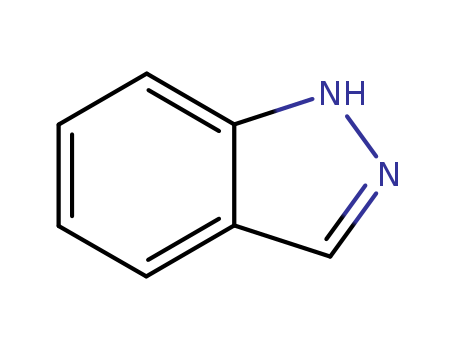
The research describes a novel and efficient method for the synthesis of indazoles, a subunit commonly found in pharmaceuticals with significant biological and pharmacological activities. The study aimed to overcome the limitations of previous methods, such as harsh reaction conditions and multi-step processes, by utilizing the [3+2] cycloaddition of diazo compounds with arynes in the presence of CsF or TBAF at room temperature. The chemicals involved in this process include a variety of diazo compounds, o-(trimethylsilyl)aryl triflates as aryne precursors, and CsF or TBAF as fluoride reagents. The conclusions of the research highlight the successful development of a simple, efficient, and general method for synthesizing a wide range of substituted indazoles with good to excellent yields under mild reaction conditions. The method also allows for the selective formation of N-unsubstituted or N-arylated indazoles, depending on the stoichiometry and reaction conditions, and includes the observation of acyl migration in dicarbonyl-containing diazo compounds to afford 1-acyl or 1-alkoxycarbonyl indazoles selectively. This new route to indazoles is expected to be useful in constructing molecules with potential biological properties and pharmaceutical applications.
10.1002/anie.201306511
The research focuses on the development of a traceless directing group strategy for C-H borylation reactions of nitrogen heterocycles and anilines. The main content revolves around the use of the (pinacolato)boron (Bpin) group as a traceless directing group, which can be readily installed and removed without additional steps, offering an alternative to traditional methods that require installation and removal of directing groups. The experiments involved the borylation of various substrates, including pyrroles, indoles, azaindoles, pyrazoles, and anilines, using the Bpin group. Reactants such as HBpin and iridium catalysts were used, along with tertiary amines to facilitate N-borylation. The analyses included monitoring the reactions by 1H and 11B NMR spectroscopy, and evaluating the yields and selectivity of the borylated products. The study demonstrated that the Bpin-directed approach is operationally simpler and generally higher yielding than the Boc-directed counterparts, and it expands the scope of C-H borylation by enabling functionalization at different positions on the substrates.