10.2298/JSC091127003K
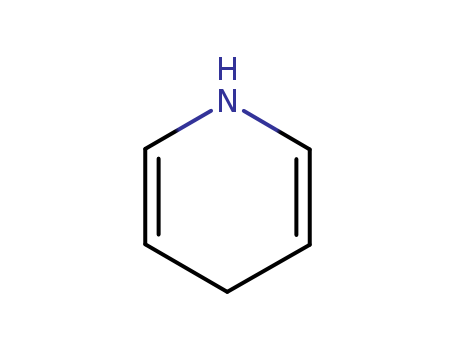
The research focuses on the synthesis and antimicrobial activity of a new series of 1,4-dihydropyridine derivatives. The purpose of the study was to prepare a series of 1,4-dihydropyridine derivatives (1a–g) using Hantzsch syntheses and then react these compounds with thiosemicarbazide to yield a new series of compounds (2a–g). The synthesized compounds were confirmed through IR, 1H-NMR, 13C-NMR, mass spectral, and elemental analysis. The research aimed to evaluate the antimicrobial activity of these compounds, with a particular interest in their potential as vasodilators, antihypertensive, anti-inflammatory, and calcium channel modulators. The conclusions drawn from the study indicated that compound 2c exhibited higher activity than ciprofloxacin against Staphylococcus aureus, and compound 2d showed greater activity than clotrimazole against Candida albicans, suggesting potential for further investigation in the field of antimicrobial agents.
10.1002/jhet.5570230617
The research investigates the alkylation of Hantzsch 1,4-dihydropyridines to develop methods for their mono- and di-alkylation. The study aims to synthesize these compounds, which are of interest due to their potential as calcium channel blockers in cardiac and vascular smooth muscle. Key chemicals used include 3,5-diester and 3,5-dinitrile derivatives of 1,4-dihydropyridine, lithium diisopropylamide, and alkyl halides such as methyl iodide. The research concludes that the alkylation reactions proceed through mono-enolates with rapid proton exchanges, rather than dianions. The study provides methods for both mono- and di-alkylation, and explores the use of dihalides to prepare bicyclic compounds. However, the synthesized alkylation products were found to lack significant calcium modulatory activity in vitro.