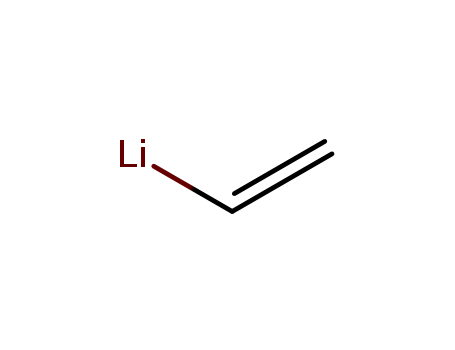
Base Information
- Chemical Name:CID 53629730
- CAS No.:917-57-7
- Molecular Formula:C2H3 Li
- Molecular Weight:33.9868
- Hs Code.:
- Nikkaji Number:J56.189D
- Mol file:917-57-7.mol
Synonyms:
Synonyms:
98%Min *data from raw suppliers
There total 15 articles about CID 53629730 which guide to synthetic route it. The literature collected by LookChem mainly comes from the sharing of users and the free literature resources found by Internet computing technology. We keep the original model of the professional version of literature to make it easier and faster for users to retrieve and use. At the same time, we analyze and calculate the most feasible synthesis route with the highest yield for your reference as below:
Reference yield: 87.0%
Reference yield: 75.0%
Reference yield:
The research focuses on the enantio- and diastereodivergent synthetic route to various cyclitols, including derivatives of conduritol B, conduritol F, myo-inositol, and chiro-inositol, starting from D-xylose. The key experimental steps involve a ring-closing metathesis process and a diastereodivergent organometallic addition to a D-xylose-derived aldehyde. The study explores the stereochemical outcomes of vinylmetal additions to carbohydrate-derived aldehydes, utilizing different vinylmetal reagents, solvents, and chelating agents to control the stereoselectivity of the reaction. The reactants include D-xylose, vinylmagnesium bromide, vinyllithium, and various chelating salts, while analyses used to confirm the structures and stereochemistry of the synthesized compounds encompass NMR spectroscopy, optical rotation measurements, and high-resolution mass spectrometry. The research provides insights into the factors influencing the stereochemistry of organometallic addition reactions and offers a practical synthetic route to a diverse group of cyclitol derivatives with potential biological importance.
The research presents an efficient and regio- as well as stereocontrolled methodology for the alkylative bridge cleavage of oxabicyclic vinyl sulfones. The study focuses on a range of 7-oxabicyclo[2.2.1]heptenyl and 8-oxabicyclo[3.2.1]octenyl sulfones, which undergo an overall syn SN2' opening when treated with various organolithium reagents and lithium aluminum hydride. This process yields highly functionalized cyclohexenyl and cycloheptenyl sulfones, which are versatile synthetic intermediates. The chemicals that played crucial roles in this research include organolithium reagents such as methyl lithium (MeLi), n-butyl lithium (n-BuLi), phenyllithium (PhLi), and vinyllithium, as well as lithium aluminum hydride (LAH). Additionally, substrates like oxabicyclic vinyl sulfones, benzyl groups, and phenylsulfonyl groups were essential in the synthesis and transformation processes. The study also involved the use of solvents like tetrahydrofuran (THF) and toluene, and reagents like benzenesulfenyl chloride and methyllithium for the preparation of various vinyl sulfone substrates. The research highlights the importance of these chemicals in achieving the desired regio- and stereocontrolled cleavage of the oxygen bridge in oxabicyclic compounds.

What can I do for you?
Get Best Price

Total 8 Pictures about this product