Refernces
10.1016/j.bmcl.2011.05.083
The research focuses on the efficient synthesis of 3-O-thia-cPAs (4a–d), sulfur analogues of cyclic phosphatidic acid (cPA), with the key step being an intramolecular Arbuzov reaction to construct the cyclic thiophosphate moiety. The synthetic route allows for the production of 4a–d in just four steps from commercially available glycidol. Preliminary biological experiments were conducted to assess the inhibitory effect of 4a–d on autotaxin (ATX), an enzyme involved in controlling the concentration of lysophosphatidic acid (LPA), which affects cell proliferation and cancer cell metastasis. The study used various reactants including glycidol, thioacetic acid, methanol, 2,4-dinitrobenzenesulfenyl chloride, and phosphite, among others, to synthesize the target compounds. The chemical structures of the synthesized compounds were confirmed using NMR (1H NMR, 31P NMR, and HH-COSY) and mass spectrometry. The biological activity was evaluated through ATX inhibition assays, which showed that 3-O-thia-cPAs exhibited a similar inhibitory effect on ATX as the original cPA, with the potency order being 2-O-ccPA 3c > 3-O-thia-cPAs 4a–d > cPA 2a.
10.1016/j.tet.2012.01.048
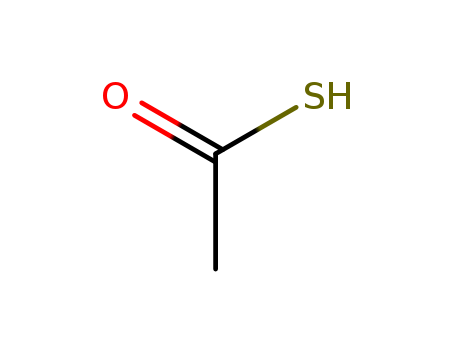
The research investigates the enantio- and diastereoselective addition of thioacetic acid to nitroalkenes using N-sulfonyl urea catalysis. The study extends the scope of the reaction to cyclic α,β-disubstituted nitroalkenes and explores the role of the sulfonyl group by comparing it with various aryl and sulfonyl groups. The researchers synthesized and tested 15 urea catalysts, finding that the sulfonyl group is crucial for achieving high enantioselectivity. Key chemicals involved in the research include thioacetic acid, nitroalkenes, and a variety of urea catalysts with different substituents. The study highlights the importance of the sulfonyl group in the catalysts and demonstrates the potential of this method for synthesizing chiral 1,2-aminothiols, which are valuable intermediates in the preparation of biologically active compounds.
10.1021/jo01347a030
The study explores the conversion of L-p-chloroalanine peptides to L-cysteine peptides using thio reagents such as thioacetate, thiobenzoate, and benzyl mercaptide in solvents like N,N-dimethylformamide or ethyl acetate. The researchers synthesized several di-, tri-, and penta-1-cysteine peptides through this method. The study also investigates the reaction of thio reagents with L-p-chloroalanine peptides, resulting in the formation of optically active L-cysteine peptides. The displacement of p-chloro groups by thioacetic acid was extended to peptides with the chloroalanine moiety between other amino acid residues in tripeptides and pentapeptides. The study provides detailed experimental procedures and analytical data for the synthesized compounds.


 F,
F, C
C


