10.1016/0022-328X(93)83012-K
The study presented in the "Journal of Organometallic Chemistry" focuses on the synthesis, properties, and structural analysis of N,N-functionalized bis(amino)carbene molybdenum(0) carbonyl complexes. The researchers prepared the complexes by treating 1,2-bis(y-diphenylphosphinopropylaminojethane) with specific reagents, yielding electron-rich enetetramine ligands. These ligands were then used to form carbenemolybdenum title compounds, which were characterized by various spectroscopic techniques and X-ray crystallography. The study revealed that one of the compounds exhibited a rare example of a metal complex with both carbene- and n*-alkene-ligation. Additionally, the researchers investigated the reactivity of the complexes, including their reactions with 13CO, PEt3, and under thermal conditions, providing insights into the potential of these complexes in catalytic alkene metathesis reactions.
10.1016/j.bmc.2014.05.014
The study focuses on the enzymatic preparation and resolution of cis and trans-3-amino-4-hydroxytetrahydrofurans and cis-3-amino-4-hydroxypyrrolidines, which are important heterocyclic amino alcohols found in bioactive natural products and drugs. The researchers utilized Candida antarctica lipases A and B as catalysts in hydrolytic processes to achieve high enantioselectivity for these heterocycles. The study successfully assigned the absolute configurations of the optically pure heterocycles obtained and demonstrated a convenient biocatalytic approach for preparing all isomers of these compounds. The findings have implications for the synthesis of complex molecules with potential biological activities, as well as for applications in organocatalysis and as chiral auxiliaries.
10.1021/om00150a032
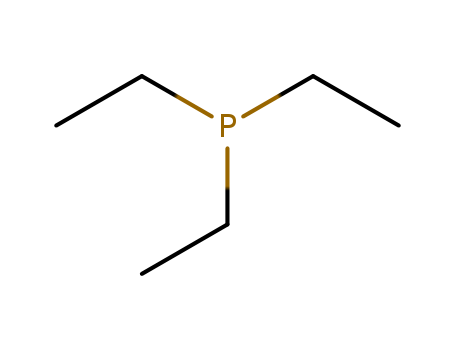
The research focused on the synthesis and characterization of hydride and borohydride derivatives of (pentamethylcyclopentadienyl)(tertiary phosphine)ruthenium complexes. The purpose of this study was to explore the chemistry of middle- and late-transition-metal polyhydride complexes, which are of interest due to their potential as catalysts for H/D exchange reactions and C-H bond activation. The researchers successfully synthesized a series of trihydride complexes, (q5-C5Me5)RuH3(PR3), and tetrahydroborate complexes, (q5-C5Me5)Ru(PR3)(BH4), using various phosphine ligands (PR3) such as PMe3, PEt3, P(i-Pr)3, PCy3, PPh2Me, and PPh3. The synthesis involved the reaction of NaBH4 with (q5-C5Me5)RuCl2(PR3) in ethanol, and the resulting trihydrides were characterized by IR and 'H NMR spectroscopy. The study also included a single-crystal X-ray diffraction study of (q5-C5Me5)RuH3(PPh3), revealing its pseudo C3 symmetry. Additionally, the research investigated the photoinduced H/D exchange reaction under UV irradiation, which led to the exchange among the hydrides, coordinated phosphine, and solvent. The conclusions of the study provided insights into the structure and reactivity of these ruthenium complexes, contributing to the understanding of their potential applications in catalysis.


 F,
F, C
C


