Welcome to LookChem.com Sign In|Join Free
  • or

Encyclopedia

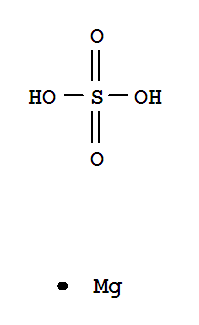
Magnesium Sulfate

Base Information
  • Chemical Name:Magnesium Sulfate
  • CAS No.:7487-88-9
  • Deprecated CAS:139939-75-6,849607-35-8,849607-35-8
  • Molecular Formula:MgSO4
  • Molecular Weight:120.369
  • Hs Code.:2833210000
  • European Community (EC) Number:231-298-2,242-691-3,686-508-9
  • ICSC Number:1197
  • UNII:ML30MJ2U7I
  • DSSTox Substance ID:DTXSID6042105
  • Nikkaji Number:J3.103H
  • Wikipedia:Magnesium sulfate,Magnesium_sulfate
  • Wikidata:Q288266
  • NCI Thesaurus Code:C623,C66051
  • RXCUI:6585,1311625
  • ChEMBL ID:CHEMBL2021423
  • Mol file:7487-88-9.mol
Magnesium Sulfate

Synonyms:Heptahydrate Magnesium Sulfate;Magnesium Sulfate;Magnesium Sulfate, Heptahydrate;Sulfate, Magnesium

Suppliers and Price of Magnesium Sulfate
Supply Marketing:
Business phase:
The product has achieved commercial mass production*data from LookChem market partment
Manufacturers and distributors:
  • Manufacture/Brand
  • Chemicals and raw materials
  • Packaging
  • price
Total 405 raw suppliers
Chemical Property of Magnesium Sulfate
Chemical Property:
  • Appearance/Colour:White crystalline powder 
  • Melting Point:1124 °C 
  • Boiling Point:330 °C at 760 mmHg 
  • PSA:88.64000 
  • Density:2.66 g/cm3 
  • LogP:-0.25720 
  • Hydrogen Bond Donor Count:0
  • Hydrogen Bond Acceptor Count:4
  • Rotatable Bond Count:0
  • Exact Mass:119.9367713
  • Heavy Atom Count:6
  • Complexity:62.2
Purity/Quality:

99% *data from raw suppliers

Safty Information:
  • Pictogram(s): IrritantXi 
  • Hazard Codes:Xi 
  • Safety Statements: S24/25:; 
MSDS Files:

SDS file from LookChem

Total 1 MSDS from other Authors

Useful:
  • Chemical Classes:Metals -> Metals, Inorganic Compounds
  • Canonical SMILES:[O-]S(=O)(=O)[O-].[Mg+2]
  • Recent ClinicalTrials:Intravenous Administration of Magnesium Sulfate in Laparoscopic Hysterectomy Cases
  • Recent EU Clinical Trials:POMPAE trial: Peri-Operative Magnesium infusion to Prevent Atrial fibrillation Evaluated.
  • Inhalation Risk:A harmful concentration of airborne particles can be reached quickly , especially if powdered.
  • Effects of Short Term Exposure:The substance is mildly irritating to the eyes and respiratory tract.
  • Chemical Properties and Role Magnesium sulfate is a magnesium salt with sulfate as the counterion. It serves various roles such as an anticonvulsant, cardiovascular drug, calcium channel blocker, anesthetic, tocolytic agent, anti-arrhythmia drug, analgesic, and fertilizer. Magnesium plays a crucial role in the physiological function of the human body.
  • Application in Regional Anesthesia Numerous studies have demonstrated the safety and effectiveness of adding magnesium sulfate to various regional anesthesia techniques. Meta-analyses have shown that combining magnesium sulfate with local anesthetics in nerve blocks can lead to prolonged postoperative analgesia. The addition of magnesium sulfate to bupivacaine during transversus abdominis plane (TAP) block and subclavian brachial plexus nerve block resulted in a longer duration of analgesia and reduced postoperative morphine requirements.
  • Enhancement of Local Anesthetics in Nerve Blocks With the widespread use of ultrasound, nerve blocks have become more prevalent but are limited by shorter duration and suboptimal analgesia. Magnesium sulfate, as a local anesthetic adjuvant for peripheral nerve blocks, enhances the effects of local anesthetics.
  • Neuroprotection in Preterm Birth Magnesium sulfate (MgSO4) has been proposed as a crucial intervention for preventing neurologic disability associated with preterm birth. It is readily accessible, cost-effective, and has been recommended as a mandatory component of managing inevitable preterm birth. MgSO4 administration has been shown to reduce the risk of severe neurologic deficits, particularly cerebral palsy, in appropriately selected patients. Guidelines recommend a standard regimen of 4g intravenous loading dose followed by 1g/h maintenance dose for up to 24 hours, but recent studies suggest higher doses may provide maximum protective effect.
Technology Process of Magnesium Sulfate

There total 117 articles about Magnesium Sulfate which guide to synthetic route it. The literature collected by LookChem mainly comes from the sharing of users and the free literature resources found by Internet computing technology. We keep the original model of the professional version of literature to make it easier and faster for users to retrieve and use. At the same time, we analyze and calculate the most feasible synthesis route with the highest yield for your reference as below:

synthetic route:
Guidance literature:
In solid; byproducts: H2O; mixt. heating in derivatograph in Pt crucible at 10 K/min in air up to 850°C; TG, DTG, DTA;
DOI:10.1016/s0040-6031(97)00199-8
Guidance literature:
Refernces

Rotaxanes capable of recognising chloride in aqueous media

10.1002/chem.201002076

The study presents the development of a series of eight new [2]rotaxane molecules, with a focus on the first sulfonamide interlocked system, designed to selectively recognize chloride anions in aqueous media. The research leverages a chloride-anion-templating synthetic pathway to create these [2]rotaxanes, whose three-dimensional interlocked-binding domains exhibit high chloride selectivity. The study utilizes 1H NMR spectroscopic titration to demonstrate the rotaxanes' chloride recognition capabilities and employs X-ray structural analysis and computational molecular dynamics simulations to elucidate the formation yields, anion binding affinities, and selectivity trends. The findings reveal that the rotaxanes can selectively bind chloride even in competitive aqueous solvent mixtures, with the binding affinity tunable through modifications such as electron-withdrawing substituents and charge increase. The research contributes to the advancement of anion recognition in supramolecular chemistry and has implications for nanotechnological applications.

Preparation of ribavirin analogues by copper- and ruthenium-catalyzed azide-alkyne 1,3-dipolar cycloaddition

10.1016/j.tet.2008.07.007

The study focuses on the synthesis of 1,4- and 1,5-disubstituted-1,2,3-triazolo-nucleosides from various alkynes using 10-azido-2,3,5-tri-O-acetylribose. The researchers employed copper-catalyzed azide-alkyne cycloaddition (CuAAC) and ruthenium-catalyzed azide-alkyne cycloaddition (RuAAC) methods. They optimized the RuAAC conditions using a commercially available catalyst, [Cp*RuCl(PPh3)2], under microwave heating, which significantly reduced the reaction time from 6 hours to 5 minutes and allowed the reaction to occur under water-containing conditions. Both CuAAC and RuAAC proved to be valuable tools for the synthesis of 1,2,3-triazolyl-nucleosides, which are potential therapeutic agents against DNA viruses and retroviruses, including hepatitis C virus (HCV). The synthesized compounds were evaluated for their anti-HCV activity in vitro, but none exhibited marked activity or toxicity. The study concludes that the developed methods provide an efficient approach to synthesize a small library of 1,5-disubstituted-triazolo derivatives under RuAAC and 1,4-regioisomers under CuAAC.

C-F activation reactions of (pentafluorophenyl)cyclopentadiene and 3-(pentafluorophenyl)indene with tetrakis(dimethylamido)titanium(IV)

10.1021/om034385g

The study investigates the reactions of 3-(pentafluorophenyl)indene and (pentafluorophenyl)cyclopentadiene with tetrakis(dimethylamido)titanium(IV), resulting in the formation of products where one or both ortho fluorines of the C6F5 group are replaced by dimethylamino groups. This suggests a titanium-mediated, intramolecular nucleophilic aromatic substitution mechanism. The research led to the isolation of organic products and the conversion of substituted cyclopentadiene to a ferrocene derivative. The study provides insights into the selective activation of polyfluorinated organic compounds, a significant challenge in synthetic chemistry, and contributes to the understanding of transition metal complex mechanisms for C-F activation.

Copper-catalyzed highly efficient multicomponent reactions of terminal alkynes, acid chlorides, and carbodiimides: synthesis of functionalized propiolamidine derivatives

10.1002/adsc.200700333

The research focuses on the copper-catalyzed multicomponent reactions (MCRs) of terminal alkynes, acid chlorides, and carbodiimides to synthesize functionalized propiolamidine derivatives. The study explores the efficiency of various bases and solvents to optimize the reaction conditions. The optimal catalytic system was found to be a combination of CuI, triethylamine (TEA), and acetonitrile (CH3CN), yielding the desired products in good to excellent yields. The experiments involved a suspension of carbodiimide and acid chloride, followed by the addition of anhydrous acetonitrile, TEA, CuI, and alkyne at room temperature under a nitrogen atmosphere. The reaction mixture was stirred, then extracted with CH2Cl2, washed with saturated NaHCO3 solution and water, dried over anhydrous MgSO4, and evaporated under vacuum. The residue was purified using silica gel column chromatography with petroleum ether/ethyl acetate as the eluent. The analysis of the reaction products was based on isolated yields, which were calculated based on the amount of N,N’-dialkylcarbodiimides used.

Chromic Acid Oxidation of Indans and Tetralins to 1-Inadanones and 1-Tetralones Using Jones and Other Cr(VI) Reagents

10.1021/jo00214a007

The research investigates the oxidation of indans and tetralins to 1-indanones and 1-tetralones using Jones chromic acid and other Cr(VI) reagents. The study explores the effectiveness of the Jones reagent in oxidizing hydrocarbons at benzylic positions, comparing it with other Cr(VI) reagents like 2,2'-bipyridinium chlorochromate (BiPCC) and CrO3 in acetic acid. It was found that while the Jones reagent provides high yields of sterically hindered monoketones, it is less selective compared to other reagents. The research also examines the impact of various parameters on the oxidation process, including the use of different acids and solvents, the effect of excess sulfuric acid, and the role of drying agents like anhydrous magnesium sulfate and oven-dried silica gel in improving yield and reaction efficiency. Additionally, the stability of 1-tetralone under Jones oxidation conditions and the consumption of Cr(VI) and formation of acetic acid during the process were studied.


Post a RFQ

Enter 15 to 2000 letters.Word count: 0 letters

Attach files(File Format: Jpeg, Jpg, Gif, Png, PDF, PPT, Zip, Rar,Word or Excel Maximum File Size: 3MB)

1 Customer Service

What can I do for you?
Get Best Price

Get Best Price for 7487-88-9