10.1021/om9907775
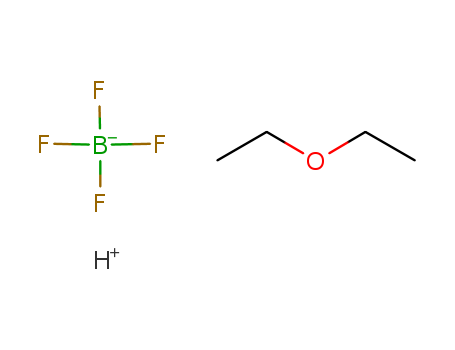
The research investigates the kinetics of the formation of dihydrogen complexes by protonation of CpRuHL complexes (where L is DPPM, DPPE, or 2 PPh3) with HBF4?Et2O in THF. The study finds that the second-order rate constants for these reactions do not correlate with the previously reported pKa values of the complexes. Additionally, the researchers observed that dihydrogen complexes do not form in reactions with HCl, HBr, or CF3COOH in THF and acetone solutions, indicating that predictions based on aqueous pKa scales have limited validity. HBF4.Et2O, Boron trifluoride diethyl etherate, used as a strong acid in the protonation reactions. It is a Lewis acid that protonates the metal hydrides to form dihydrogen complexes. The study suggests that the lack of correlation and the failure to form dihydrogen complexes with certain acids may be due to the different kinetic selectivity of the complexes toward acids or a mechanistic change in the protonation process.


 F
F


