Welcome to LookChem.com Sign In|Join Free
  • or

Encyclopedia

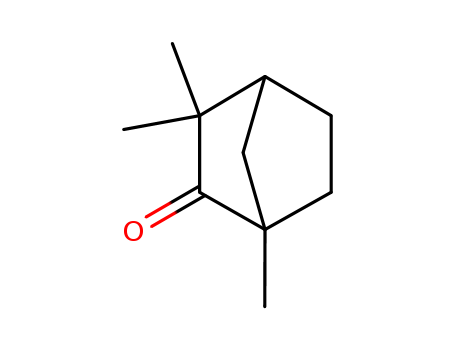
FENCHONE

Base Information
  • Chemical Name:FENCHONE
  • CAS No.:1195-79-5
  • Deprecated CAS:1071582-04-1,126-21-6,18492-37-0
  • Molecular Formula:C10H16O
  • Molecular Weight:152.236
  • Hs Code.:2914299000
  • European Community (EC) Number:214-804-6,225-160-0
  • NSC Number:122687,8896
  • DSSTox Substance ID:DTXSID9025324
  • Nikkaji Number:J125B
  • Wikipedia:Fenchone
  • Wikidata:Q414784
  • Metabolomics Workbench ID:75130
  • ChEMBL ID:CHEMBL2268554
  • Mol file:1195-79-5.mol
FENCHONE

Synonyms:2-Norbornanone,1,3,3-trimethyl- (6CI,8CI);(?à)-Fenchone;1,3,3-Trimethyl-2-norbornanone;1,3,3-Trimethylbicyclo[2.2.1]heptan-2-one;1,3,3-Trimethylnorcamphor;Fenchone;NSC 122687;NSC 8896;dl-Fenchone;

Suppliers and Price of FENCHONE
Supply Marketing:
Business phase:
The product has achieved commercial mass production*data from LookChem market partment
Manufacturers and distributors:
  • Manufacture/Brand
  • Chemicals and raw materials
  • Packaging
  • price
  • TRC
  • Fenchone
  • 5g
  • $ 525.00
  • American Custom Chemicals Corporation
  • 1,3,3-TRIMETHYLBICYCLO[2.2.1]HEPTAN-2-ONE 95.00%
  • 1G
  • $ 662.61
Total 42 raw suppliers
Chemical Property of FENCHONE
Chemical Property:
  • Vapor Pressure:0.463mmHg at 25°C 
  • Melting Point:191.0-192.5℃ 
  • Refractive Index:1.4640 (589.3 nm 20℃) 
  • Boiling Point:193.5 °C at 760 mmHg 
  • Flash Point:52.8 °C 
  • PSA:17.07000 
  • Density:0.982 g/cm3 
  • LogP:2.40170 
  • Water Solubility.:744mg/L at 25℃ 
  • XLogP3:2.3
  • Hydrogen Bond Donor Count:0
  • Hydrogen Bond Acceptor Count:1
  • Rotatable Bond Count:0
  • Exact Mass:152.120115130
  • Heavy Atom Count:11
  • Complexity:217
Purity/Quality:

99% *data from raw suppliers

Fenchone *data from reagent suppliers

Safty Information:
  • Pictogram(s):  
  • Hazard Codes: 
MSDS Files:

SDS file from LookChem

Useful:
  • Chemical Classes:Other Classes -> Aliphatic Ketones, Other
  • Canonical SMILES:CC1(C2CCC(C2)(C1=O)C)C
  • General Description Fenchone is a hindered ketone that was studied in the context of improved reactivity with phenyllithium (PhLi) in non-polar media, demonstrating enhanced yields and stereospecific addition favoring the less-hindered side under these conditions. This method provides a more efficient and cost-effective approach for synthesizing chiral inducers compared to traditional ether-based reactions.
Technology Process of FENCHONE

There total 24 articles about FENCHONE which guide to synthetic route it. The literature collected by LookChem mainly comes from the sharing of users and the free literature resources found by Internet computing technology. We keep the original model of the professional version of literature to make it easier and faster for users to retrieve and use. At the same time, we analyze and calculate the most feasible synthesis route with the highest yield for your reference as below:

synthetic route:
Guidance literature:
With 9-benzyl-9-norazaadamantane N-oxyl; oxygen; acetic acid; sodium nitrite; In acetonitrile; at 20 ℃; for 6h; Reagent/catalyst; Time; Concentration; Catalytic behavior;
Guidance literature:
bis-triphenylphosphine-palladium(II) chloride; In 1-methyl-pyrrolidin-2-one; for 6h; Heating;
DOI:10.1016/j.tetlet.2005.03.068
Guidance literature:
With perfluoro-cis-2-n-butyl-3-n-propyloxaziridine; In various solvent(s); Ambient temperature;
DOI:10.1016/S0040-4039(00)60884-5
Refernces

Improved addition of phenyllithium to hindered ketones by the use of non-polar media

10.1016/S0040-4039(02)00597-X

The research focuses on the improved addition of phenyllithium (PhLi) to hindered ketones using non-polar media at room temperature. The study was conducted on six hindered ketones: (?)-fenchone, (?)-menthone, (+)-camphor, 3,3,5-trimethylcyclohexanone, 3,3,5,5-tetramethylcyclohexanone, and 2,4-dimethylpentan-3-one. The researchers aimed to enhance the low reactivity of these ketones towards PhLi, which traditionally yields modest results when performed in ethers like diethyl ether or THF. The experiments involved dissolving the ketones in a non-polar solvent, such as toluene or a toluene-diethyl ether mixture, and then slowly adding commercial PhLi via syringe. The mixtures were stirred at room temperature for 2 to 4 hours. The results showed significant improvements in yield compared to traditional methods, with the addition occurring in a stereospecific manner, favoring the less-hindered side. The configuration of the adducts was established using 13C NMR according to literature methods. This approach was found to be more efficient, cost-effective, and easier, offering a significant advantage for the synthesis of chiral inducers.

Post a RFQ

Enter 15 to 2000 letters.Word count: 0 letters

Attach files(File Format: Jpeg, Jpg, Gif, Png, PDF, PPT, Zip, Rar,Word or Excel Maximum File Size: 3MB)

1 Customer Service

What can I do for you?
Get Best Price

Get Best Price for 1195-79-5