Welcome to LookChem.com Sign In|Join Free
  • or

Encyclopedia

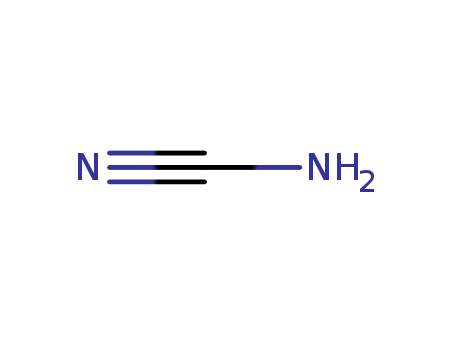
Cyanamide

Base Information
  • Chemical Name:Cyanamide
  • CAS No.:420-04-2
  • Deprecated CAS:32729-71-8,65931-45-5,65931-45-5
  • Molecular Formula:CH2N2
  • Molecular Weight:42.0403
  • Hs Code.:29269090
  • European Community (EC) Number:205-861-8,206-992-3
  • ICSC Number:0424
  • NSC Number:267195,24133
  • UN Number:2811,1403
  • UNII:21CP7826LC
  • DSSTox Substance ID:DTXSID9034490
  • Nikkaji Number:J2.584D
  • Wikipedia:Cyanamide,Calcium cyanamide
  • Wikidata:Q414555
  • NCI Thesaurus Code:C76744
  • Metabolomics Workbench ID:50601
  • ChEMBL ID:CHEMBL56279
  • Mol file:420-04-2.mol
Cyanamide

Synonyms:Abstem;Calcium Carbimide;Calcium Cyanamide;Calcium Cyanamide, Citrated;Calcium Salt Cyanamide;Carbimide;Carbimide, Calcium;Citrated Calcium Cyanamide;Colme;Cyanamide;Cyanamide, Calcium;Cyanamide, Calcium (1:1) Salt;Cyanamide, Calcium (2:1) Salt;Cyanamide, Calcium Salt;Cyanamide, Citrated Calcium;Temposil

Suppliers and Price of Cyanamide
Supply Marketing:
Business phase:
The product has achieved commercial mass production*data from LookChem market partment
Manufacturers and distributors:
  • Manufacture/Brand
  • Chemicals and raw materials
  • Packaging
  • price
  • TRC
  • Cyanamide
  • 5g
  • $ 55.00
  • SynQuest Laboratories
  • Cyanamide
  • 25 g
  • $ 128.00
  • SynQuest Laboratories
  • Cyanamide,50%aqueoussolution
  • 100 g
  • $ 45.00
  • SynQuest Laboratories
  • Cyanamide
  • 100 g
  • $ 184.00
  • Sigma-Aldrich
  • Cyanamide solution 50 wt. % in H2O
  • 1kg
  • $ 175.00
  • Sigma-Aldrich
  • Cyanamide 99%
  • 100g
  • $ 106.00
  • Sigma-Aldrich
  • Cyanamide 99%
  • 250g
  • $ 135.00
  • Sigma-Aldrich
  • Cyanamide solution 50 wt. % in H2O
  • 100g
  • $ 40.60
  • Sigma-Aldrich
  • Cyanamide 99%
  • 5g
  • $ 20.50
  • Sigma-Aldrich
  • Cyanamide solution 50 wt. % in H2O
  • 250g
  • $ 81.30
Total 192 raw suppliers
Chemical Property of Cyanamide
Chemical Property:
  • Appearance/Colour:white crystalline solid 
  • Vapor Pressure:1Pa at 24.95℃ 
  • Melting Point:45-46 °C(lit.) 
  • Refractive Index:1.405 
  • Boiling Point:258.5 °C at 760 mmHg 
  • PKA:1.1(at 29℃) 
  • Flash Point:1.2 °C 
  • PSA:49.81000 
  • Density:0.998 g/cm3 
  • LogP:0.12648 
  • Storage Temp.:2-8°C 
  • Sensitive.:Hygroscopic 
  • Solubility.:ethanol: soluble10%, clear to hazy, colorless to faintly yellow 
  • Water Solubility.:775 g/L 
  • XLogP3:-0.3
  • Hydrogen Bond Donor Count:1
  • Hydrogen Bond Acceptor Count:2
  • Rotatable Bond Count:0
  • Exact Mass:42.021798072
  • Heavy Atom Count:3
  • Complexity:29.3
  • Transport DOT Label:Poison
Purity/Quality:

99% *data from raw suppliers

Cyanamide *data from reagent suppliers

Safty Information:
  • Pictogram(s):  
  • Hazard Codes:
  • Statements: 21-25-36/38-43 
  • Safety Statements: 3-22-36/37-45-26 
MSDS Files:

SDS file from LookChem

Useful:
  • Chemical Classes:Nitrogen Compounds -> Cyanamides
  • Canonical SMILES:C(#N)N
  • Inhalation Risk:A harmful concentration of airborne particles can be reached quickly when dispersed, especially if powdered.
  • Effects of Short Term Exposure:The substance is severely irritating to the eyes and skin. The substance is irritating to the respiratory tract.
  • Effects of Long Term Exposure:Repeated or prolonged contact may cause skin sensitization. Animal tests show that this substance possibly causes toxicity to human reproduction or development.
  • General Description **Cyanamide** is a versatile chemical compound used in various synthetic processes, including the production of pharmaceuticals like imatinib analogs and neonicotinoid insecticides. It serves as a key intermediate in reactions such as cyanation and desulfurization, often facilitated by reagents like hypervalent iodine(III) compounds. While traditional methods rely on toxic cyanogen halides, newer eco-friendly protocols leverage cyanamide’s reactivity under mild conditions. Its derivatives, such as N-cyano sulfoximines, exhibit notable biological activity, including insecticidal properties. However, its use is sometimes avoided in favor of safer alternatives due to its toxicity.
Technology Process of Cyanamide

There total 253 articles about Cyanamide which guide to synthetic route it. The literature collected by LookChem mainly comes from the sharing of users and the free literature resources found by Internet computing technology. We keep the original model of the professional version of literature to make it easier and faster for users to retrieve and use. At the same time, we analyze and calculate the most feasible synthesis route with the highest yield for your reference as below:

synthetic route:

Reference yield: 100.0%

Guidance literature:
With copper(ll) sulfate pentahydrate; triethylamine; In dimethyl sulfoxide; at 20 ℃; for 1h; Reagent/catalyst; Solvent;
DOI:10.1039/c7nj03527f
Guidance literature:
With carbon dioxide; 40°C;
Refernces

Imatinib analogs as potential agents for PET imaging of Bcr-Abl and c-KIT expression at a kinase level

10.1016/j.bmc.2013.10.040

The research focused on the synthesis and evaluation of imatinib mesylate (STI-571) analogs as potential agents for PET imaging of Bcr-Abl and c-KIT expression at the kinase level. The study involved molecular modeling to predict binding configurations, followed by the synthesis of STI-571 and its analogs using various reactants such as 2-methyl-5-nitroaniline, cyanamide, and 3-acetylpyridine derivatives. Radiolabeling with [18F] and [131I] was performed to prepare PET imaging agents. In vitro kinase assays were conducted to assess the potency of the analogs in inhibiting Bcr-Abl and c-KIT kinase activities. The uptake rates of [18F]-STI-571 in K562 cells (expressing Abl) and U87WT cells (overexpressing c-KIT) were measured and compared with those in U87 cells. PET scans were conducted on tumor-bearing mice to visualize tumor uptake and contrast. The research utilized various analytical techniques, including HPLC, MS, NMR, and radio-TLC, to monitor reactions, assess radiochemical purity, and characterize compounds. The results showed that the [18F]-STI-571 analog could serve as a marker for sensitivity to Bcr-Abl and c-KIT inhibitors, potentially aiding in patient selection for targeted therapies.

A facile total synthesis of imatinib base and its analogues

10.1021/op700270n

The study presents an improved method for synthesizing Imatinib and its analogues. Imatinib is a tyrosine kinase inhibitor used to treat chronic myeloid leukemia (CML) and gastrointestinal stromal tumors (GISTs). The researchers developed a more cost-effective and environmentally friendly approach to synthesize Imatinib by avoiding the use of toxic cyanamide and expensive palladium compounds. Key chemicals involved include enaminone, guanidine nitrate, and copper salts. Enaminone reacts with guanidine nitrate to form pyrimidinyl amine, a crucial intermediate. Copper salts are used as catalysts in the C-N bond-forming reaction to produce another key intermediate. The nitro compound intermediate is reduced using a N2H4·H2O/FeCl3/C system. The final steps involve acylation and amination reactions to yield Imatinib base. This method achieves good yields and avoids hazardous reagents, making it suitable for industrial applications.

A Sterically Congested α-Cyanoamine as a Cyanating Reagent: Cyanation of Acetals and Orthoesters

10.1002/ejoc.201501084

The study investigates the use of a sterically congested α-cyanoamine as an effective cyanating reagent for the cyanation of acetals and orthoesters. The key chemicals used in the study include α-cyanoamines, which were prepared from secondary amines and α-bromoacetonitrile, and trichlorosilyl triflate (SiCl3OTf), which acts as a catalyst. These chemicals serve the purpose of facilitating the cyanation reaction, leading to the production of cyanated adducts in high yields. The α-cyanoamines were found to be influenced by steric effects, with more hindered amines improving the product yield, suggesting that they prevent the formation of unfavorable complexes with the catalyst and retain their cyanating functionality. The study also detected oxocarbenium cations as intermediates through NMR spectroscopy, providing insights into the reaction mechanism.

An efficient synthesis of cyanamide from amine promoted by a hypervalent iodine(III) reagent

10.1016/j.tetlet.2009.03.017

The research focuses on the efficient synthesis of cyanamide from amine, utilizing a hypervalent iodine(III) reagent, specifically diacetoxyiodobenzene (DIB), as a non-metallic, non-toxic, and eco-friendly desulfurizing agent. The purpose of this study was to develop an alternative method to the traditional synthesis of cyanamides, which often involves the use of highly toxic cyanogen halides or other harmful reagents. The researchers achieved this by employing a one-pot strategy that starts with dithiocarbamic acid salts/amines, generates alkyl or aryl isothiocyanates in situ through desulfurization with DIB, and then reacts these with aqueous ammonia to form alkyl or aryl thiourea. Further oxidative desulfurization with DIB leads to the formation of the corresponding cyanamide in good yields. The conclusions drawn from the study highlight the mild reaction conditions, shorter reaction times, and environmentally benign protocol as significant advantages, making this methodology a suitable alternative for the preparation of various organic cyanamides. The chemicals used in the process include dithiocarbamic acid salts, amines, aqueous ammonia, and DIB, with the latter serving as a key reagent for both desulfurization steps and the oxidation of thiourea to cyanamide.

Synthesis and insecticidal activity of N-substituted (1,3-thiazole)alkyl sulfoximine derivatives

10.1021/jf802802g

The research focuses on the synthesis and insecticidal activity of N-substituted (1,3-thiazole)alkyl sulfoximine derivatives, a new chemical family of neonicotinoid insecticides. The purpose of this study was to design and synthesize 10 such derivatives and evaluate their insecticidal activities against Myzus persicae, a common pest known as the peach aphid. The researchers used various chemicals in the synthesis process, including 5-halomethyl-1,3-thiazole, iodobenzene diacetate, cyanamide, and 3-chloroperoxy-benzoid acid, among others. The synthesized compounds were characterized using techniques like NMR, IR, and elemental analysis. The bioassays revealed that some of the synthesized compounds exhibited good insecticidal activities at a concentration of 10 mg/L. The study concluded that the N-cyano sulfoximine pharmacophore (S(O)dN-CN) with a 2-chloro-4-trifluoromethyl-5-thiazolyl moiety was the most promising structure for insecticidal activity, and the nature and position of the substitutes on the thiazolyl ring significantly influenced the efficacy.

Post a RFQ

Enter 15 to 2000 letters.Word count: 0 letters

Attach files(File Format: Jpeg, Jpg, Gif, Png, PDF, PPT, Zip, Rar,Word or Excel Maximum File Size: 3MB)

1 Customer Service

What can I do for you?
Get Best Price

Get Best Price for 420-04-2
