Refernces
10.1002/adsc.200700382
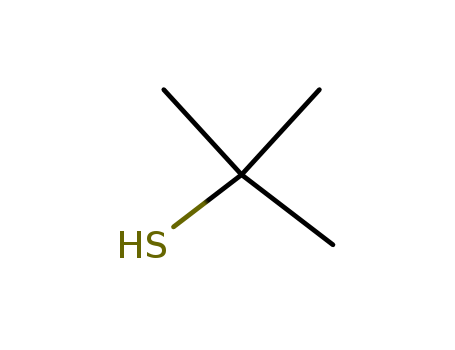
The research focuses on the highly enantioselective organocatalytic sulfa-Michael addition (SMA) to α,β-unsaturated ketones, utilizing benzyl and tert-butyl mercaptans as sulfur-centered nucleophiles. The study employs a novel primary amine salt catalyst, derived from 9-amino-(9deoxy)-epi-hydroquinine and d-N-Boc-phenylglycine, which demonstrates high reactivity and selectivity for iminium ion catalysis with enones. The experiments involve the addition of various thiols to different enones in the presence of the chiral catalyst, aiming to achieve high yields and excellent stereocontrol. The reactions were optimized in terms of catalyst loading, solvent, temperature, and reaction time to find the best conditions for enantioselectivity and yield. Analyses used to assess the results include 1H NMR for conversion determination, isolated yield for product quantity, and HPLC analysis on chiral support for enantiomeric excess (ee) calculation.
10.1021/jo00109a043
The research focused on studying the kinetic parameters and relative energies of radicals involved in the rearrangement of a bicyclic cyclopropylmethylhomoallyl system. The purpose was to understand the effects of benzylic stabilization on the cyclopropylmethyl radical, which facilitates the characterization of all four ring-opening and closing processes. The study concluded that benzylic stabilization does not significantly perturb the position of the transition state for ring opening, suggesting that phenyl substitution of a bicyclic cyclopropylmethyl radical can be a useful tool for analyzing the effects of substituents elsewhere in the system. Key chemicals used in the process included bicyclo[3.1.0]hexan-1-yl, Bu3SnH, PhSH, and t-BuSH as radical traps, as well as a series of synthesized compounds such as 1-phenylbicyclo[3.1.0]hexane, 3-methyl-1-phenylcyclopent-1-ene, and 1-phenylcyclohexene. The research provided insights into the regioselectivity of ring opening and the energetics of isomeric homoallyl radicals, which are valuable for the rational application of cyclopropylmethyl radical rearrangements in organic synthesis.
10.1039/b408677e
The study presents a novel method for converting S-tert-butyl groups into acetyl-protected thiols, which are crucial for self-assembly processes, particularly in the field of nanotechnology and molecular electronics. The reaction is catalyzed by bromine in the presence of acetyl chloride and acetic acid, offering a mild and efficient alternative to existing methods that rely on harsher conditions. The chemicals used include tert-butyl thiols, acetyl chloride, bromine, and acetic acid. The purpose of these chemicals is to facilitate the transformation of the robust tert-butyl protecting groups into more versatile and labile acetyl-protected thiols, which can be hydrolyzed in situ to free thiols, thereby enabling the integration of molecular systems into nanostructures and electronic circuits for studying their properties.


 F,
F, Xn,
Xn, Xi
Xi


