10.1021/jo702075r
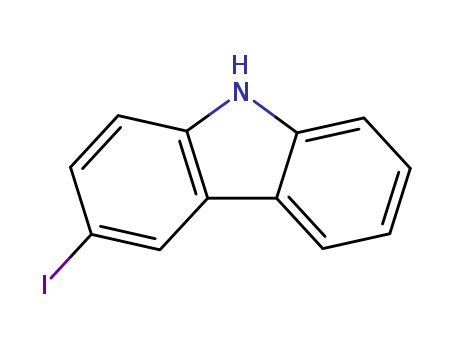
The research focuses on the synthesis, characterization, and application of pyrene-modified carbazole oligomers in organic light-emitting diodes (OLEDs). The purpose of the study was to create a series of monodisperse, ethynylene-linked oligocarbazoles with zigzag molecular backbones, which were designed to have stable, size-independent absorption and emission properties. The researchers aimed to investigate the impact of pyrene incorporation at different positions within the oligocarbazole main chain on the absorption and emission spectra, as well as to evaluate the optoelectronic performance of these materials in OLEDs. The conclusions drawn from the study indicated that the introduction of pyrene units effectively tuned the emission wavelengths and significantly improved the fluorescence quantum efficiency of the oligomers. Carbazole oligomers without pyrene were found to be suitable as hole-transporting materials, while pyrene-modified oligomers exhibited both light-emitting and hole-transporting properties, making them promising materials for OLED applications. Key chemicals used in the synthesis process included 3-iodo-9H-carbazole, 1-ethynylpyrene, 1,8-diethynylpyrene, and various other intermediates derived from carbazole, as well as palladium and copper catalysts for the Sonogashira coupling reactions that formed the ethynylene linkages.
10.1016/j.tet.2006.12.082
The research focuses on the molecular engineering of organic dyes containing the N-aryl carbazole moiety for application in solar cells, specifically dye-sensitized solar cells (DSSCs). The purpose of this study was to design and synthesize novel organic dyes that could overcome the limitations of low conversion efficiency and operational stability often associated with organic dyes in DSSCs, as compared to metal-based complexes. The researchers aimed to develop alternative, highly efficient organic dyes that could potentially rival the performance of ruthenium complexes, which are known for their high efficiency but are prohibitively expensive. In the process, various chemicals were used, including 2-iodo-9,9-dimethylfluorene, 3-iodocarbazole, 1-bromo-4-(2,2-diphenylvinyl)benzene, and (2-thienylmethyl)triphenylphosphonium bromide, which were synthesized using modified procedures from previous references. Other chemicals involved in the synthesis steps included tributyl(thiophen-2-yl)stannane, Pd(PPh3)4, copper bronze, potassium carbonate, 18-crown-6, n-butyl lithium, cyanoacetic acid, piperidine, rhodanine-3-acetic acid, and ammonium acetate, among others. These chemicals were utilized in a series of reactions such as coupling, lithiation, and condensation to synthesize the target dyes, which were then tested for their photovoltaic performance in DSSCs.