Products Categories
| CAS No.: | 824-94-2 |
|---|---|
| Name: | 4-Methoxybenzylchloride |
| Article Data: | 170 |
| Molecular Structure: | |
|
|
|
| Formula: | C8H9ClO |
| Molecular Weight: | 156.612 |
| Synonyms: | Anisole,p-(chloromethyl)- (6CI,7CI,8CI);1-(Chloromethyl)-4-(methyloxy)benzene;1-(Chloromethyl)-4-methoxybenzene;4-(Chloromethyl)-1-methoxybenzene;4-(Chloromethyl)anisole;4-(Chloromethyl)phenyl methyl ether;4-Methyloxybenzyl chloride;NSC 172955;p-(Chloromethyl)(methoxy)benzene;p-(Chloromethyl)anisole;p-Anisyl chloride;a-Chloro-4-methoxytoluene;a-Chloro-p-methoxytoluene;p-Methoxybenzyl chloride; |
| EINECS: | 212-540-6 |
| Density: | 1.109 g/cm3 |
| Melting Point: | -1 °C(lit.) |
| Boiling Point: | 243.6 °C at 760 mmHg |
| Flash Point: | 109.4 °C |
| Solubility: | slowly decomposes in water |
| Appearance: | Colorless liquid |
| Hazard Symbols: |

|
| Risk Codes: | 34 |
| Safety: | 26-27-36/37/39-45 |
| Transport Information: | UN 3265 8/PG 3 |
| PSA: | 9.23000 |
| LogP: | 2.43400 |
- 82993-81-5D-threo-Ritalinic acid hydrochloride
- 852475-26-4MC1568
- 958254-66-51H-Imidazo[4,5-b]pyridine-2-carboxaldehyde, 1-methyl-, hydrochloride
- 99170-93-1N-Methyl-2-oxazolamine
- 914458-26-7[5-(2-fluorophenyl)-1-pentyl-1H-pyrrol-3-yl]-1-naphthalenyl-Methanone
- 894852-01-87-BROMO-2,2-DIMETHYL-2H-PYRIDO[3,2-B][1,4]OXAZIN-3(4H)-ONE
- 90221-55-92-bromo-5-methylbenzaldehyde
- 885590-99-82,3-DIFLUORO-4-IODOBENZALDEHYDE
- 97730-31-9(S)-4'-(2-Methylbutyl)Biphenyl-4-Carbonitrile
- 926293-55-26-Bromo-2-methylpyridine-3-carboxaldehyde

| Conditions | Yield |
|---|---|
| With 1,2,3-Benzotriazole; thionyl chloride In dichloromethane at 20℃; Substitution; | 100% |
| With thionyl chloride; triethylamine In dichloromethane at -10 - 0℃; for 4.25h; Large scale; | 99% |
| With oxalyl dichloride; 1-methyl-3-(2-(3-methyl-2-oxoimidazolidin-1-yl)ethyl)-1H-imidazol-3-ium hexafluorophosphate at 20 - 60℃; for 24h; Reagent/catalyst; | 99% |
- 15733-09-2
1-methoxy-4-((methylsulfinyl)methyl)benzene

- 824-94-2
p-methoxybenzyl chloride
| Conditions | Yield |
|---|---|
| With hydrogenchloride In tetrachloromethane for 0.25h; Heating; | 100% |

| Conditions | Yield |
|---|---|
| In tetrachloromethane for 15h; Heating; | 100% |
- 27979-81-3
Methyl-thiocarbamic acid S-(4-methoxy-benzyl) ester
- 824-94-2
p-methoxybenzyl chloride
| Conditions | Yield |
|---|---|
| With hydrogenchloride; N-chloro-succinimide In acetonitrile at 10℃; | 98% |
| Conditions | Yield |
|---|---|
| In nitromethane byproducts: Hg2Cl2; vacuum-sealed ampule, 65°C for 50h; separation of Hg, analysis of decanted soln. by TLC and GLC; | A 90% B 97% |
- 14629-56-2
trimethyl(4-methoxybenzyloxy)silane
- 824-94-2
p-methoxybenzyl chloride
| Conditions | Yield |
|---|---|
| With 4-aminophenyl diphenylphosphinite; N-chloro-succinimide In dichloromethane for 1h; Heating; | 96% |
- 18494-82-1
2-(4-methoxy-benzyloxy)-tetrahydro-pyran
- 824-94-2
p-methoxybenzyl chloride
| Conditions | Yield |
|---|---|
| With 4-aminophenyl diphenylphosphinite; N-chloro-succinimide In dichloromethane for 1.5h; Heating; | 95% |
| Conditions | Yield |
|---|---|
| In nitromethane at 65℃; for 50h; | A 90% B n/a |
| Conditions | Yield |
|---|---|
| With tetrachlorosilane; NbCl3(N,N′-bis-(2,6-diisopropylphenyl)-1,4-diaza-2,3-dimethyl-1,3-butadiene) In chloroform-d1 at 20℃; for 24h; Catalytic behavior; Reagent/catalyst; Solvent; Temperature; | 85% |
| Conditions | Yield |
|---|---|
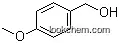
| Stage #1: Bromotrichloromethane With triphenylphosphine In dichloromethane at 20℃; for 0.666667h; Appel reaction; in air; Stage #2: 4-Methoxybenzyl alcohol In dichloromethane at 20℃; Appel reaction; in air; | 84% |
- 115-96-8Tris(2-chloroethyl) phosphate
- 91424-40-73-(tert-Butyldimethylsilyloxy)glutaric anhydride
- 23964-57-0Articaine hydrochloride
- 3453-33-62-Naphthalenecarboxaldehyde,6-methoxy-
- 860-22-01H-Indole-5-sulfonicacid, 2-(1,3-dihydro-3-oxo-5-sulfo-2H-indol-2-ylidene)-2,3-dihydro-3-oxo-,sodium salt (1:2)
- 149104-88-14-(Methanesulfonyl)phenylboronic acid
- 27214-00-2Glycerol phosphate calcium salt
- 56265-06-6L-Arginine-L-pyroglutamate
- 104987-11-3Tacrolimus
- 141-53-7Sodium formate
- 8001-54-5Quaternary ammonium compounds, alkylbenzyldimethyl, chlorides
- 9003-39-8Povidone
- 10161-34-9Trenbolone acetate
- 402957-28-2Telaprevir
- 68-19-9Cyanocobalamin

What can I do for you?
Get Best Price


Specification
The 4-Methoxybenzylchloride, with the CAS registry number 824-94-2,is also known as 4-(1,1,3,3-Tetramethylbutyl)phenol. It belongs to the product categories of Biochemistry;Reagents for Oligosaccharide Synthesis. This chemical's molecular formula is C8H9ClO and molecular weight is 156.61.Its EINECS number is 212-540-6. What's more,Its systematic name is p-Methoxybenzyl chloride.It is a colorless liquid
Physical properties about 4-Methoxybenzylchloride are:
(1)ACD/LogP: 2.468; (2)# of Rule of 5 Violations: 0; (3)ACD/LogD (pH 5.5): 2.47; (4)ACD/LogD (pH 7.4): 2.47; (5)ACD/BCF (pH 5.5): 44.21; (6)ACD/BCF (pH 7.4): 44.21; (7)ACD/KOC (pH 5.5): 524.15; (8)ACD/KOC (pH 7.4): 524.15; (9)#H bond acceptors: 1; (10)#H bond donors: 0; (11)#Freely Rotating Bonds: 2; (12)Index of Refraction: 1.517; (13)Molar Refractivity: 42.697 cm3; (14)Molar Volume: 141.131 cm3; (15)Surface Tension: 33.367000579834 dyne/cm; (16)Density: 1.11 g/cm3; (17)Flash Point: 109.444 °C; (18)Enthalpy of Vaporization: 46.119 kJ/mol; (19)Boiling Point: 243.639 °C at 760 mmHg; (20)Vapour Pressure: 0.0500000007450581 mmHg at 25°C.
You can still convert the following datas into molecular structure:
(1)SMILES:ClCc1ccc(OC)cc1;
(2)Std. InChI:InChI=1S/C8H9ClO/c1-10-8-4-2-7(6-9)3-5-8/h2-5H,6H2,1H3;
(3)Std. InChIKey:MOHYOXXOKFQHDC-UHFFFAOYSA-N.
Safety Information of 4-Methoxybenzylchloride:
The 4-Methoxybenzylchloride can causes burns .In case of contact with eyes, rinse immediately with plenty of water and seek medical advice .When you use it ,wear suitable protective clothing, gloves and eye/face protection.In case of accident or if you feel unwell, seek medical advice immediately (show label where possible) and take off immediately all contaminated clothing.