S. Suda et al. / Journal of Alloys and Compounds 404–406 (2005) 643–647
[2] M.E. Indig, R.N. Snyder, J. Electrochem. Soc. 109 (1962) 1104.
647
[3] R. Jasinski, Electrochem. Technol. 3 (1965) 40.
[4] M. Jung, H.H. Kroeger, US Patent 3,511,710 (1970).
[5] K. Strasser, J. Power Sources 29 (1990) 149.
[6] J.-Y. Lee, US Patent 5,559,640 (1997).
[7] S.C. Amendola, US Patent 5,804,329 (1998).
[8] S.C. Amendola, P. Onnerud, M. Kelly, P. Petillo, M. Binder, Proceed-
ings of the 194th Meeting of the Electrochemical Society on Selected
Battery Topics 98-15, vol. 47, November 1–6, 1998, Boston, MA,
1999.
[9] S.C. Amendola, P. Onnerud, M. Kelly, P. Petillo, S. Sharp-Goldman,
M. Binder, J. Power Sources 84 (1) (1999) 130.
[10] S.C. Amendola, P. Petillo, M. Kelly, S. Sharp-Goldman, M. Binder,
Proceedings of the 195th Meeting of the Electrochemical Society, May
2–6, 1999, Seattle, WA.
[11] S.C. Amendola et al., J. Power Sources 85 (2000) 186.
[12] S.-M. Lee, J.-H. Kim, H.-H. Lee, P.S. Lee, J.-Y. Lee, J. Electrochem.
Soc. 149 (5) (2002) A603.
[13] Z.P. Li, B.H. Liu, K. Arai, S. Suda, J. Electrochem. Soc. 150 (7) (2003)
A868.
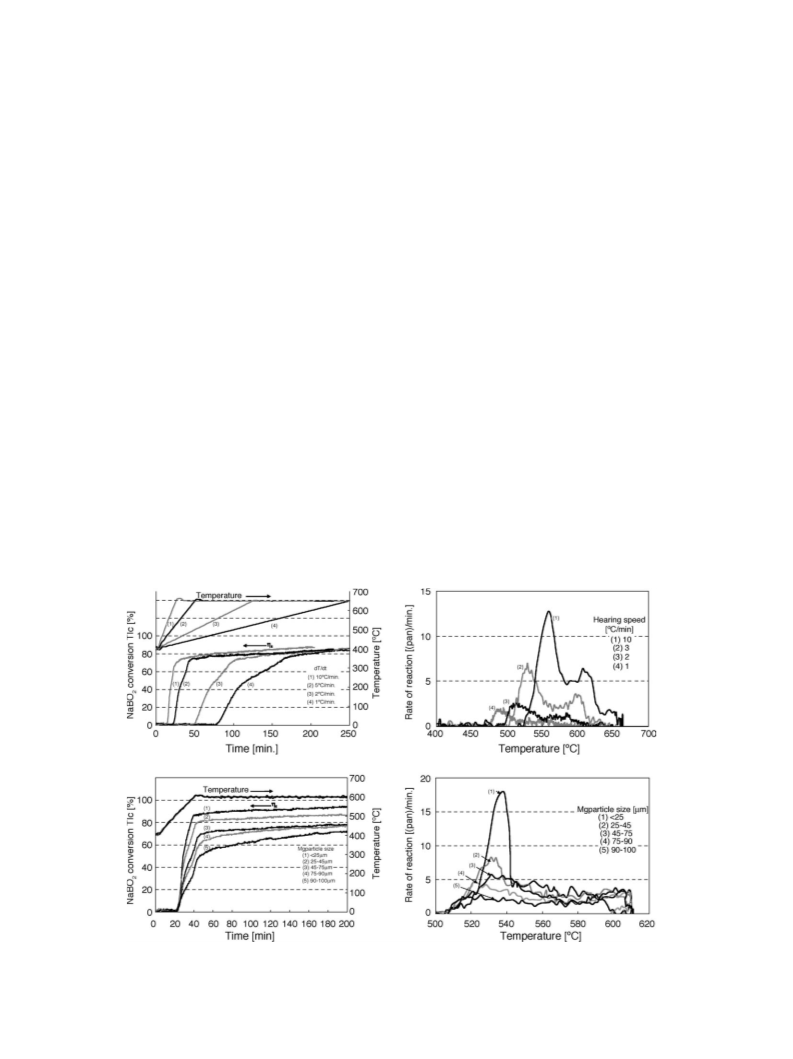
Fig. 4. Schematic illustration of the transitional states of SBH formation.
6. Remarks
A dynamic hydriding and dehydriding process for the pro-
duction of sodium borohydride as the hydrogen storage ma-
terial was developed, which is based on the transitional state
of hydrogen between the gaseous H2 and protide.
The process uses Borax as the starting material and sodium
metaborate as the spent fuel to synthesize the anhydrous
sodium borohydride. The production cost is estimated to be
1/20 times cheaper than the conventional processes available
today.
[14] B.H. Liu, Z.P. Li, S. Suda, J. Electrochem. Soc. 150 (3) (2003)
A398.
[15] B.H. Liu, Z.P. Li, S. Suda, Electrochem. Acta 49 (2004) 3097.
[16] Z.-P. Li, B.-H. Liu, K. Arai, K. Asaba, S. Suda, J. Power Sources 126
(2004) 28–33.
Hydrogen storage materials are the key issues for bring-
ing PEMFC more practical. However, we must recognize that
there has not been developed any hydrogen storage materials
practically available today. Conventional metal hydrides in
general will not be qualified for automobile applications be-
cause of their limited H-capacity and thermal requirements,
and some of the hydrogen-metal complex compounds such
as NaAlH4 will not be employed as “On-board” or “On-site”
materials because of its handling difficulties and safety is-
sues.
The authors convince that NaBH4 as the hydrogen storage
material both for the large-scale storage material and the pro-
tide carrier in a wide variety of fuel cell applications with the
estimated fuel cost of less than US$ 50/kW within a couple
of years.
(b) Hydrogen generation from borohydride
[17] R.L. Pecsok, J. Am. Chem. Soc. 76 (1953) 2862.
[18] S. Suda, Y.-M. Sun, B.-H. Liu, Y. Zhou, S. Morimitsu, K. Arai, N.
Tsukamoto, M. Uchida, Y. Candra, Z.-P. Li, J. Appl. Phys. A72 (2001)
209–212.
[19] S. Suda, Y.-M. Sun, M. Uchida, B.-H. Liu, S. Morimitsu, K. Arai,
Y. Zhou, N. Tsukamoto, Y. Candra, Z.-P. Li, Metals Mater. Int. 7 (1)
(2001) 73–75.
[20] S. Suda, Hydrogen–Metal Systems: Technological and Engineering
Aspects in Encyclopedia of Materials-Science and Technology, Else-
vier Science Ltd., 2002, pp. 3970–3976.
[21] S. Suda, US Patent 6,358,488 (2002).
[22] S. Suda, Handbook of Fuel Cells—Fundamentals, Technology and Ap-
plications, vol. 3, No. 2, John Wiley & Sons, Ltd., 2003, pp. 115–120.
(c) Production of sodium borohydride
Acknowledgement
[23] W.S. Fedor, M. Douglas, D.O. Ingalls, IEC 49 (10) (1957) 1664–
1672.
[24] F. Schubert, K. Lang, W. Shabacher, A. Burger, US Patent, 3,077,356
(1963).
[25] Z.-P. Li, B.-H. Liu, N. Morigasaki, S. Suda, J. Alloys Compd. 349 (1)
(2003) 232–236.
[26] Z.-P. Li, N. Morigasaki, B.-H. Liu, S. Suda, J. Alloys Compd. 354 (1/2)
(2003) 243–247.
[27] Z.-P. Li, B.-H. Liu, K. Arai, N. Morigasaki, S. Suda, J. Alloys Compd.
356–357 (2003) 469–474.
The authors wish to express their thanks for the support
and funding from the following organization; The New En-
ergy and Industrial Technology Development Organization
(NEDO) and the Ministry of Education, Culture, Sports, Sci-
ence and Technology (MEXI).
[28] S. Suda, US Patent Appl. No. 10/721479 (11-25-03) (2003).
[29] Y. Kojima, T. Haga, Int. J. Hydrogen Energy 28 (2003) 989–993.
[30] J.V. Ortega, Y. Wu, S.C. Amendola, M.T. Kelly, US Patent 6,586,563
B1 (2003).
References
(a) Direct borohydride fuel cells (DBFC)
[31] S. Suda, Y. Iwase, N. Morigasaki, Z.-P. Li, in: D. Chandra, R.G.
Bautista, L. Schlapbach (Eds.), Advanced Materials for Energy Storage
II, TMS, 2004, pp. 123–133.
[1] W.H. Stockmayer, D.W. Rice, C.C. Stephenson, J. Am. Chem. Soc. 77
(1955) 1980.

 Suda
Suda