Paper
RSC Advances
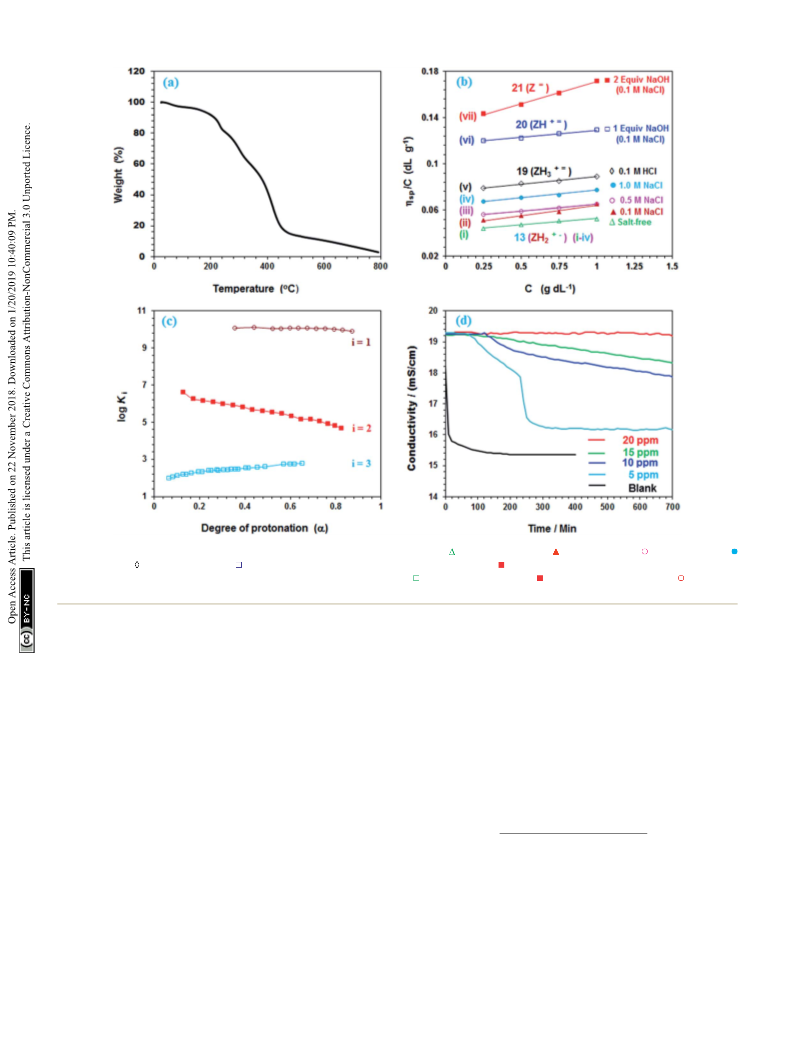
Table 4 Percent scale inhibition in the presence of PA 13 in 3 CBa
has been determined to be 2.62, 5.59, and 10.1, respectively. PA
13 was evaluated as an antiscalant for potential application in
reverse osmosis (RO) plants. At concentrations of 5 and 20 ppm,
it demonstrated remarkable efficiency of z100% for CaSO4
scale inhibition from its supersaturated solution for 50 and
500 min, respectively. Since an antiscalant should be effective
for the duration of brine's residence time (z30 min) in the
osmosis chamber, the synthesis of PA 13 in excellent yields from
cheap starting materials and its very impressive performance
may accord it a prestigious place among many an environment-
friendly phosphate-free antiscalant. Note that polyphosphate
additives used for controlling scale formation, when discharged
in the sea have deleterious inuence over the marine biota
picture.51
supersaturated CaSO4 solution at 40 ꢁ
C
Percent inhibition at times (min)
Entry Sample (ppm) 50 100 200 300 400 500 700
1
2
3
4
5
100
100 100
100 99
92
71
88
96
24
81
91
22
76
88
17 17
71 63
83 75
10
15
20
100 100 100 100 100 100 98
a
2ꢀ
Three times the concentration of Ca2+ and SO4
found in the
concentrated brine of an RO plant.
2ꢀ
concentration of Ca2+ (2600 ppm) and SO4 (6300 ppm) by
conductivity measurements. A sudden drop in the conductivity
indicates the onset of CaSO4 scaling (Fig. 3d).
Conflicts of interest
It is indeed satisfying that in the presence of 5 and 20 ppm
13, a 100% scale inhibition was registered for about 50 and
500 min, respectively (Table 4). Since the reject brine usually has
a residence time of z30 min in the osmosis chamber, the
current antiscalant may thus be very effective in inhibiting
CaSO4 scaling. As shown in Fig. 3d, the onset of precipitation
occurs aer an induction period; an accelerated growth of
CaSO4 crystals is indicated by a sudden drop in conductivity.
For a duration of 700 min, 20 ppm PA 13 did not show any
induction time. The crystal growth starts aer nucleation
process, which is interfered with the complexation of the metal
ions by the chelating ligands of the antiscalant.48,49 The gypsum
scale, i.e., CaSO4 in mineral form, occurs during several
processes involving production of water.50 PA 13 is found to be
remarkably efficient in preventing scale formation, and as such
it has the ability to mitigate the membrane fouling in RO plants.
There are no conicts to declare.
Acknowledgements
The facilities provided by KFUPM are gratefully acknowledged.
References
1 G. B. Butler, Cyclopolymerization and Cyclocopolymerization,
Marcel Dekker, New York, 1992.
2 S. Kudaibergenov, W. Jaeger and A. Laschewsky, Adv. Polym.
Sci., 2006, 201, 157–224.
3 A. Laschewsky, Polymers, 2014, 6, 1544–1601.
4 P. K. Singh, V. K. Singh and M. Singh, e-Polym., 2007, 30, 1–
34.
5 G. B. Butler, J. Polym. Sci., Part A: Polym. Chem., 2000, 38,
3451–3461.
6 F. C. McGrew, J. Chem. Educ., 1958, 35, 178–186.
7 N. Y. Abu-Thabit, I. W. Kazi, H. A. Al-Muallem and S. A. Ali,
Eur. Polym. J., 2011, 47, 1113–1123.
8 S. A. Ali, H. A. Al-Muallem and M. A. J. Mazumdar, Polymer,
2003, 44, 1671–1679.
9 S. A. Ali, I. B. Rachman and T. A. Saleh, Chem. Eng. J., 2017,
330, 663–674.
4. Conclusions
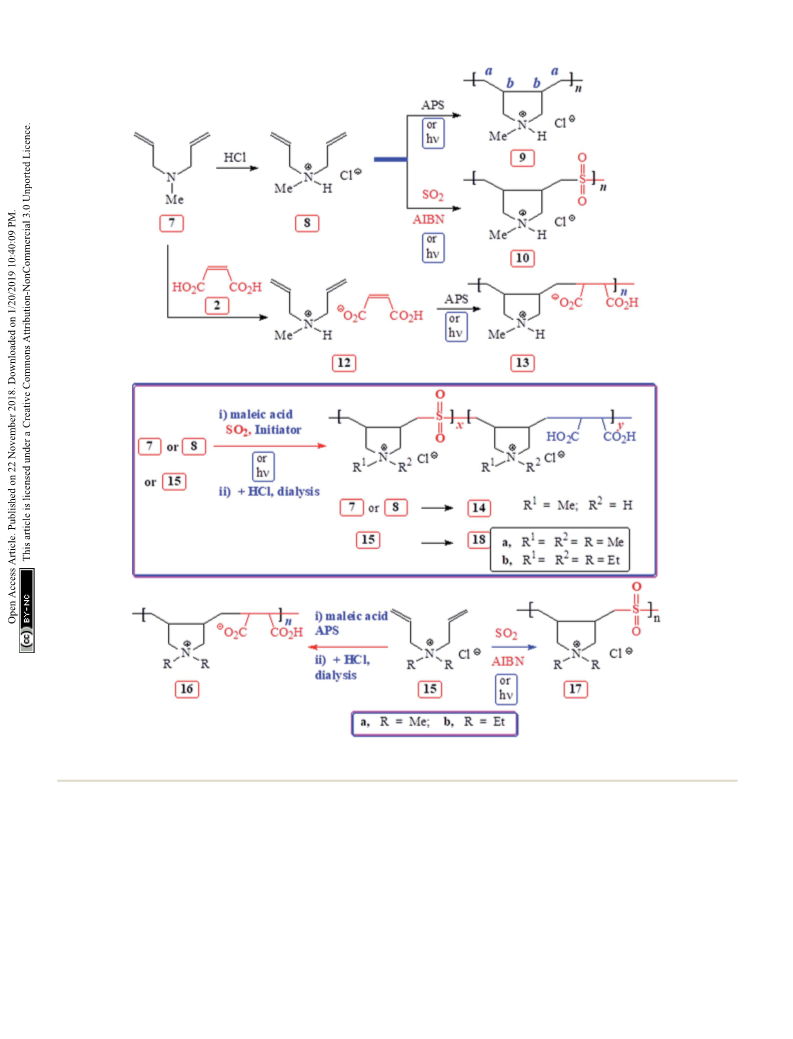
Several diallylamine derivatives 1a, b, 5 and 7 as well as
quaternary diallyldialkylammonium chlorides 15a, b has been
terpolymerized with MA and SO2 using APS initiator or UV light
at a l of 365 nm in an attempt to obtain amine (salt)–MA–SO2
terpolymer. In contrast to reported literature, only 1–2 mol% of
MA was incorporated into the polymer chain mainly consisting
of amine (salt)–SO2 copolymers. The non-incorporation of MA is 10 F. Rullens, M. Devillers and A. Laschewsky, Macromol. Chem.
attributed to the far greater rate of propagation of amine (salt)– Phys., 2004, 205, 1155–1166.
SO2 than either amine (salt)–MA or MA–SO2 under the poly- 11 I. Y. Yaagoob, H. A. Al-Muallem and S. A. Ali, RSC Adv., 2017,
merization conditions. The reactivity ratios of both monomers
7, 31641–31653.
in the amine (salt)–MA and MA–SO2 pairs are z0; however, in 12 E. Kogure, N. Morii, Y. Makino, T. Hawakawa and
a three-monomer system: amine (salt)–MA–SO2, the very slow K. Tsukuda, JP Pat., 2007106920 A 20070426, 2007.
reactivity of MA does not allow its incorporation into terpolymer 13 Y. Yomogida and H. Torigoe, JP Pat., 2012214539 A
chain to any meaningful extent. 20121108, 2012.
The 1c–MA copolymer PA 13 has been synthesized in excel- 14 N. Suzuki, H. Togashi, S. Ito and Y. Yamazaki, JP Pat.,
lent yield with an anticipation that it could be a potential 2007238921 A 20070920, 2007.
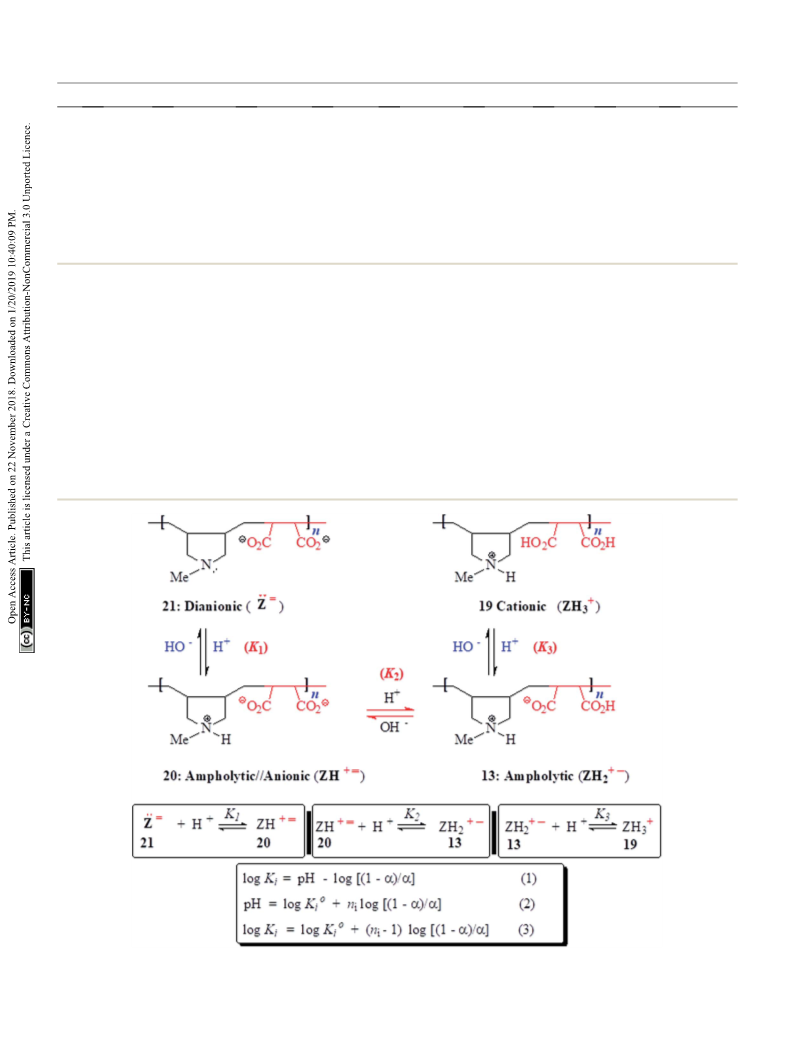
antiscalant. Under pH-induced changes, stimuli-responsive 15 S. A. Ali, N. Y. Abu-Thabit and H. A. Al-Muallem, J. Polym.
polyampholyte 13 was transformed to cationic 19,
Sci., Part A: Polym. Chem., 2010, 48, 5693–5703.
polyampholyte-anionic 20, and dianionic polyelectrolyte 21 to 16 O. C. S. Al-Hamouz and S. A. Ali, J. Polym. Sci., Part A: Polym.
examine their viscosity. The viscosity values of 13 in the pres- Chem., 2012, 50, 3580–3591.
ence of salt NaCl conrmed its antipolyelectrolyte behaviour. 17 S. A. Ali, I. W. Kazi and N. Ullah, Ind. Eng. Chem. Res., 2015,
The log K (i.e. pKa) of two carboxylic acid groups and NH+ in 13
54, 9689–9698.
This journal is © The Royal Society of Chemistry 2018
RSC Adv., 2018, 8, 38891–38902 | 38901

 Yaagoob, Ibrahim Y.