
Journal of Physical Chemistry p. 3354 - 3358 (1980)
Update date:2022-08-11
Topics:
 Brodzinsky, R.
Chang, S. G.
Markowitz, S. S.
Novakov, T.
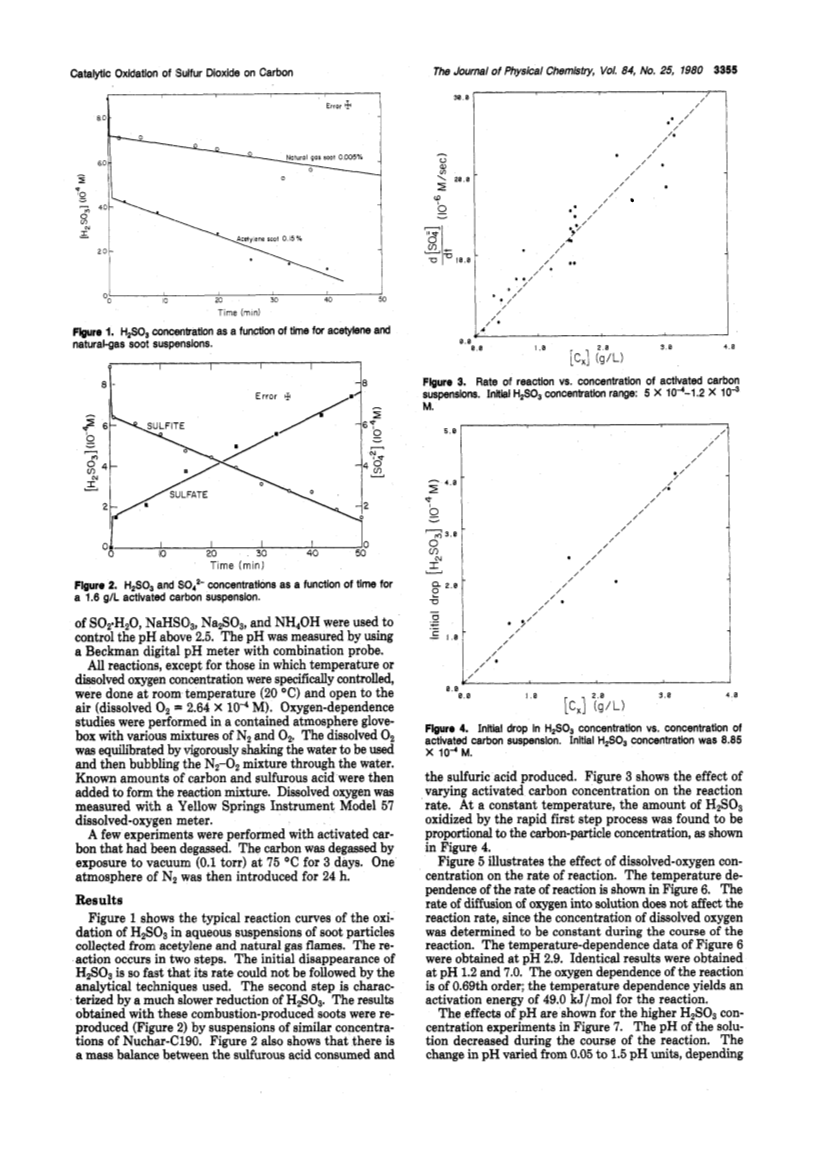
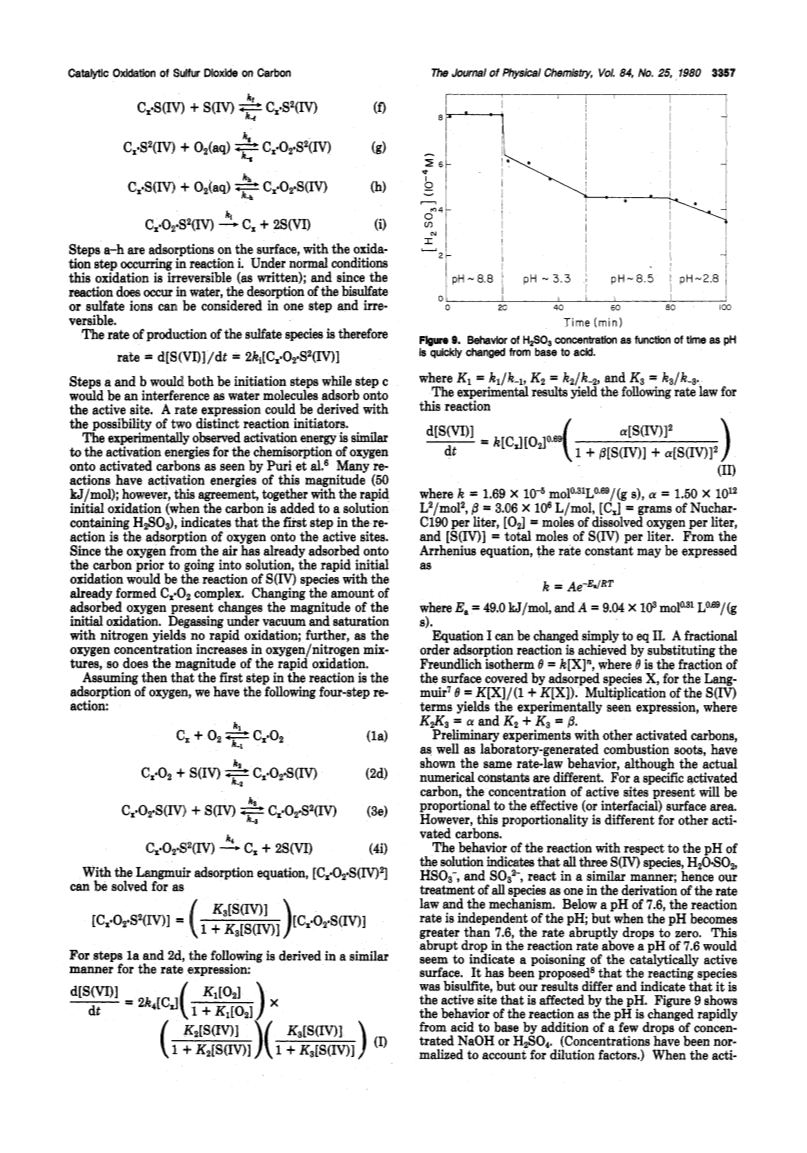
Combustion-produced soot (carbonaceous) particles have been found to be efficient catalysts for SO2 oxidation, especially in the presence of liquid water.A kinetic study of the catalytic oxidation of SO2 on carbon particles suspended in solution has been carried out.The reaction was found to be first order with respect to the concentration of carbon particles, 0.69th order with respect to dissolved oxygen, between zero and second order with respect to S(IV) concentrations, and independent of the pH.Temperature studies were carried out, and an activation energy for this reaction was determined.A four-step mechanism is proposed for this carbon-catalyzed oxidation reaction.


Doi:10.1002/ejic.201402288
(2014)Doi:10.1021/ja971070h
(1997)Doi:10.1039/d0dt03019h
(2020)Doi:10.1021/jp406791a
(2013)Doi:10.1021/acs.joc.6b02074
(2016)Doi:10.1016/j.ejmech.2021.113288
(2021)
