
Journal of Physical Chemistry p. 300 - 305 (1981)
Update date:2022-08-11
Topics:
 Bhattacharyya, S. N.
Saha, N. C.
Neta, P.
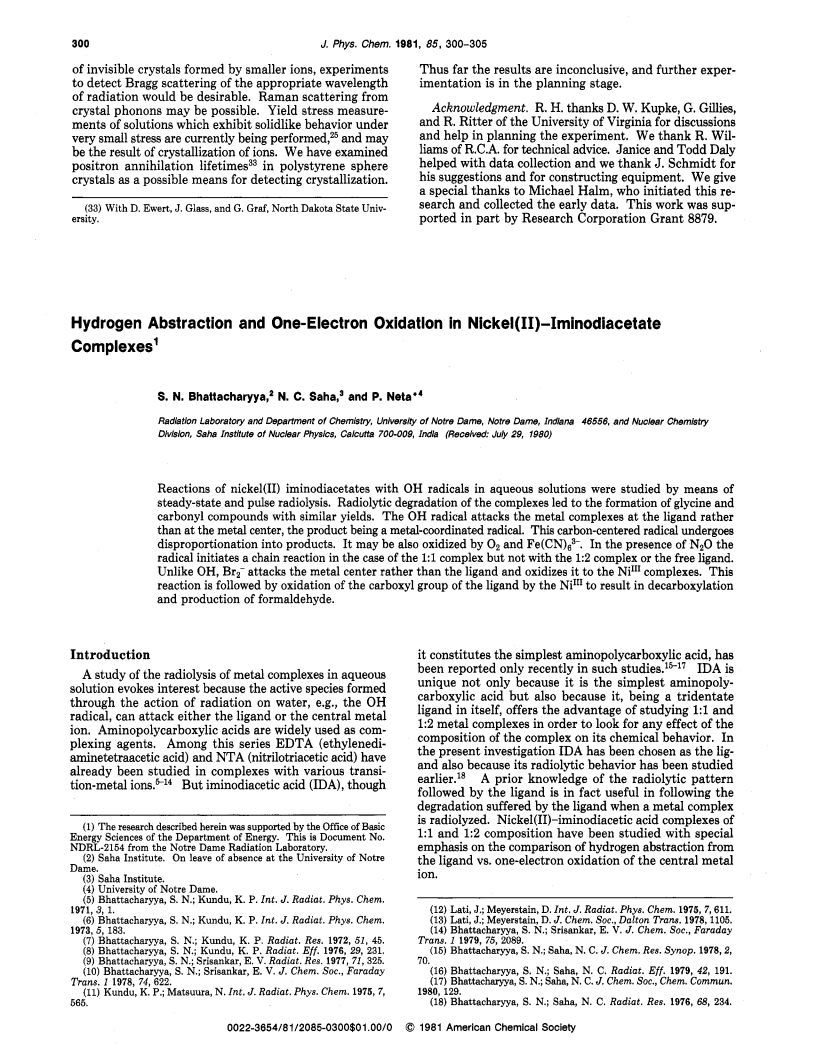
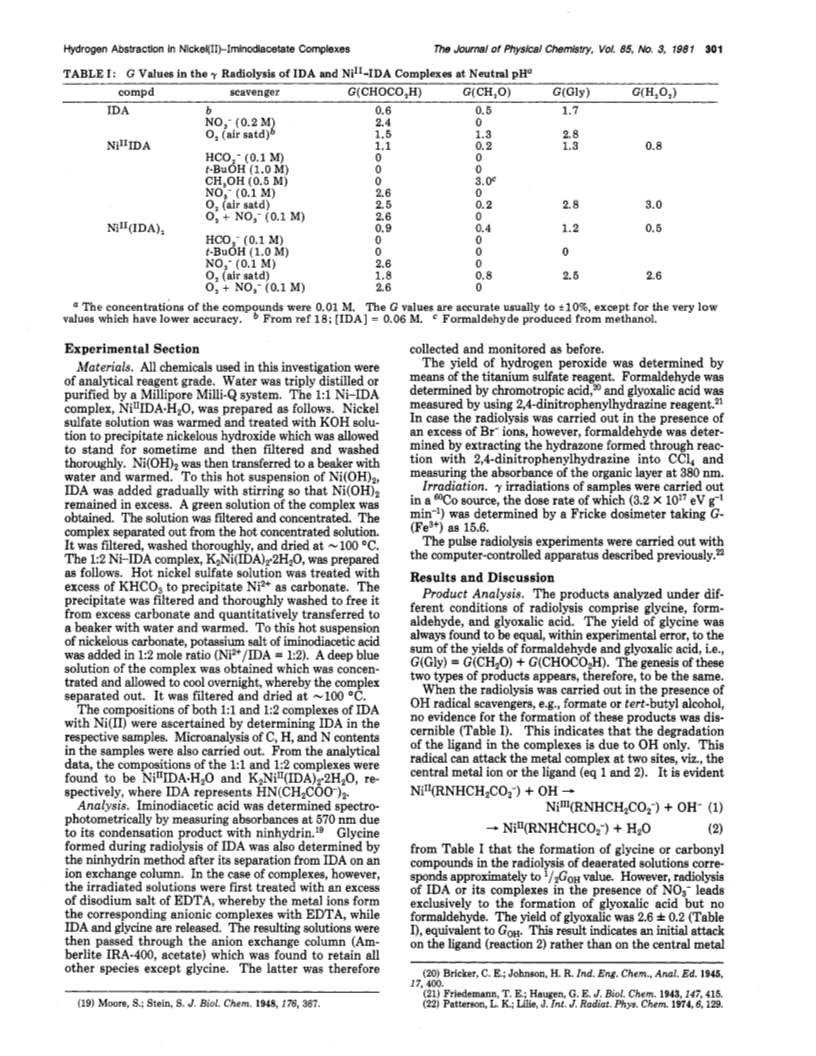
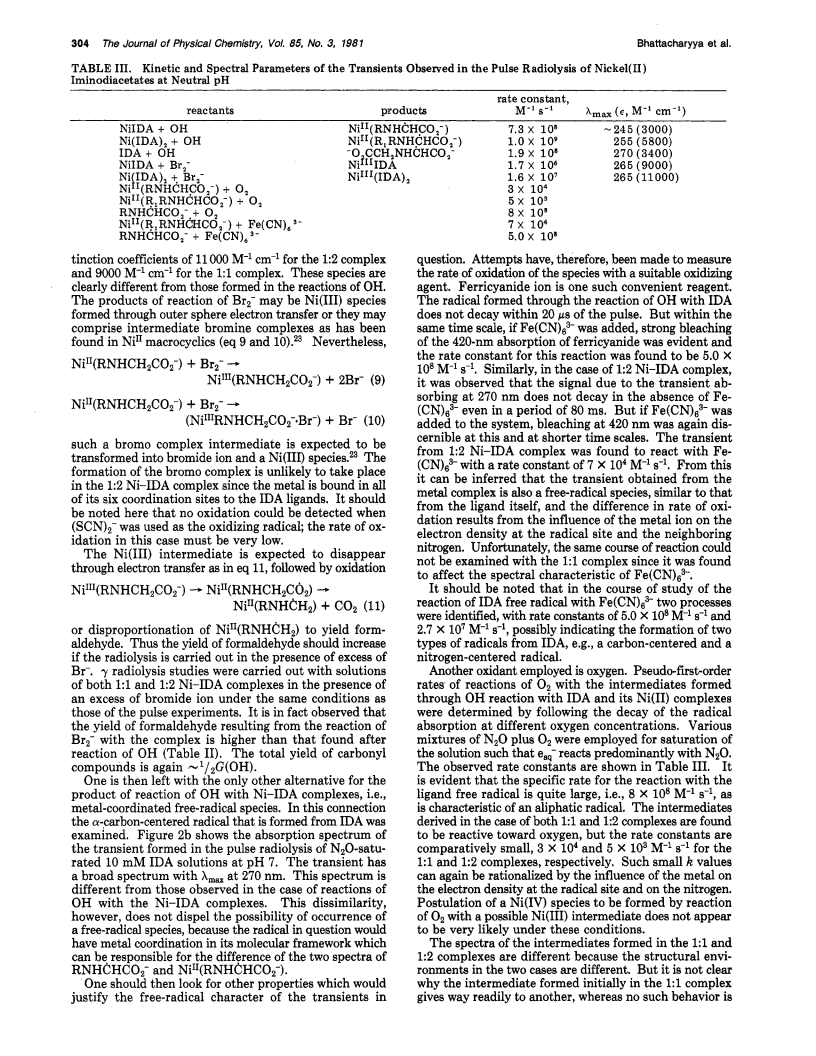
Reactions of nickel(II) iminodiacetates with OH radicals in aqueous solutions were studied by means of steady-state and pulse radiolysis.Radiolytic degradation of the complexes led to the formation of glycine and carbonyl compounds with similar yields.The OH radical attacks the metal complexes at the ligand rather than at the metal center, the product being a metal-coordinated radical.This carbon-centered radical undergoes disproponation into products.It may be also oxidized by O2 and Fe(CN)63-.In the presence of N2O the radical initiates a chain reaction in the case of the 1:1 complex but not with the 1:2 complex or the free ligand.Unlike OH, Br2- attacks the metal center rather than the ligand and oxidizes it to the NiIII complexes.This reaction is followed by oxidation of the carboxyl group of the ligby the NiIII to result in decarboxylation and production of formaldehyde.



Doi:10.1039/c5ra16201g
(2015)Doi:10.1055/s-0037-1610219
(2018)Doi:10.1016/S0040-4020(01)86868-X
(1987)Doi:10.1021/jm501189p
(2014)Doi:10.1039/c4ra10577j
(2014)Doi:10.1055/s-2002-32523
(2002)
