10.1021/acs.orglett.5b01547
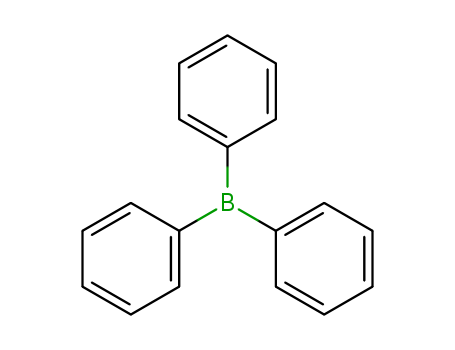
The research focuses on the synthesis, absorption, and electrochemical properties of novel quinoid-type bisboron complexes with highly symmetrical structures. The study involves the synthesis of bisboron complexes using 1,4-benzoquinone and pyrrole derivatives through a two-step reaction process. The synthesized complexes were analyzed for their absorption properties using UV-vis spectroscopy, showing maxima at approximately 620 and 800 nm, attributed to allowed S0 → S2 and forbidden S0 → S1 transitions, respectively. The complexes did not exhibit fluorescence, likely due to their symmetrical structure. Electrochemical analyses, including cyclic voltammetry, revealed a two-electron reduction process leading to the formation of aromatic dianions. Density functional theory (DFT) calculations were also employed to understand the molecular orbitals and transitions responsible for the observed absorption properties. The experiments utilized reactants such as bis(pyrrol-2-yl)-1,4-benzoquinone and triphenylborane, and analyses included single-crystal X-ray analyses to confirm the crystal structures of the complexes.
10.1021/ma100814v
This research focused on the synthesis and characterization of π-conjugated polymers containing organoboron benzo[h]quinolate in the main chain, with the aim of leveraging their promising optical properties for applications such as chemical probes, photosensitizers, and optical sensing. The study demonstrated that the introduction of organoboron benzo[h]quinolate into the polymer backbone enhances the fluorescence quantum yield and leads to a bathochromic shift in the absorption peaks due to the extended π-conjugation. The researchers successfully prepared low-molecular-mass organoboron benzo[h]quinolate complexes and main-chain-type organoboron benzo[h]quinolate polymers using Sonogashira-Hagihara coupling in moderate yields. Key chemicals used in the process included 10-hydroxybenzo[h]quinoline, triphenylborane, 1,4-diethynyl-2,5-dihexadecyloxybenzene, and 1,4-diethynyl-2-perfluorooctyl-5-trifluoromethylbenzene, among others. The conclusions highlighted the efficient energy transfer from the π-conjugated main chain to the benzo[h]quinolate ligand, resulting in higher quantum yields for the polymers compared to the low-molecular-mass model compound.


 Xn,
Xn, F
F


