Welcome to LookChem.com Sign In|Join Free
  • or

Encyclopedia

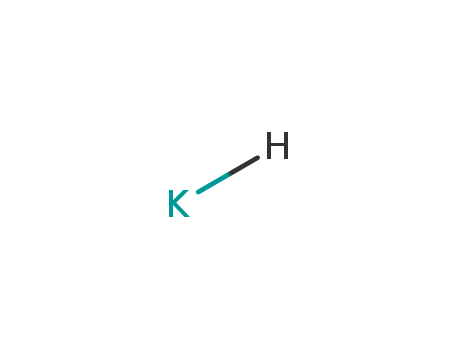
Potassium hydride

Base Information
  • Chemical Name:Potassium hydride
  • CAS No.:7693-26-7
  • Molecular Formula:HK
  • Molecular Weight:40.1062
  • Hs Code.:28500090
  • Mol file:7693-26-7.mol
Potassium hydride

Synonyms:Potassiumhydride (8CI); Potassium monohydride

Suppliers and Price of Potassium hydride
Supply Marketing:
Business phase:
The product has achieved commercial mass production*data from LookChem market partment
Manufacturers and distributors:
  • Manufacture/Brand
  • Chemicals and raw materials
  • Packaging
  • price
  • Strem Chemicals
  • Potassium hydride, 30-35% in oil
  • 300g
  • $ 948.00
  • Sigma-Aldrich
  • Potassium hydride 30 wt % dispersion in mineral oil
  • 300g
  • $ 684.00
  • Sigma-Aldrich
  • Potassium hydride in paraffin
  • 5g
  • $ 81.70
  • Sigma-Aldrich
  • Potassium hydride in paraffin
  • 25g
  • $ 207.00
  • Sigma-Aldrich
  • Potassium hydride 30 wt % dispersion in mineral oil
  • 75g
  • $ 180.00
  • Oakwood
  • Potassium hydride 30% dispersion in mineral oil
  • 25g
  • $ 148.00
  • Oakwood
  • Potassium hydride 30% dispersion in mineral oil
  • 1g
  • $ 30.00
  • Oakwood
  • Potassium hydride 30% dispersion in mineral oil
  • 100g
  • $ 250.00
  • American Custom Chemicals Corporation
  • POTASSIUM HYDRIDE 95.00%
  • 25G
  • $ 1232.76
  • American Custom Chemicals Corporation
  • POTASSIUM HYDRIDE 95.00%
  • 5G
  • $ 839.10
Total 8 raw suppliers
Chemical Property of Potassium hydride
Chemical Property:
  • Melting Point:decomposes [CRC10] 
  • Boiling Point:316oC 
  • Flash Point:113oC 
  • PSA:0.00000 
  • Density:1.45 
  • LogP:0.00000 
  • Storage Temp.:Flammables + water-Freezer (-20°C)e area 
  • Sensitive.:Moisture Sensitive 
  • Solubility.:Insoluble in benzene, diethyl ether and carbon disulfide. 
  • Water Solubility.:decomposed by H2O [CRC10] 
Purity/Quality:

98%min *data from raw suppliers

Potassium hydride, 30-35% in oil *data from reagent suppliers

Safty Information:
  • Pictogram(s): F
  • Hazard Codes:F,C 
  • Statements: 11-14/15-34 
  • Safety Statements: 16-26-27-36/37/39-45-43 
MSDS Files:

SDS file from LookChem

Total 1 MSDS from other Authors

Useful:
  • General Description Potassium hydride (KH), also known as Potassiumhydride (8CI) or Potassium monohydride, is a reactive inorganic compound used as a strong base in organic synthesis. In the context of methylation analysis of oligosaccharides and polysaccharides, it serves as a precursor to generate potassium methylsulphinyl carbanion, which is essential for forming polyalkoxide ions required for methylation reactions. Its strong basicity facilitates the deprotonation of hydroxyl groups in carbohydrates, enabling efficient methylation with methyl iodide. This application highlights its utility in structural analysis of complex carbohydrates, contributing to rapid and high-yield derivatization processes.
Technology Process of Potassium hydride

There total 1 articles about Potassium hydride which guide to synthetic route it. The literature collected by LookChem mainly comes from the sharing of users and the free literature resources found by Internet computing technology. We keep the original model of the professional version of literature to make it easier and faster for users to retrieve and use. At the same time, we analyze and calculate the most feasible synthesis route with the highest yield for your reference as below:

synthetic route:
Guidance literature:
In neat (no solvent); byproducts: H; Irradiation (UV/VIS); mixt. irradiation by frequency doubled and tripled Nd:YAG laser (404.4nm, 30 Hz, 300 μJ/pulse, oven temp. 500 K), according to P. D. Kleib er et al., J. Chem. Phys. 85 (1986) 5493; detection by LIF technique;
DOI:10.1063/1.478579
upstream raw materials:

hydrogen

potassium

Refernces

Stereoselective Glucal Epoxide Formation

10.1021/jo00066a032

The research focuses on the stereoselective formation of glucal epoxides, which are crucial intermediates in the synthesis of oligosaccharides and other carbohydrate derivatives. The study aimed to find an alternative approach to the existing method of dimethyldioxirane (DMD) oxidation, which has limitations such as the need for rigorous drying and difficulty in scaling up. The researchers explored the cyclization of bromohydrins as a route to glucal epoxide formation, using chemicals such as N-bromoacetamide (NBA), sodium hydride (NaH), potassium hydride (KH), 18-crown-6, sodium phenylthiolate, sodium azide, methoxide, and benzyloxide. They observed that the reaction conditions significantly affected the diastereoselectivity of the epoxide formation, leading to different ratios of a-manno and β-gluco products. The study concluded that the formation and cyclization of bromohydrins offer an alternative route for glucal epoxide synthesis, with potential applications to other carbohydrate substrates, and highlighted the importance of metal ions and solvents in modifying the relative reactivities of the anomeric alkoxides, which influence the stereoselectivity of the cyclization process.

Palladium-catalyzed intermolecular α-arylation of zinc amide enolates under mild conditions

10.1021/ja056076i

The study presents a novel method for the intermolecular R-arylation and vinylation of amides through palladium-catalyzed coupling of aryl and vinyl bromides with zinc enolates of amides. The researchers developed reactions using three different types of zinc enolates, achieving high yields with a variety of bromoarenes, including those with functional groups such as cyano, nitro, ester, keto, fluoro, hydroxyl, or amino. The use of zinc enolates, as opposed to alkali metal enolates, significantly expands the scope of amide arylation by allowing reactions at room temperature or 70 °C and by tolerating a broader range of functional groups. The study also introduces the use of morpholine amides, which are precursors to ketones and aldehydes, in the arylation process. The reactions were facilitated by catalysts bearing hindered pentaphenylferrocenyl di-tert-butylphosphine (Q-phos) or the highly reactive, dimeric Pd(I) complex {[P(t-Bu)3]PdBr}2, offering a mild and efficient approach to synthesize R-aryl carbonyl compounds, which are prevalent in pharmaceuticals and biologically active compounds.

An improved procedure for the methylation analysis of oligosaccharides and polysaccharides.

10.1016/0008-6215(84)85106-X

The study presents an optimized method for methylation analysis of oligo- and polysaccharides. The authors examined and refined each step of the procedure to enhance quantitative recovery and speed. Key chemicals involved include potassium methylsulphinyl carbanion, generated from potassium hydride, which is used to form polyalkoxide ions necessary for methylation. Methyl iodide is employed for the methylation of these ions. Other reagents such as trifluoroacetic acid for hydrolysis, sodium borohydride for reduction, and acetic anhydride for acetylation are used in subsequent steps to convert the methylated carbohydrates into analyzable derivatives. The study also utilizes 2,2-dimethoxypropane to remove residual water after washing steps, ensuring efficient evaporation and isolation of the methylated products. The improved procedure allows for complete methylation, high recoveries of acetylated alditols of methylated sugars, and the analysis to be completed within a working day, making it a convenient and efficient method for determining glycosyl linkages in a wide range of oligo- and polysaccharides.


Post a RFQ

Enter 15 to 2000 letters.Word count: 0 letters

Attach files(File Format: Jpeg, Jpg, Gif, Png, PDF, PPT, Zip, Rar,Word or Excel Maximum File Size: 3MB)

1 Customer Service

What can I do for you?
Get Best Price

Get Best Price for 7693-26-7