10.1016/j.bmc.2020.115565
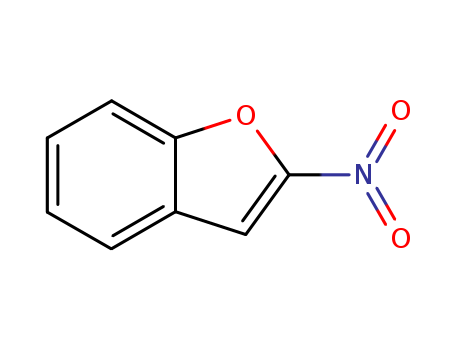
The research focuses on the development of potent trypanocidal drugs to combat Chagas disease, caused by the parasite Trypanosoma cruzi. The study employs Rhodium-catalyzed [2+2+2] cycloadditions, sulfonyl phthalide annulation, and nitroalkene reactions for the synthesis of 56 quinone-based compounds. These compounds were evaluated for their activity against T. cruzi, with the aim of identifying new lead compounds with potent trypanocidal activity. The experiments involved the use of various reactants, including 1,6-diynes, benzoquinones, sulfonyl phthalide, 2-nitrobenzofurans, and α-bromonitroalkenes, among others. The synthesized compounds were analyzed using techniques such as NMR, IR, HRMS, and X-ray crystallography to confirm their structures, and their trypanocidal activity was assessed through incubation with T. cruzi parasites under specific conditions, with the IC50 values determining the concentration required for 50% parasite lysis. Additionally, cytotoxicity assays on mammalian cells were conducted to evaluate the selectivity index of the compounds.