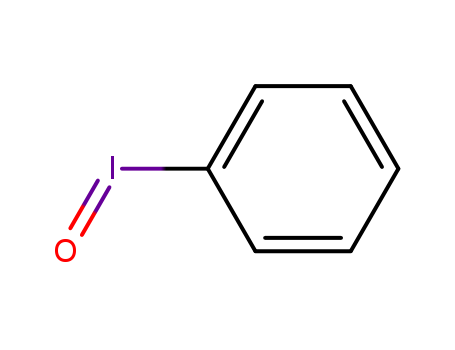
Refernces
10.1021/jo034442f
The research focuses on the α-fragmentation of primary alkoxyl radicals, a synthetic methodology used in the synthesis of a wide range of compounds, including medium and large-sized rings, heterocycles, and halogenated compounds. The study aims to demonstrate that this process, often considered low-yielding and prone to side reactions, can proceed with satisfactory yields using carbohydrate substrates. The research explores how the ratio of α-fragmentation to hydrogen abstraction can be varied based on reaction conditions, the stereochemistry of substituents, and the choice of protecting groups. The study concludes that α-scission provides an efficient route to shorter and less common sugar series as well as to α,ω-differentially substituted cyclic ethers, which are valuable building blocks present in many naturally occurring products with biological activity. Key chemicals used in the process include diacetoxyiodobenzene (DIB), iodine, iodosylbenzene (PhIO), and various carbohydrate substrates, which are prepared under mild conditions compatible with most functional groups.
10.1039/c5nj02378e
The study presents a novel one-pot method for the catalytic cyclopropanation of various alkenes with unsubstituted hydrazones. The process utilizes iodosobenzene as an oxidant to convert hydrazones into diazo compounds, which are then cyclopropanated in the presence of a nickel(II) catalyst, Ni(OH)2. This method allows for the efficient generation of cyclopropane products under mild conditions (80°C) within a short time frame (5 minutes to 4 hours) and with moderate to good yields (42–91%). The protocol is applicable to a wide range of substrates, including aryl alkenes with different electronic effects, aliphatic alkenes with halogen functional groups, and alkyl acrylates. The study also explores the reaction mechanism and provides a promising approach to synthesizing cyclopropane compounds, which are prevalent in natural products and have significant value in pharmaceutical chemistry.
10.1002/rcm.8757
The study focused on the bioinspired oxidation of the flavonoids orientin and isoorientin, which are C-glycosidic flavonoids found in certain plant species, including Passiflora edulis var. flavicarpa. The aim was to evaluate and characterize the in vitro metabolism of these flavonoids by simulating phase I biotransformation reactions using Salen complexes as catalysts. The chemicals used in the study included m-chloroperbenzoic acid (m-CPBA) and iodozylbenzene (PhIO) as oxidants, and the Jacobsen catalyst or [Mn(3-MeOSalen)Cl] as catalysts. The [Mn(3-MeOSalen)Cl] catalyst was synthesized and characterized by spectrometric techniques. The study utilized UPLC-DAD and HPLC/MS/MS to monitor and analyze the oxidation reactions and products, which are crucial for understanding the potential pharmacological and toxicological properties of these compounds, thus aiding in the safe use of plant products containing orientin as a chemical marker.
10.1039/b718642h
The research focuses on the development of a novel purification strategy for iodine(III)-promoted glycosidations of 2-deoxy diethyldithiophosphate glycosides using a tagged iodine(III)-promoter. The purpose of this study was to address the challenges associated with the removal of by-products, such as iodobenzene, which are common in hypervalent iodine chemistry and can be cumbersome to remove chromatographically. The researchers introduced a concept based on a sulfonate ester tag that acts as a dormant ion exchange group, allowing for the liberation and removal of the sulfonate anion via an SN2-step and subsequent anion exchange resin capture. The tagged iodine(III) reagents were prepared from commercially available p-iodo-benzenesulfonyl chloride (pipsyl chloride) and were used to activate glycosyl donors in the presence of various glycosyl acceptors. The study concluded that this method, combined with a scavenging protocol, is a powerful glycosidation approach for diethyldithiophosphates and has general applicability for purification protocols of reagents and catalysts. Key chemicals used in the process include p-iodo-benzenesulfonyl chloride, i-butyl sulfonate, bis(acetoxy)iodoarene, iodosylbenzene, and the Zefirov reagent, as well as various glycosyl donors and acceptors such as diethyldithiophosphates and decarestrictines.
10.1246/cl.1985.665
The research focused on the catalytic oxidation of dienones using a TPPMn(III)Cl-PhIO system, which is a metalloporphyrin-monooxygen donor system that mimics monooxygenase reactions such as hydroxylation and epoxidation. The purpose of the study was to explore the oxidation of electron-rich olefins, particularly enones, which are typically inert to oxidation with oxo-metalloporphyrins. The researchers hypothesized that allylic stabilization of radical species formed initially could allow for the oxidation of enones if an additional olefinic part was introduced. The study concluded that several dienones could be efficiently oxidized to corresponding epoxides and pyrones, supporting the hypothesis of allylic stabilization of the radical formed by the addition of the active species to the olefinic part, leading to epoxidation. The chemicals used in the process included tetraphenylporphinato manganese(III) chloride (TPPMn(III)Cl), iodosylbenzene (PhIO), and various dienones such as 2,4-di-t-butylcyclopentadienone. The reaction did not proceed without the catalyst, and changing the central metal of the catalyst from manganese to iron did not result in oxidation, likely due to the fast decomposition of the active species.