Welcome to LookChem.com Sign In|Join Free
  • or

Encyclopedia

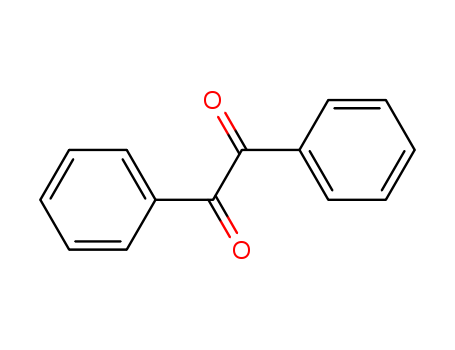
Benzil

Base Information
  • Chemical Name:Benzil
  • CAS No.:134-81-6
  • Deprecated CAS:16510-35-3,1056020-44-0,1056020-46-2,1056020-44-0,1056020-46-2
  • Molecular Formula:C14H10O2
  • Molecular Weight:210.232
  • Hs Code.:2914.30
  • European Community (EC) Number:205-157-0
  • NSC Number:220315,4041
  • UNII:S85X61172J
  • DSSTox Substance ID:DTXSID3044380
  • Nikkaji Number:J5.599I
  • Wikipedia:Benzil
  • Wikidata:Q818497
  • Pharos Ligand ID:PPYXC92HBUHS
  • Metabolomics Workbench ID:57776
  • ChEMBL ID:CHEMBL189886
  • Mol file:134-81-6.mol
Benzil

Synonyms:benzil;diphenyl-alpha-beta-ketone;diphenylethane-1,2-dione;diphenylethanedione

Suppliers and Price of Benzil
Supply Marketing:
Business phase:
The product has achieved commercial mass production*data from LookChem market partment
Manufacturers and distributors:
  • Manufacture/Brand
  • Chemicals and raw materials
  • Packaging
  • price
  • TRC
  • Benzil
  • 50g
  • $ 100.00
  • TRC
  • Benzil
  • 25g
  • $ 75.00
  • TRC
  • Benzil
  • 5g
  • $ 50.00
  • TCI Chemical
  • Benzil >99.0%(GC)
  • 25g
  • $ 20.00
  • TCI Chemical
  • Benzil >99.0%(GC)
  • 500g
  • $ 67.00
  • TCI Chemical
  • Benzil Zone Refined (number of passes:22)
  • 1sample
  • $ 278.00
  • SynQuest Laboratories
  • Benzil
  • 2.5 kg
  • $ 274.00
  • Sigma-Aldrich
  • Benzil for synthesis
  • 250 g
  • $ 51.89
  • Sigma-Aldrich
  • Benzil Benzil for synthesis. CAS No. 134-81-6, EC Number 205-157-0., for synthesis
  • 8016320250
  • $ 54.20
  • Sigma-Aldrich
  • Benzil Benzil for synthesis. CAS No. 134-81-6, EC Number 205-157-0., for synthesis
  • 8016320005
  • $ 27.40
Total 155 raw suppliers
Chemical Property of Benzil
Chemical Property:
  • Appearance/Colour:yellow crystals or powder 
  • Vapor Pressure:1 mm Hg ( 128.4 °C) 
  • Melting Point:94-95 °C(lit.) 
  • Refractive Index:1.594 
  • Boiling Point:347 °C at 760 mmHg 
  • Flash Point:142.559 °C 
  • PSA:34.14000 
  • Density:1.165 g/cm3 
  • LogP:2.75220 
  • Storage Temp.:Store below +30°C. 
  • Solubility.:<0.5g/l 
  • Water Solubility.:0.5 g/L (20 ºC) 
  • XLogP3:3.4
  • Hydrogen Bond Donor Count:0
  • Hydrogen Bond Acceptor Count:2
  • Rotatable Bond Count:3
  • Exact Mass:210.068079557
  • Heavy Atom Count:16
  • Complexity:230
Purity/Quality:

99% *data from raw suppliers

Benzil *data from reagent suppliers

Safty Information:
  • Pictogram(s): IrritantXi 
  • Hazard Codes:Xi 
  • Statements: 36/37/38 
  • Safety Statements: 26-36-37/39 
MSDS Files:

SDS file from LookChem

Total 1 MSDS from other Authors

Useful:
  • Chemical Classes:Other Classes -> Aromatic Ketones
  • Canonical SMILES:C1=CC=C(C=C1)C(=O)C(=O)C2=CC=CC=C2
  • Description Benzil also known as 1,2-diphenylethane-1,2-dione is an organic compound with the molecular formula (C6H5CO)2. The compound belongs to the group of organic compounds known as stilbenes which contains a 1,2-diphenylethylene moiety. Benzyl is yellow in color and is one of the most common diketones.
  • Uses Organic synthesis; insecticide. Benzil is used as a pharmaceutical intermediate and uv curing resin photosensitizer. In polymer chemistry, it is used as a photoinitiator. Further, it serves as a potent inhibitor of human carboxylesterases. It is used in the preparation of diketimines by reacting with amines. It is also involved in the famous benil-benzilic acid rearrangement. In addition this, it reacts with 1,3-diphenylacetone to get tetraphenylcyclopentadienone.
Technology Process of Benzil

There total 1169 articles about Benzil which guide to synthetic route it. The literature collected by LookChem mainly comes from the sharing of users and the free literature resources found by Internet computing technology. We keep the original model of the professional version of literature to make it easier and faster for users to retrieve and use. At the same time, we analyze and calculate the most feasible synthesis route with the highest yield for your reference as below:

synthetic route:
Guidance literature:
With -Bu4N+ (MoO5PICO); In dichloromethane; at 50 ℃; for 10h;
DOI:10.1021/jo00298a052
Guidance literature:
With [Fe(2,2'-bipyridine)Cl4][2,2'-bipyridine*H] encapsulation on Al-MCM-41; In N,N-dimethyl-formamide; acetonitrile; at 25 ℃; Temperature; Reagent/catalyst;
DOI:10.1039/c5ra04565g
Refernces

Asymmetric synthesis of new chiral 1,2- and 1,3-diols

10.1007/s00706-012-0792-7

The study focuses on the asymmetric synthesis of novel chiral 1,2- and 1,3-diols through the reduction of corresponding 1,2-diketones and 1,3-diketones using an oxazaborolidine–BH3 catalyst. The research successfully synthesized seven chiral 1,2-diols and six chiral 1,3-diols, with five of the starting diketones, four racemic 1,2-diols, five chiral 1,2-diols, and two chiral 1,3-diols being identified as new compounds. The methodology applied, the oxazaborolidine–BH3 reduction, was a first-time application to these types of diketones. The study also involved the synthesis of the corresponding racemic 1,2- and 1,3-diols using NaBH4 for the determination of enantiomeric excess (ee) values through chiral resolution on high-performance liquid chromatography (HPLC) and gas chromatography (GC). The newly synthesized chiral compounds were characterized using various analytical techniques, including infrared (IR), proton and carbon-13 nuclear magnetic resonance (1H and 13C NMR), mass spectrometry (MS), and elemental analysis. The relationship between the structure of the diketone and the yield, diastereoselectivity, and enantiomeric excess was also discussed, providing insights into the stereoselective reduction process.

A greener route for the one-pot synthesis of 1,2,4,5-tetraarylated imidazoles

10.1007/s00706-012-0724-6

The research aims to develop a greener and more efficient method for the one-pot synthesis of 1,2,4,5-tetraarylated imidazoles, which are important compounds found in natural products and pharmacologically active compounds with various therapeutic properties. The study introduces the use of anhydrous FePO4 (iron(III) phosphate) as a catalyst for the four-component condensation of benzil (or benzoin), aldehydes, amines, and ammonium acetate in refluxing ethanol. The purpose of this research is to overcome the disadvantages of previous methods, such as the use of expensive reagents, longer reaction times, and the generation of toxic waste. The conclusions drawn from the study highlight the efficiency of the new method, which not only yields excellent results but also avoids the problems associated with catalyst cost, handling, safety, and pollution. The chemicals used in the process include benzil or benzoin, aromatic aldehydes, aniline, ammonium acetate, and FePO4 as the catalyst. The research demonstrates that FePO4 is an eco-friendly, reusable, recyclable, and commercially available catalyst that simplifies the isolation and purification of the products through simple washing and crystallization of the crude products.

Reactions of a bis-silylene (LSi-SiL, L = PhC(N t Bu)2) and a heteroleptic chloro silylene (LSiCl) with Benzil: Formation of bis(siladioxolene) and monosiladioxolene analogue with five-coordinate silicon atoms in both ring systems

10.1021/om100581u

The research focuses on the reactions of a bis-silylene (LSi-SiL, L = PhC(NtBu)2) and a heteroleptic chloro silylene (LSiCl) with benzil, resulting in the formation of bis(siladioxolene) and monosiladioxolene analogues with five-coordinate silicon atoms in both ring systems. The study aimed to explore the reactivity of disilyne compounds and their potential to form stable siladioxolene derivatives, which are electronically stabilized by σ-donor ligands. The key findings were that the central Si-Si bond in the bis(siladioxolene) derivative was not cleaved during the reaction, and the formal oxidation state of silicon in the products was +3 and +4, respectively. The chemicals used in the process included LSi-SiL (4), LSiCl (6), benzil, toluene, and other reagents for characterization such as NMR spectroscopy, EI-MS spectrometry, and elemental analysis. The research concluded that siladioxolenes can be electronically stabilized by σ-donor ligands, and the reactions proceeded via a [1+4] cycloaddition mechanism, yielding stable compounds with five-coordinate silicon atoms.

Post a RFQ

Enter 15 to 2000 letters.Word count: 0 letters

Attach files(File Format: Jpeg, Jpg, Gif, Png, PDF, PPT, Zip, Rar,Word or Excel Maximum File Size: 3MB)

1 Customer Service

What can I do for you?
Get Best Price

Get Best Price for 134-81-6
