Refernces
10.1016/j.tetlet.2008.05.037
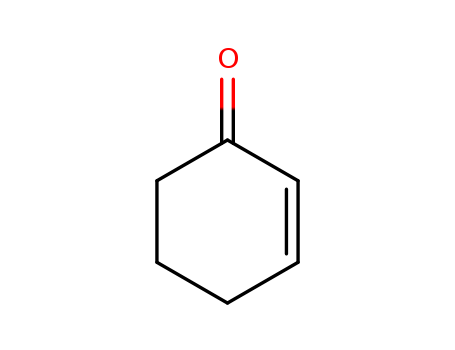
The study presents a rational design of bis(thiourea) cocatalysts to accelerate the Morita–Baylis–Hillman (MBH) reaction, a C–C bond forming reaction known for its sluggishness. By applying electronic structure calculations, the researchers identified key transition states and designed catalysts that could stabilize these states through hydrogen bond recognition of both nucleophile and electrophile. The cocatalysts were synthesized and tested, demonstrating significant acceleration of the MBH reaction between cyclohexenone and 4-fluorobenzaldehyde. The study shows that the designed cocatalysts, particularly one with an o-xylyl bridge, were much more effective than the previously reported bis(thiourea) cocatalyst, nearly tripling the reaction rate. The findings underscore the potential of computational methods in designing organic catalysts that utilize hydrogen bonding for enhanced reactivity.
10.1002/cctc.202000414
The research focuses on a novel strategy for organocatalytic transfer hydrogenations, utilizing an ion-paired catalyst composed of natural L-amino acids as the primary source of chirality and racemic, atropisomeric phosphoric acids as counterions. The study aims to enhance selectivity through synergistic effects and develop a cheaper and more accessible catalytic system compared to existing methods. The experiments involve the asymmetric transfer hydrogenation of α,β-unsaturated cyclohexenones using a Hantzsch ester as the hydrogen source. The catalytic system was optimized by varying the cation source from different amino acid esters and the anion source from various atropisomeric phosphate anions. The reactions were conducted under mild conditions, and the products were analyzed for yield and enantioselectivity using gas chromatography (GC) and chiral GC analysis. Computational chemistry calculations were also performed to determine the isomerization barriers of the atropisomeric phosphoric acids, providing insights into their behavior and contribution to the enantioselectivity of the reaction.
10.1021/jo300973r
The research focuses on the development of novel tandem reactions for the synthesis of highly functionalized cyclohexenones from cyclopropyl substituted propargyl esters, utilizing rhodium-catalyzed 1,3-acyloxy migration followed by a [5 + 1] cycloaddition with carbon monoxide (CO). The study explores the reactivity of various transition metal catalysts, with a particular emphasis on the use of [Rh(CO)2Cl]2, which facilitates both the 1,3-acyloxy migration and the carbonylation reaction. The experiments involved treating propargyl esters with different catalysts and optimizing reaction conditions to achieve high yields of the desired alkylidene cyclohexenone products. The analyses used to characterize the products and intermediates included nuclear magnetic resonance (NMR) spectroscopy, infrared (IR) spectroscopy, and high-resolution mass spectrometry (HRMS). The research also investigated the regioselectivity of the reaction and the influence of substrate stereochemistry on the reaction outcome, providing insights into the mechanism of the tandem reaction and its potential applications in the synthesis of complex molecular structures.
10.1039/c3cc42695e
This study focused on the visible light-induced hydroalkoxymethylation of electron-deficient alkenes via photoredox catalysis. The aim of this study was to generate highly reactive alkoxymethyl radicals from alkoxymethyl trifluoroborate via a visible light-induced single electron transfer (SET) process, which were then added to electron-deficient alkenes. The researchers utilized well-defined ruthenium(II) polypyridine complexes and cyclometallated iridium(III) derivatives as photocatalysts. The study concluded that this photocatalytic approach provides a new method for C-C coupling on carbon atoms adjacent to oxygen atoms, which is a major advance in the functionalization of ethers via photoredox catalysis. The key chemicals used in the process included potassium (p-methoxyphenoxy)methyltrifluoroborate (1a), various electron-deficient alkenes such as 2-cyclopentenone (2a), 2-cyclohexenone (2b), etc., and photocatalysts 4–7. The reaction was carried out under visible light irradiation, and the researchers found that the iridium-based photocatalyst 4 was the most efficient, giving 99% yield of the product 3aa as determined by 1H NMR spectroscopy. The study also showed that the photocatalytic system can use natural sunlight as a light source and is more effective than blue LEDs.
10.1002/asia.201000458
The research focuses on the total synthesis of (±)-morphine, an analgesic that is essential for controlling cancer pain. The study addresses the challenges of synthesizing morphine due to its complex five-ring skeleton and quaternary carbon center. The researchers developed an efficient synthetic route that overcomes previous shortcomings, such as cumbersome installation of the aminoethyl moiety and inefficient functionalization of the C ring. Key reactants include 2-cyclohexen-1-one, which undergoes a series of transformations including enzymatic resolution, Suzuki-Miyaura coupling, intramolecular aldol reaction, and intramolecular 1,6-addition to construct the morphinane core. The synthesis also employed Mitsunobu and Heck reactions. Analyses used to characterize the intermediates and final products included 1H and 13C NMR, high-resolution mass spectrometry (HRMS), infrared (IR) spectroscopy, and specific rotation measurements. The overall yield of the synthesis was 5%, and the longest linear sequence from the starting material consisted of 17 steps.
10.1021/ja00204a040
The research focuses on the intramolecular C-H insertion reactions of (cyclopentadienyl)dicarbonyliron carbene complexes, which are well-known species in transition metal chemistry. The purpose of the study was to explore the reactivity of these iron complexes, particularly in alkylidene transfer reactions with alkenes to form cyclopropanes, as well as their potential in cationic olefinic cyclization and intramolecular C-H insertion reactions. The researchers reported the preparation and use of a stable thiocarbene complex, Cp(CO)2Fe+=CHSPh PF6 (1), as a reagent for incorporating carbene centers into various organic systems through carbanionic addition reactions. Key chemicals used in the process include 2-cyclohexenone, (2-phenylethyl)magnesium bromide, tri-methylsilyl chloride, and trimethyloxonium tetrafluoroborate. The conclusions drawn from the study indicate that these iron carbene complexes can undergo intramolecular C-H insertion reactions, leading to the formation of cyclopentane-fused products, and that the reactions show stereoselectivity which may be explained by the conformation of the intermediate carbene complexes. The study also highlights the potential of these iron-based reactions in synthetic strategy, noting their complementarity to rhodium-catalyzed reactions and the ease with which complex substrates can be obtained from simple starting materials.
10.1002/chem.200901577
The study investigates the use of SimplePhos ligands in copper-catalyzed asymmetric conjugate addition reactions. SimplePhos ligands are a novel class of monodentate chiral ligands based on a chiral amine moiety and flexible diaryl groups on the phosphorus atom. They can be easily prepared and highly functionalized. The study explores their effectiveness in the addition of diethyl zinc and trialkylaluminium reagents to various substrates such as cyclic and acyclic enones, nitro-olefins, and substituted cyclohexenones. The ligands are tested for their ability to induce high enantioselectivity in these reactions, with some achieving up to 98.6% enantiomeric excess. The study also examines the influence of different substituents on the ligands and their impact on the reaction outcomes.



 T
T


