Welcome to LookChem.com Sign In|Join Free
  • or

Encyclopedia

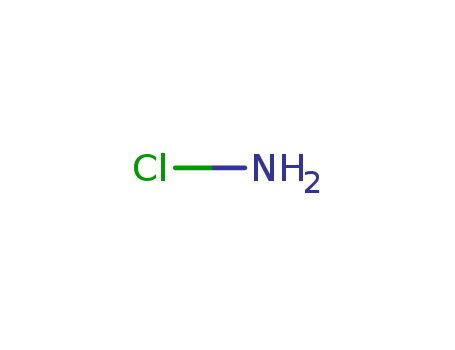
Chloramine

Base Information
  • Chemical Name:Chloramine
  • CAS No.:10599-90-3
  • Deprecated CAS:1428979-51-4
  • Molecular Formula:ClH2N
  • Molecular Weight:51.4756
  • Hs Code.:
  • European Community (EC) Number:234-217-9
  • UN Number:3093
  • UNII:KW8K411A1P
  • DSSTox Substance ID:DTXSID8023842,DTXSID00721369
  • Nikkaji Number:J74.688F
  • Wikipedia:Monochloramine,Chloramine
  • Wikidata:Q409375,Q82660305
  • Mol file:10599-90-3.mol
Chloramine

Synonyms:ammonia chloramine;chloramine;monochloramine

Suppliers and Price of Chloramine
Supply Marketing:
Business phase:
The product has achieved commercial mass production*data from LookChem market partment
Manufacturers and distributors:
  • Manufacture/Brand
  • Chemicals and raw materials
  • Packaging
  • price
  • American Custom Chemicals Corporation
  • CHLORAMIDE 95.00%
  • 5MG
  • $ 504.88
Total 44 raw suppliers
Chemical Property of Chloramine
Chemical Property:
  • Appearance/Colour:colourless to yellow liquid with a pungent odour 
  • Vapor Pressure:32hPa at 25℃ 
  • Melting Point:-66 C 
  • Boiling Point:°Cat760mmHg 
  • PKA:-1.03±0.70(Predicted) 
  • Flash Point:°C 
  • PSA:26.02000 
  • Density:1.18g/cm3 
  • LogP:0.79920 
  • Water Solubility.:Soluble 
  • XLogP3:0.1
  • Hydrogen Bond Donor Count:1
  • Hydrogen Bond Acceptor Count:1
  • Rotatable Bond Count:0
  • Exact Mass:50.9875768
  • Heavy Atom Count:2
  • Complexity:2
  • Transport DOT Label:Corrosive Oxidizer
Purity/Quality:

99% *data from raw suppliers

CHLORAMIDE 95.00% *data from reagent suppliers

Safty Information:
  • Pictogram(s):  
  • Hazard Codes: 
MSDS Files:

SDS file from LookChem

Useful:
  • Chemical Classes:Nitrogen Compounds -> Other Nitrogen Compounds
  • Canonical SMILES:NCl
Technology Process of Chloramine

There total 90 articles about Chloramine which guide to synthetic route it. The literature collected by LookChem mainly comes from the sharing of users and the free literature resources found by Internet computing technology. We keep the original model of the professional version of literature to make it easier and faster for users to retrieve and use. At the same time, we analyze and calculate the most feasible synthesis route with the highest yield for your reference as below:

synthetic route:
Guidance literature:
In neat (no solvent); byproducts: N3, N2; Irradiation (UV/VIS); dominate products by 248-nm photolysis: Cl+N3, also observed NCl+N2; monitored by TOF MS;
DOI:10.1016/j.cplett.2004.04.113
Guidance literature:
In neat (no solvent); NH3:Cl2 = 39; at ambient temp.;;
DOI:10.1021/ja01644a010
Guidance literature:
In water; very dild. soln. of NH2Cl is obtained;; distn. in vac. at 40°C;;
Refernces

Molecular modulation of muscarinic antagonists. Synthesis and affinity profile of 2,2-diphenyl-2-ethylthio-acetic acid esters designed to probe the binding site cavity

10.1016/j.farmac.2004.08.003

The study focuses on the synthesis and preliminary pharmacological evaluation of a new series of muscarinic antagonists derived from 2,2-diphenyl-2-ethylthio-acetic acid esters. These compounds were designed to probe the binding site cavity of muscarinic receptors, which are found in the central and peripheral nervous system and play a crucial role in various vital functions. The researchers aimed to enhance the potency and selectivity of these antagonists by decorating the parent molecules with linkers of different lengths, carrying an amino group to potentially interact with an anionic function outside the recognition site of the receptor. The chemicals used in the study included 2,2-diphenyl-2-ethylthio-acetic acid esters, various chloramines, amino alcohols, and other organic compounds to synthesize the new series of compounds (3–20). The purpose of these chemicals was to create probes that could interact with the muscarinic receptor subtypes and potentially lead to the development of more selective and potent therapeutic agents for pathologies such as smooth muscle hyperactivity and neurodegenerative diseases. However, the study found that while the new compounds showed some increase in affinity, they lacked subtype selectivity and did not meet the expected outcomes, leading to the identification of a series of compounds with a peculiar pharmacological profile.


Post a RFQ

Enter 15 to 2000 letters.Word count: 0 letters

Attach files(File Format: Jpeg, Jpg, Gif, Png, PDF, PPT, Zip, Rar,Word or Excel Maximum File Size: 3MB)

1 Customer Service

What can I do for you?
Get Best Price

Get Best Price for 10599-90-3