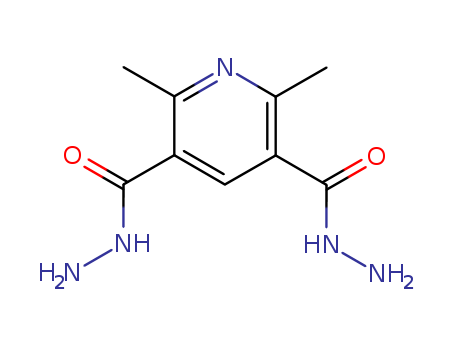
10.1007/s10593-006-0029-y
The study investigates the acylation of 3-ethoxycarbonyl-2,6-dimethyl-5-pyridinecarboxylic acid hydrazide and 2,6-dimethyl-3,5-pyridinedicarboxylic acid dihydrazide using aromatic acid chlorides, yielding N-aroyl hydrazides. The study reveals that hydrazinolysis of these N-aroyl hydrazides occurs at the dihydrazide fragment rather than the ester group, leading to the formation of dihydrazides and benzoic acid hydrazides. The stability of the N-aroyl hydrazides under acid and base hydrolysis conditions is also examined, with complete hydrolysis achievable through prolonged reflux in hydrochloric acid or potassium hydroxide solutions. X-ray analysis of compound 6d provides insights into the conformation and bonding characteristics of the N-aroyl hydrazide fragment, highlighting the influence of steric and electronic factors on the reaction mechanism. The research contributes to the understanding of the chemical properties and reactivity of these hydrazide compounds, supported by detailed IR and NMR spectral data.