10.1002/hlca.19830660213
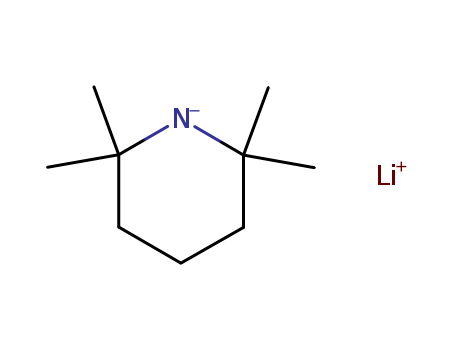
The research details the total synthesis of (k)-a-acoradiene (4) from 3-methoxy-2-cyclohexenone through an 8-step process. The key steps involve a regio- and stereoselective photo [2 + 2] addition and reductive fragmentation. The purpose of the study was to develop a new, stereoselective approach to synthesizing the spiro [4.5] decane system, specifically targeting (k)-a-acoradiene. The researchers used key chemicals such as 3-methoxy-2-cyclohexenone, lithium/sodium alloy, t-butyl hydroperoxide, and lithium in ammonia. They also employed various reagents like N-chlorosuccinimide, dimethyl sulfide, and lithium tetramethylpiperidide. The conclusions drawn from the study confirmed the feasibility of the intramolecular photoaddition/cyclobutane fragmentation sequence for synthesizing complex structures like (k)-a-acoradiene. The researchers successfully synthesized the target compound and provided detailed structural evidence through spectral analysis.
10.1039/c1ob05267e
The research investigates the deprotonative metallation of N-aryl and N-heteroaryl pyrazoles using a mixed lithium–zinc base derived from ZnCl2·TMEDA (Zinc chloride N,N,N',N'-tetramethylethylenediamine complex) and LiTMP (Lithium 2,2,6,6-tetramethylpiperidide). The study explores the impact of various substituents on the pyrazole ring's CH acidity and how these influence the metallation outcomes. Through experimental and computational methods, including Density Functional Theory (DFT) calculations, the researchers determined the CH acidities of the substrates in both the gas phase and THF solution. They found that electron-withdrawing groups enhance CH acidity, favoring deprotonation, while electron-donating groups have the opposite effect. The results showed that the most acidic site on the pyrazole ring is typically the 5 position, and the study identified conditions under which mono-, di-, or tri-iodides could be selectively obtained.