Welcome to LookChem.com Sign In|Join Free
  • or
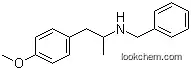
4-Methoxy-alpha-methyl-N-(phenylmethyl)benzeneethanamine, commonly referred to as 4-Me-MA, is a synthetic amphetamine-class psychoactive substance. It is a potent central nervous system stimulant and a derivative of methamphetamine, exhibiting similar effects on the body and brain. 4-Me-MA is known for its ability to increase the release of dopamine and norepinephrine, which results in heightened mood, alertness, and energy levels. Additionally, it possesses hallucinogenic and entactogenic properties, inducing feelings of euphoria and empathy. However, due to its potential for abuse and addiction, 4-Me-MA is not approved for medical use and is classified as a controlled substance in many countries. Long-term use has been linked to several adverse health effects, such as hypertension, heart problems, and psychological issues.

245759-64-2

Post Buying Request

245759-64-2 Suppliers

Recommended suppliers

  • Product
  • FOB Price
  • Min.Order
  • Supply Ability
  • Supplier
  • Contact Supplier

245759-64-2 Usage

Uses

Used in Research Applications:
4-Methoxy-alpha-methyl-N-(phenylmethyl)benzeneethanamine is used as a research chemical for studying the effects of psychoactive substances on the central nervous system. Its ability to increase the release of neurotransmitters like dopamine and norepinephrine makes it a valuable tool for understanding the mechanisms of action of stimulant drugs.
Used in Forensic Analysis:
In the field of forensic science, 4-Me-MA is utilized for the detection and identification of controlled substances in biological samples, such as blood, urine, or hair. Its unique chemical structure allows for accurate analysis and differentiation from other similar compounds.
Used in Drug Policy and Regulation:
4-Methoxy-alpha-methyl-N-(phenylmethyl)benzeneethanamine is used as a reference substance in the development and implementation of drug policy and regulation. Understanding its properties, effects, and potential for abuse helps inform the creation of guidelines and restrictions to protect public health and safety.

Check Digit Verification of cas no

The CAS Registry Mumber 245759-64-2 includes 9 digits separated into 3 groups by hyphens. The first part of the number,starting from the left, has 6 digits, 2,4,5,7,5 and 9 respectively; the second part has 2 digits, 6 and 4 respectively.
Calculate Digit Verification of CAS Registry Number 245759-64:
(8*2)+(7*4)+(6*5)+(5*7)+(4*5)+(3*9)+(2*6)+(1*4)=172
172 % 10 = 2
So 245759-64-2 is a valid CAS Registry Number.
InChI:InChI=1/C17H21NO/c1-14(18-13-16-6-4-3-5-7-16)12-15-8-10-17(19-2)11-9-15/h3-11,14,18H,12-13H2,1-2H3

245759-64-2SDS

SAFETY DATA SHEETS

According to Globally Harmonized System of Classification and Labelling of Chemicals (GHS) - Sixth revised edition

Version: 1.0

Creation Date: Aug 20, 2017

Revision Date: Aug 20, 2017

1.Identification

1.1 GHS Product identifier

Product name N-benzyl-1-(4-methoxyphenyl)propan-2-amine

1.2 Other means of identification

Product number -
Other names -

1.3 Recommended use of the chemical and restrictions on use

Identified uses For industry use only.
Uses advised against no data available

1.4 Supplier's details

1.5 Emergency phone number

Emergency phone number -
Service hours Monday to Friday, 9am-5pm (Standard time zone: UTC/GMT +8 hours).

More Details:245759-64-2 SDS

245759-64-2Relevant academic research and scientific papers

PROCESS FOR THE PREPARATION OF ARFORMOTEROL OR SALT THEREOF

-

Paragraph 0163, (2016/04/19)

Provided is an improved process for the preparation of arformoterol L-(+)-tartrate, and more specifically provided is a novel process for the preparation of arformoterol L-(+)-tartrate via arformoterol D-(?)-tartrate.

PROCESS FOR THE SYNTHESIS OF ARFORMOTEROL

-

Page/Page column 32, (2009/12/28)

The present invention provides a process for preparing a compound of formula (Vl) or a salt thereof, the process comprising: (i) reacting 4-methoxyphenyl acetone with an amine of formula (VIII) under conditions of reductive amination to produce a compound of formula (II) or a salt thereof, wherein there is no isolation of an imine intermediate formed during the reductive amination; (ii) condensing the compound (II) or the acid addition salt thereof with an α-haloketone of formula (III) to produce the compound of formula (IV); (iii) reducing the compound (IV) to a compound of formula (V); and (iv) reducing the compound (V) to the compound of formula (Vl), wherein the reduction is carried out in the presence of either (1 ) a hydrogen donating compound in the presence of a hydrogen transfer catalyst; or (2) ammonium formate using a hydrogenation catalyst, wherein: R1 and R2 are independently optionally substituted arylalkyl, and Hal is selected from chloro or bromo.

PREPARATION OF (R,R)-FENOTEROL AND (R,R)- OR (R,S)-FENOTEROL ANALOGUES AND THEIR USE IN TREATING CONGESTIVE HEART FAILURE

-

Page/Page column 41-42, (2008/06/13)

This disclosure concerns the discovery of (R,R)- and (R,S)-fenoterol analogues which are highly effective at binding β2-adrenergic receptors. Exemplary chemical structures for these analogues are provided. Also provided are pharmaceutical compositions including the disclosed (R,R)-fenoterol and fenoterol analogues, and methods of using such compounds and compositions for the treatment of cardiac disorders such as congestive heart failure and pulmonary disorders such as asthma or chronic obstructive pulmonary disease.

Large-scale synthesis of enantio- and diastereomerically pure (R,R)-formoterol

Hett, Robert,Fang, Qun K.,Gao, Yun,Wald, Stephen A.,Senanayake, Chris H.

, p. 96 - 99 (2013/09/08)

(R,R)-Formoterol (1) is a long-acting, very potent β2-agonist, which is used as a bronchodilator in the therapy of asthma and chronic bronchitis. Highly convergent synthesis of enantio- and diastereomerically pure (R,R)-formoterol fumarate is achieved by a chromatography-free process with an overall yield of 44%. Asymmetric catalytic reduction of bromoketone 4 using as catalyst oxazaborolidine derived from (1R, 2S)-1-amino-2-indanol and resolution of chiral amine 3 are the origins of chirality in this process. Further enrichment of enantio- and diastereomeric purity is accomplished by crystallizations of the isolated intermediates throughout the process to give (R,R)-formoterol (1) as the pure stereoisomer (ee, de >99.5%).

Post a RFQ

Enter 15 to 2000 letters.Word count: 0 letters

Attach files(File Format: Jpeg, Jpg, Gif, Png, PDF, PPT, Zip, Rar,Word or Excel Maximum File Size: 3MB)

1 Customer Service

What can I do for you?
Get Best Price

Get Best Price for 245759-64-2