€
I. Ozdemir et al. / Tetrahedron Letters 45 (2004) 5823–5825
5825
Table 1 (continued)
Entry
R1
R2
X
LHX
Time (h)
Yield (%)b;c;d
26
27
28
29
30
H
H
H
H
H
COMe
COMe
COMe
COMe
COMe
Cl
Cl
Cl
Cl
Cl
1
2
3
4
5
24
24
24
24
24
92
89
85
93
90
31
32
33
34
35
H
H
H
H
H
OMe
OMe
OMe
OMe
OMe
Cl
Cl
Cl
Cl
Cl
1
2
3
4
5
24
24
24
24
24
85
83
81
87
84
36
37
38
39
40
Me
Me
Me
Me
Me
Me
Me
Me
Me
Me
Br
Br
Br
Br
Br
1
2
3
4
5
24
24
24
24
24
85
83
89
91
95
a Reaction conditions: 1.0 mmol of ArX, 1.0 mmol diethyl malonate, 2 mmol Cs2CO3, 1.5 mol % Pd(OAc)2, 3 mol % LHX, dioxane (3 mL).
b Purity of compounds was determined by NMR and yields were based on aryl halides.
c All reactions were monitored by TLC.
d Temperature 80 °C; reaction times were not optimized.
metallics 2000, 19, 741–748; (c) Zapf, A.; Beller, M. Chem.
Eur. J. 2001, 7, 2908–2915.
Presumably, the bulkier and potentially hemilabile
ligands derived from 4 and 5 are more effective in
stabilizing the Pd complex. Bis(trimethoxybenzyl)
substituted precursors such as 2 and 3 gave relatively
poor yields compared with 1, 4 and 5. Control experi-
ments revealed that no reaction was observed in the
absence of the NHC ligand precursors.
3. (a) Mathews, C. J.; Smith, P. J.; Welton, T. J. Mol. Catal.
A: Chem. 2003, 206, 77–82; (b) Heiden, M.; Pleino,
H. Chem. Eur. J. 2004, 10, 1789–1797; (c) Walker, S. D.;
Barder, T. I.; Martinelli, J. R.; Buchwald, S. L. Angew.
Chem., Int. Ed. 2004, 43, 1871–1876.
4. Terao, Y.; Fukuoka, Y.; Satoh, T.; Miura, M.; Nomura,
M. Tetrahedron Lett. 2002, 43, 101–104.
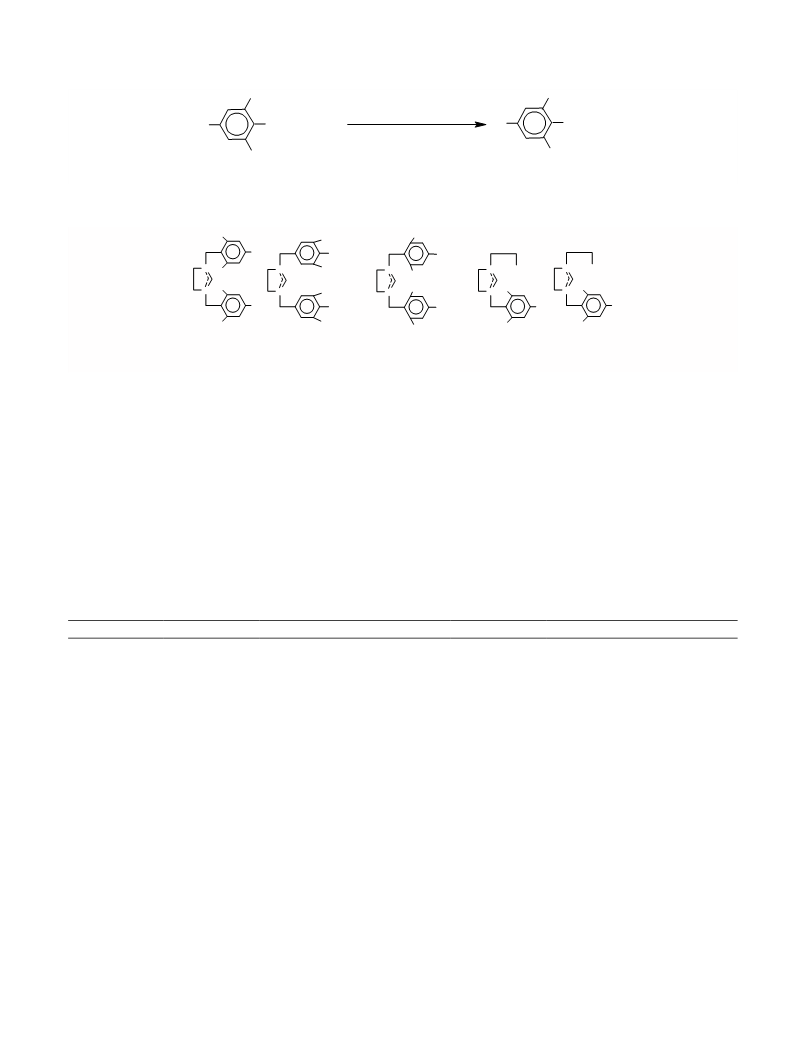
In conclusion, five imidazolinium salts, LHX, as pre-
cursors of 1,3-dialkyl substituted NHC ligands were
evaluated in Pd-catalyzed cross-coupling reactions of
aryl halides with diethyl malonate with accompanying
dealkoxycarbonylation. The reaction was found to
proceed with high conversion (up to 96%) in relatively
short reaction times and at low temperatures to give the
desired arylacetic esters. It is also possible to run the
reaction catalytically under an oxygen atmosphere
without significant loss of yield.
5. (a) Gaertzen, O.; Buchwald, S. L. J. Org. Chem. 2002, 67,
465–475; (b) Lee, S.; Beare, N. A.; Hartwig, J. F. J. Am.
Chem. Soc. 2001, 123, 8410–8411.
6. (a) Jorgensen, M.; Lee, S.; Liu, X.; Wokowski, J.
P.; Hartwig, J. F. J. Am. Chem. Soc. 2002, 124, 12557–
12565; (b) Moradi, W. A.; Buchwald, S. L. J. Am. Chem.
Soc. 2001, 123, 7996–8002.
7. (a) Beare, N. A.; Hartwig, J. F. J. Org. Chem. 2002, 67,
541–555; (b) Wokowski, J. P.; Hartwig, J. F. Angew.
Chem., Int. Ed. 2002, 41, 4289–4291.
8. (a) Culkin, D. A.; Hartwig, J. F. Acc. Chem. Res. 2003, 36,
234–245; (b) Lloyd-Jones, G. C. Angew. Chem., Int. Ed.
2002, 41, 953–956.
9. Dannhardt, G.; Kiefer, W. Eur. J. Med. Chem. 2001, 36,
109–126.
Acknowledgements
10. Kondo, Y.; Inamoto, K.; Uchiyama, M.; Sakamoto,
T. Chem. Commun. 2001, 2704–2705.
We thank the Technological and Scientific Research
€
Council of Turkiye TUBITAK (TUBITAK COST D17)
_
€
€
and Inonu University Research Fund (BAP 2002/23) for
€
€
11. (a) Bohm, V. P. W.; Gstottmayr, C. W. K.; Weskamp,
T.; Herrmann, W. A. J. Organomet. Chem. 2000, 595, 186–
€ €
financial support of this work.
€
190; (b) Furstner, A.; Leitner, A. Synlett 2001, 290–292.
€
€
€
12. Gurbuz, N.; Ozdemir, I.; Demir, S.; Cßetinkaya, B. J. Mol.
Catal. A: Chem. 2004, 209, 23–28.
References and notes
13. (a) Zhang, C.; Huang, J.; Trudell, M. L.; Nolan, S. P.
Organometallics 2002, 21, 2866–2873; (b) Grasa, G. A.;
Viciu, M. S.; Huang, J.; Zhang, C.; Trudell, M. L.; Nolan,
S. P. Organometallics 2002, 21, 2866–2873.
14. (a) Saba, S.; Brescia, A.; Kaloustian, M. K. Tetrahedron
Lett. 1991, 32, 5031–5034; (b) Cßetinkaya, E.; Hitchcock,
P. B.; Jasim, H. A.; Lappert, M. F.; Spyropoulos, K.
J. Chem. Soc., Perkin Trans. 1 1992, 561–567.
1. (a) Handbook of Organopalladium Chemistry for Organic
Synthesis; Negishi, E. I., Ed.; Wiley: New York, 2002; Vol.
1; (b) Miyaruna, N.; Suzuki, A. Chem. Rev. 1995, 95,
2457–2483.
2. (a) Litke, A. F.; Fu, G. C. Angew. Chem., Int. Ed. 2002, 41,
4176–4211; (b) McGuinness, D. S.; Cavell, K. J. Organo-

 ?zdemir, Ismail