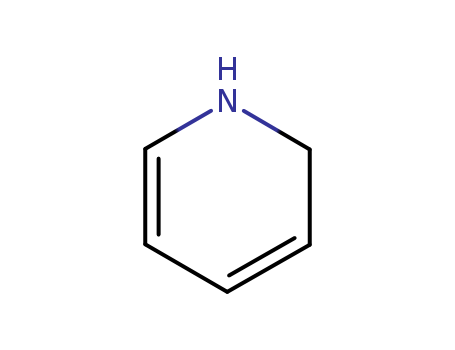
Base Information
- Chemical Name:Pyridine, 1,2-dihydro-
- CAS No.:22694-45-7
- Molecular Formula:C5H7 N
- Molecular Weight:81.1173
- Hs Code.:
- Mol file:22694-45-7.mol
Synonyms:1,2-Dihydropyridine
Synonyms:1,2-Dihydropyridine
98% *data from raw suppliers
There total 12 articles about Pyridine, 1,2-dihydro- which guide to synthetic route it. The literature collected by LookChem mainly comes from the sharing of users and the free literature resources found by Internet computing technology. We keep the original model of the professional version of literature to make it easier and faster for users to retrieve and use. At the same time, we analyze and calculate the most feasible synthesis route with the highest yield for your reference as below:
Reference yield: 99.0%
Reference yield: 81.0%
The study presents an in situ coupled oxidation cycle that enables catalytic oxidation of substrates using catalytic amounts of o-chloranil and novel, reusable polymer-immobilized platinum nanocluster catalysts, with molecular oxygen serving as the terminal oxidant. The chemicals used in the study include o-chloranil, a quinone with high oxidation potential, and platinum nanocluster catalysts, which are immobilized on a polymer matrix. These catalysts were designed to overcome the challenges associated with the stoichiometric use of quinones in organic synthesis, such as difficulty in removing by-products and high costs. The purpose of these chemicals was to facilitate a more environmentally friendly and economically viable oxidation process, where molecular oxygen, being abundant and producing water as the only by-product, was utilized as the ideal oxidizer. The study demonstrated the effectiveness of this system in the oxidation of dihydropyridines to pyridines, among other reactions, and showed that the platinum catalysts could be reused multiple times without significant loss of activity.

What can I do for you?
Get Best Price

Total 8 Pictures about this product