Refernces
10.1016/j.jcat.2005.06.011
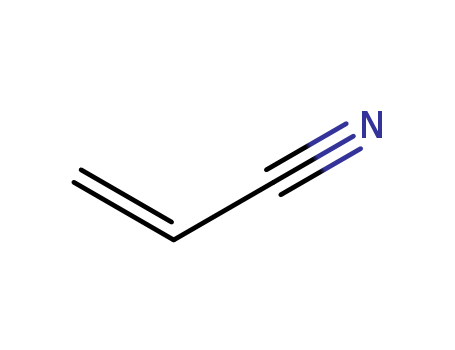
The research investigates the structure-selectivity relationship in the chemoselective hydrogenation of various unsaturated nitriles using different catalysts. The purpose of the study was to understand how the molecular structure of substrates influences the selectivity for unsaturated amines and to explore the scope and limitations of this type of hydrogenation. The researchers used several unsaturated nitriles, including cinnamonitrile, cyclohex-1-enyl-acetonitrile, acrylonitrile, 3,3-dimethyl-acrylonitrile, geranylnitrile, and 2- and 3-pentenenitrile, which were hydrogenated over Cr-doped Raney cobalt and nickel, as well as their undoped equivalents. The conclusions drawn from the study were that the position of the double bond relative to the nitrile group and the substitution of the double bond are crucial factors in determining the chemoselectivity for unsaturated amines. The highest selectivities were obtained when the double bond was not conjugated with the nitrile group, and the further the C=C bond was from the C≡N group, the higher the selectivity. Additionally, the presence of more substituents at the C=C bond increased the selectivity for unsaturated amines. The study also highlighted the suitability of Raney cobalt, especially Cr-doped Raney cobalt, for the chemoselective hydrogenation of unsaturated nitriles, while Raney nickel catalysts were found to be less selective due to their higher activity in C=C bond hydrogenation.
10.1016/j.apcata.2010.04.041
The research investigates the effects of substituting Fe, Ga, Ti, and Nb in ?SbVO4 catalysts on propane ammoxidation for acrylonitrile production. The study found that Fe, Ga, and Ti substitutions resulted in lower catalyst activity but significantly higher selectivity to acrylonitrile compared to pure ?SbVO4, while Nb substitution did not enhance catalytic properties. Characterizations using XRD, DRIFT, and Raman spectroscopy revealed the formation of a cation-deficient single rutile-type phase. The results support the site isolation theory, indicating that isolating propane-activating V–O sites in a nitrogen-inserting Sb-site environment improves selectivity for acrylonitrile formation.
10.1016/j.jorganchem.2007.10.015
The research focuses on the synthesis and characterization of new bridging aminoallylidene complexes through Olefin–aminocarbyne coupling in diiron and diruthenium complexes. The study explores the reaction of bridging aminocarbyne complexes with olefins such as acrylonitrile, methyl acrylate, styrene, and diethyl maleate, in the presence of Me3NO and NaH. These reactions yield the corresponding l-allylidene complexes, which are characterized by various analytical techniques including infrared (IR) spectroscopy, nuclear magnetic resonance (NMR) spectroscopy, and elemental analysis. The research also investigates further modifications of the bridging ligand through methylation and protonation reactions, as well as the potential for coordination with additional metal complexes through the nitrile functionality. The experiments involve the preparation of intermediate nitrile complexes and the formation of cationic complexes, with the structures of some compounds confirmed through X-ray diffraction studies. The research provides insights into the regio- and stereospecificity of the coupling reactions and the flexibility of the dinuclear M2(CO)2(Cp)2 frame in accommodating different bridging organic molecules.
10.1002/ejoc.202000945
Here we report a green and efficient method for the synthesis of γ-ketonitriles via a photocatalytic intermolecular Stetter reaction under visible light conditions using Cu@g-C3N4 as a photocatalyst and water as a solvent. Aromatic aldehydes and acrylonitrile are the main reactants. The Cu@g-C3N4 photocatalyst activates the C(sp2)–H bonds of aromatic aldehydes under visible light to generate acyl radicals, which then react with acrylonitrile to generate γ-ketonitriles in good to excellent yields (80–95%) within 4–10 h. The method is simple to operate, performed under ambient conditions, and has a wide range of substrate applicability. The Cu@g-C3N4 catalyst can be reused seven times without significant loss of activity.
10.1021/jo00805a002
The study investigates the reactions of 2-diazoacenaphthenone (1) with various olefins and acetylenes. The researchers found that 1 did not decompose in boiling benzene or toluene but underwent copper-catalyzed thermolysis in boiling toluene to form biacenedione. In boiling xylene, 1 produced biacenedione and a trace amount of acenaphthenequinone ketazine. When 1 reacted with olefins like ethyl acrylate, acrylonitrile, ethyl a-bromoacrylate, and methyl vinyl ketone in refluxing benzene, it yielded spiro[acenaphthenone-2,1'-cyclopropanes] (3a-d, 4a-c, 7) with two stereoisomers for some reactions. Reactions with acrolein, phenylacetylene, and diethyl acetylenedicarboxylate led to the formation of 2'-hydroxymethylspiro[acenaphthenone-2,1'-cyclopropanes] (5, 6) and spiro[acenaphthenone-2,3'(3'H)-pyrazoles] (9, 10). The study also explored the reaction of 1 with bicyclo[2.2.1]hept-5-ene-2,3-dicarboxylic anhydride, producing spiro[acenaphthenone-2,3'-tricyclooctanedicarboxylic anhydride] (8). The researchers used various analytical techniques to confirm the structures and properties of the synthesized compounds.



 F,
F, T,
T, N
N


