Welcome to LookChem.com Sign In|Join Free
  • or

Encyclopedia

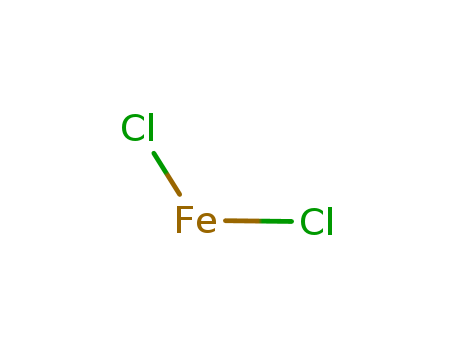
Ferrous Chloride

Base Information
  • Chemical Name:Ferrous Chloride
  • CAS No.:7758-94-3
  • Deprecated CAS:612850-32-5,2260985-77-9,2417040-39-0
  • Molecular Formula:FeCl2
  • Molecular Weight:126.753
  • Hs Code.:2827399000
  • European Community (EC) Number:231-843-4,680-591-5
  • ICSC Number:1715
  • UN Number:1759,3260
  • Wikipedia:Iron(II) chloride
  • Wikidata:Q407867
  • NCI Thesaurus Code:C83715
  • Mol file:7758-94-3.mol
Ferrous Chloride

Synonyms:ferrous chloride;ferrous chloride, 2H2-labeled cpd dihydrate;ferrous chloride, 2H2-labeled cpd hexahydrate;ferrous chloride, 2H2-labeled cpd monohydrate;ferrous chloride, 2H2-labeled cpd tetrahydrate;ferrous chloride, dihydrate;ferrous chloride, hexahydrate;ferrous chloride, hydrate;ferrous chloride, monohydrate;ferrous chloride, nonahydrate;ferrous chloride, tetrahydrate;Lawrencite

Suppliers and Price of Ferrous Chloride
Supply Marketing:
Business phase:
The product has achieved commercial mass production*data from LookChem market partment
Manufacturers and distributors:
  • Manufacture/Brand
  • Chemicals and raw materials
  • Packaging
  • price
Total 160 raw suppliers
Chemical Property of Ferrous Chloride
Chemical Property:
  • Appearance/Colour:greenish white crystalline solid 
  • Melting Point:677 °C(lit.) 
  • Boiling Point:1023 °C 
  • Flash Point:1023oC 
  • PSA:0.00000 
  • Density:3.16 g/mL at 25 °C(lit.) 
  • LogP:-5.99450 
  • Hydrogen Bond Donor Count:0
  • Hydrogen Bond Acceptor Count:0
  • Rotatable Bond Count:0
  • Exact Mass:125.872641
  • Heavy Atom Count:3
  • Complexity:2.8
  • Transport DOT Label:Corrosive
Purity/Quality:

99% *data from raw suppliers

Safty Information:
  • Pictogram(s): Corrosive
  • Hazard Codes: C:Corrosive;
     
  • Statements: R22:; R34:; 
  • Safety Statements: S26:; S36/37/39:; S45:; 
MSDS Files:

SDS file from LookChem

Total 1 MSDS from other Authors

Useful:
  • Chemical Classes:Metals -> Metals, Inorganic Compounds
  • Canonical SMILES:Cl[Fe]Cl
  • Inhalation Risk:A harmful concentration of airborne particles can be reached quickly when dispersed, especially if powdered.
  • Effects of Short Term Exposure:The substance is corrosive to the eyes. The substance is irritating to the respiratory tract. The substance is mildly irritating to the skin.
Technology Process of Ferrous Chloride

There total 3 articles about Ferrous Chloride which guide to synthetic route it. The literature collected by LookChem mainly comes from the sharing of users and the free literature resources found by Internet computing technology. We keep the original model of the professional version of literature to make it easier and faster for users to retrieve and use. At the same time, we analyze and calculate the most feasible synthesis route with the highest yield for your reference as below:

synthetic route:
Guidance literature:
In neat (no solvent); isolation in N2 solid matrix;
DOI:10.1063/1.466725
Guidance literature:
In solid matrix; mixt. of metal (tenfold excess) and AgCl heated in Ar (400 Torr) until react. was complete; cooled, evacuated, co-condensed with solid matrix (N2, Ar);
DOI:10.1016/0009-2614(91)90088-Q
Guidance literature:
In neat (no solvent, gas phase); equilibrium reaction was studied at 1349-1596 K;
Refernces

Magnetic, high-field EPR studies and catalytic activity of Schiff base tetranuclear CuII2FeIII2 complexes obtained by direct synthesis

10.1039/c3dt51800k

The research focuses on the synthesis, characterization, and investigation of two novel heterometallic complexes, [Cu2Fe2(HL1)2(H2L1)2]·10DMSO (1) and [Cu2Fe2(HL2)2(H2L2)2]·2DMF (2), which contain a tetranuclear {Cu2Fe2(μ-O)6} core supported by polydentate Schiff base ligands. The study involves the direct synthesis of these complexes using copper powder, iron(II) chloride, and DMSO or DMF solutions of the Schiff bases formed in situ from salicylaldehyde or 5-bromo-salicylaldehyde and tris(hydroxymethyl)aminomethane. The synthesized compounds were analyzed using various techniques, including crystallographic analysis, variable-temperature magnetic susceptibility measurements, high-field EPR spectroscopy, M?ssbauer spectra, and catalytic activity tests in the oxidation of cyclohexane with hydrogen peroxide under mild conditions. The experiments aimed to explore the magnetic properties and exceptional catalytic activity of these complexes, which showed high yields and turnover numbers in the oxidation reactions.

Post a RFQ

Enter 15 to 2000 letters.Word count: 0 letters

Attach files(File Format: Jpeg, Jpg, Gif, Png, PDF, PPT, Zip, Rar,Word or Excel Maximum File Size: 3MB)

1 Customer Service

What can I do for you?
Get Best Price

Get Best Price for 7758-94-3