Refernces
10.1021/om8011932
The research focuses on the synthesis, reactivity, and coordination chemistry of titanium and zirconium complexes supported by the multidentate monoanionic [N2P2] ligand. The study involves the preparation of various metal complexes, such as [N2P2]ZrCl3, [N2P2]ZrMe3, and their titanium analogues, using standard Schlenk-line techniques and drybox conditions. Reactants include metal halides, lithium [N2P2], and alkylating agents like methyllithium and LiCH2SiMe3. The complexes were characterized using NMR and IR spectroscopy, X-ray diffraction, and elemental analysis. The experiments aimed to explore the stability and reactivity of these complexes, including their behavior under reduction, alkylation, and protonation conditions, as well as their potential to activate small molecules like N2 and CO2. The research also investigates the coordination behavior of the [N2P2] ligand in different metal complexes and its ability to adapt to the steric and electronic preferences of the metal center.
10.1021/ic300407u
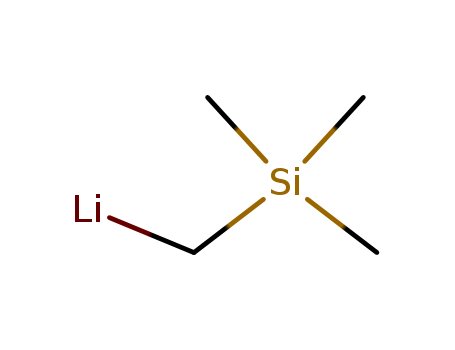
The research focuses on the synthesis, structural characterization, and catalytic application of bis(imidazolin-2-iminato) rare earth metal complexes. The purpose of this study was to create noncyclopentadienyl mono-, bis-, and tris(imidazolin-2-iminato) complexes of rare earth metals, with the aim of understanding their structure and potential catalytic activity. The researchers successfully synthesized and characterized complexes of scandium, yttrium, and lutetium with the ligand 1,3-bis(2,6-diisopropylphenyl)imidazolin-2-imine (ImDippNH) and trimethylsilylmethyl lithium (Me3SiCH2Li) in tetrahydrofuran (THF), resulting in the formation of [(ImDippN)2MCl(THF)n] complexes (M = Sc, Y, Lu). The coordination spheres around the metal atoms were found to be best described as distorted trigonal bipyramids. The yttrium complex [(ImDippN)2Y(CH2SiMe3)(THF)2] was tested as a precatalyst in intramolecular hydroamination/cyclization reactions of various terminal aminoalkenes and one aminoalkyne, showing high catalytic activity and selectivity. The study concluded that the rate of cyclization for aminoalkenes follows the order 5 > 6, consistent with stereoelectronically controlled cyclization processes observed for lanthanocene catalysts, and that there is a substrate-dependent activity for the complexes compared to previously reported dialkyl yttrium complexes.
10.1016/j.ica.2007.08.010
The research focuses on the synthesis and characterization of yttrium complexes with a bulky arylamido ancillary ligand. The main reactants used in the experiments include anhydrous YCl3, arylamido lithium 2,6-iPr2C6H3NSiiPr3Li, LiCH2SiMe3, and THF as a solvent. The synthesis involved the reaction of YCl3 with arylamido lithium to form an anionic mono-arylamido-ligated yttrium dichloride complex (1), which was then alkylated with LiCH2SiMe3 to produce an anionic arylamido-ligated yttrium tris(alkyl) complex (2). The complexes were characterized using NMR spectroscopy, elementary analysis, and X-ray structural determination, which confirmed their structures and provided insights into their steric and electronic properties. The study aimed to understand the reactivity of rare earth metal complexes and explore the potential of arylamido ligands in modifying these properties.


 F,
F, C,
C, N
N


