Chemistry Letters 2002
1035
À
capped with C17H33CO2 ion. Other impurities such as chloride
ion, potassium ion, elemental phosphorus, and nitrogen were not
detected by the XPS.
Increasing pH to 13.85 by adding aqueous NaOH solution,
however, resulted in InP NCs with larger size (about 50 nm).
In the existence of the surfactant potassium stearate
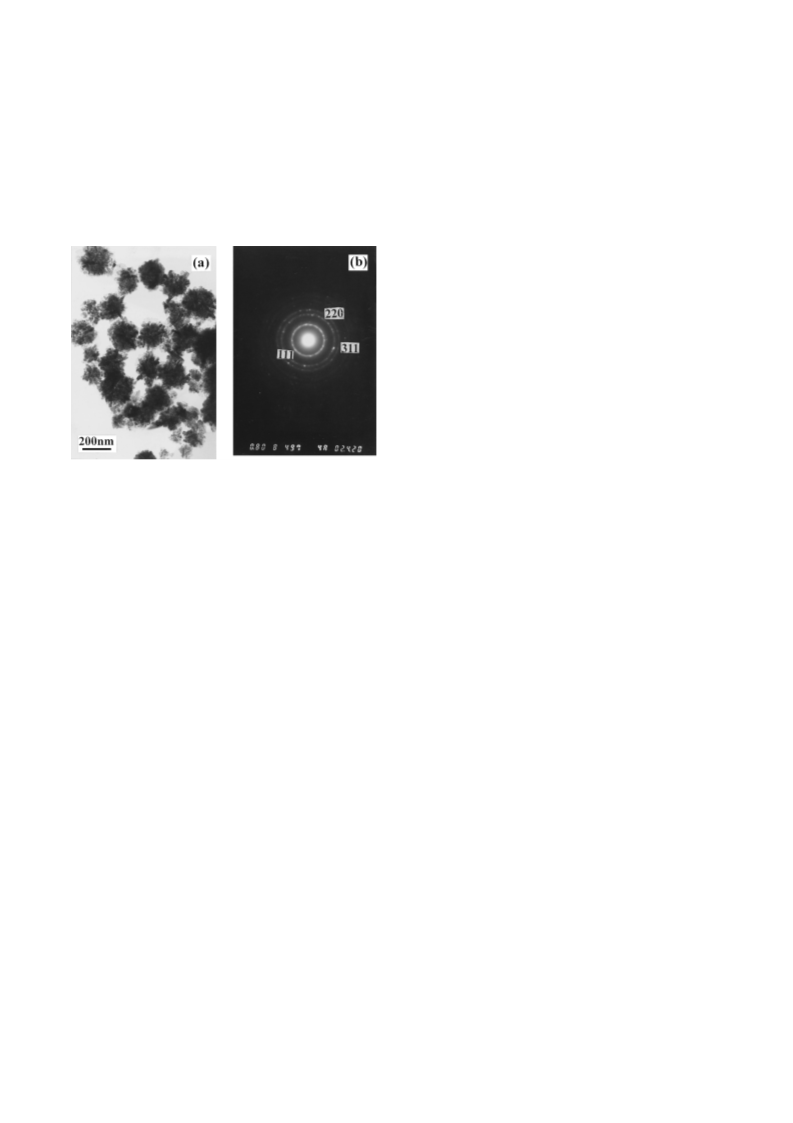
Figure 3a shows the TEM15 image of the as-prepared InP
NCs. Spherical secondary particles with 180 nm were found,
which consisted of fine NCs with 15 nm in size. In the SAED
pattern (Figure 3b), the concentric diffraction rings could be
indexed outwards as 111, 220, and 311 diffractions, which
indicated the nanocrystalline nature of the product.
(0.01 molÁL ), the InP NCs of 15 nm were obtained at 170 C
for 12 h. With other surfactants, however, such as sodium
dodecylbenzene sulfonate (C12H25C6H4SO3Na), and cetyl tri-
methyl ammonium bromide (C16H33N(CH3)3Br), no obvious
confined effect on the size of InP NCs was observed. According to
the XPS result of C1s region and the TEM image, the function of
potassium stearate could be considered as to passivate the surface
of InP NCs to confine nanoparticle growth (from 20 nm to 15 nm).
Further researches on effective surface passivation of InP NCs in
hydrothermal conditions were underway.
À1
ꢀ
In summary, pure InP NCs of 15 nm were prepared in
À1
ꢀ
ꢀ
aqueous ammonia (potassium stearate, 0.01 molÁL )at 170
C
for 12 h. Searches on reaction conditions revealed that, at 170 C,
for 3–12 h, and in aqueous ammonia of pH > 11:2, InP NCs of
2
0 nm could be synthesized and stably exist.
Since most of previous preparation methods for InP NCs and
QDs were carried out in organic solvents systems, our results of
hydrothermal synthesis of InP NCs supplied possibility for
synthesizing non-oxides nanocrystals in hydrothermal systems.
This work was supported by the National Natural Science
Foundation of China, and the National Key Fundamental
Research and Development Program of China (973 Program).
Figure 3. The transmission electron microscope (TEM)image (a ), and
ꢀ
selected area electron diffraction (SAED)(b)of InP nanocrystals (170 C,
2 h, C17H33CO2K, 0.01 molÁLÀ1).
References and Notes
1
1
2
A. Bhattacharya and D. Botez, Appl. Phys. Lett., 72, 138 (1998).
M. D. Healy, P. E. Laibinis, P. D. Stupik, and A. R. Barron, J. Chem. Soc.,
Chem. Commun., 1989, 359.
According to our 12 h-reaction results, the reaction tempera-
ꢀ
3
R. L. Wells, S. R. Aubuchon, S. S. Kher, M. S. Lube, and P. S. White, Chem.
Mater., 7, 793 (1995).
ture of 170 C was approximately the lowest one to synthesize InP
ꢀ
NCs. At lower temperature, 160 C for example, cubic In(OH)3
(
4
5
O. I. Micic, S. P. Ahrenkiel, and A. J. Nozik, Appl. Phys. Lett., 78, 4022 (2001).
A. A. Guzelian, J. E. B. Katari, A. V. Kadavanich, U. Banin, K. Hamad, E.
Juban, A. P. Alivisatos, R. H. Wolters, C. C. Arnold, and J. R. Heath, J. Phys.
Chem., 100, 7212 (1996).
JCPDS PDF No. 16–161)was found to be the exclusive phase
ꢀ
by the XRD pattern of products. On the other hand, at 190 C,
spare In(OH)3 coexisted with main product InP (about 30 nm),
which indicated that the higher temperature would speed the
growth of InP NCs and its hydrolysis as well.
6
7
8
9
M. Green and P. O’Brien, Chem. Commun., 1998, 2459.
S. S. Kher and R. L. Wells, Chem. Mater., 6, 2056 (1994).
Y. Xie, W. Z. Wang, Y. T. Qian, and X. M. Liu, Chin. Sci. Bull., 41, 997 (1996).
P. Yan, Y. Xie, W. Z. Wang, F. Y. Liu, and Y. T. Qian, J. Mater. Chem., 9, 1831
(1999).
Without potassium stearate, the InP NCs (about 20 nm)
ꢀ
evolved after heating for 3 h at 170 C, and from 3 to 12 h, no
obvious nanocrystal growth was detected from the breadth of the
XRD peaks of the products. When extending the reaction time to
1
0
B. Li, Y. Xie, J. X. Huang, Y. Liu, and Y. T. Qian, Ultrason. Sonochem., 8, 331
(
11 The XRD pattern was recorded on a MAX 18 AHF X-ray diffractometer (MAC
2001).
Science Co. Ltd.)equipped with graphite-monochromatized Cu K ꢀ1 X-ray
24 h, well-crystalline InP NCs with about 30 nm in size and a trace
of In(OH)3 were obtained. Therefore, the reaction period of 3–
ꢁ ¼ 1:54056 Aꢀ )at a scanning rate of 8.0000 min . The lattice constants
ꢀ
À1
(
were fitted through the program of Cell Ver. 5.0 (Copyright by K. Dwight,
l986).
12 A. Guiner, in ‘‘X-ray Diffraction,’’ Freeman, San Fransisco (1963).
ꢀ
1
2 h at 170 C not only ensured the completeness of preparation
reaction but also suppressed the hydrolysis of products.
The pH value of the aqueous ammonia system was another
key factor for synthesizing InP NCs. In our experimental system
1
3
The XPS (X-ray photoelectron spectra)were recorded on a VGESCALAB
MKII X-ray photoelectron spectrometer, using nonmonochromatized Mg Kꢀ
À9
(
1253.6 eV)X-ray as the excitation source in high vacuum ( 5 Â 10 Pa). The
ꢀ
(
initial 12.18 owing to the disproportionation of P4 molecules.
170 C, 12 h), the end pH value decreased to 11.20 from the
6{18
binding energy values were calibrated with that of C1s (284.6 eV).
G. E. Muilenberg, C. D. Wagner, W. M. Riggs, L. E. Davis, and J. F. Moulder,
in ‘‘Handbook of X-ray Photoelectron Spectroscopy,’’ Perkin-Elmer Corpora-
tion, Physical Electronics Division, New York (1979), p 72.
1
1
1
4
5
À37
Within this pH range, insoluble In(OH)3 (Ksp ¼ 1:3 Â 10
)
À
absorbed OH to form colloidal solution which was an ideal
indium source for InP NCs.19 Therefore, a possible mechanism
was proposed as follows,
The TEM (Transmission electron microscope)image and the SAED (selected
area electron diffraction)pattern were taken on a Hitachi Model H-800
transmission electron microscope, using an accelerating voltage of 200 KV.
N. S. Akhmetov, in ‘‘General and Inorganic Chemistry,’’ (English translation),
Mir Publishers, Moscow (1983), p 371.
1
1
1
1
6
7
8
9
3
þ
À
In ðaqÞ þ 3OH ! InðOHÞ ðcolloidÞ
3
H. L. Su, Y. Xie, B. Li, X. M. Liu, and Y. T. Qian, Solid State Ionics, 122, 157
À
À
P4 þ 3OH þ 3H2O ! PH3 þ 3H2PO2
InðOHÞ þ PH3 ! InP þ 3H2O
(
1999).
Y. Xie, H. L. Su, X. F. Qian, X. M. Liu, and Y. T. Qian, J. Solid State Chem.,
49, 88 (2000).
3
1
a) ‘‘Manual of Chemical Analysis (Chinese),’’ Ke Xue Press, Beijing (1982),
p 580. b)X. L. Gu, Y. S. Gong, X. W. Zang, C. L. Tang, Y. Y. Lu¨, and W. Z.
Zeng, ‘‘Inorganic Chemistry Series (Chinese),’’ Ke Xue Press, Beijing (1998),
Vol. 2, p 606.
When the initial pH was less than 11.2, yellow phosphorous
remained in the final products and the absence of InP indicated
that the disproportionation of P4 molecules did not occur.

 Wei, Shuo