10.1248/cpb.35.2196
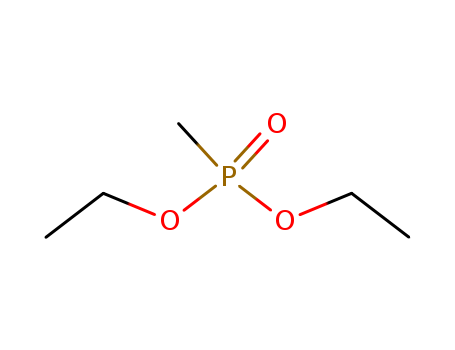
Yuji Oikawa, Tatsuyoshi Tanaka, Tatsuo Hamada, and Osamu Yonemitsu detail a highly stereoselective synthesis of the seco-acid (3) of the aglycone methoxylactone (1) of the 12-membered macrolide antibiotic methicillin. The synthesis started from D-glucose and involved the Wittig-Horner coupling of two fragments (i and ii). Fragment i (4) was synthesized by kinetic acetalization with p-methoxybenzylide (MP) acetal protection, while fragment ii (5) was obtained from the Prelog-Djerassi lactone-type intermediate (2) through a series of reactions including protection, hydrolysis, reduction, and oxidation. Diethyl methylphosphonate, a widely used organic synthesis reagent, was used to synthesize fragment ii (5) to introduce the phosphonate group. The coupling of these fragments formed the ring-opened acid (3), which was confirmed by nuclear magnetic resonance (NMR) and mass spectrometry. This work represents a major advance in the synthesis of complex macrolide antibiotics, demonstrating the utility of noncyclic stereocontrolled approaches and the importance of careful choice of protecting groups to achieve high stereoselectivity.