Journal of the American Chemical Society
Page 4 of 5
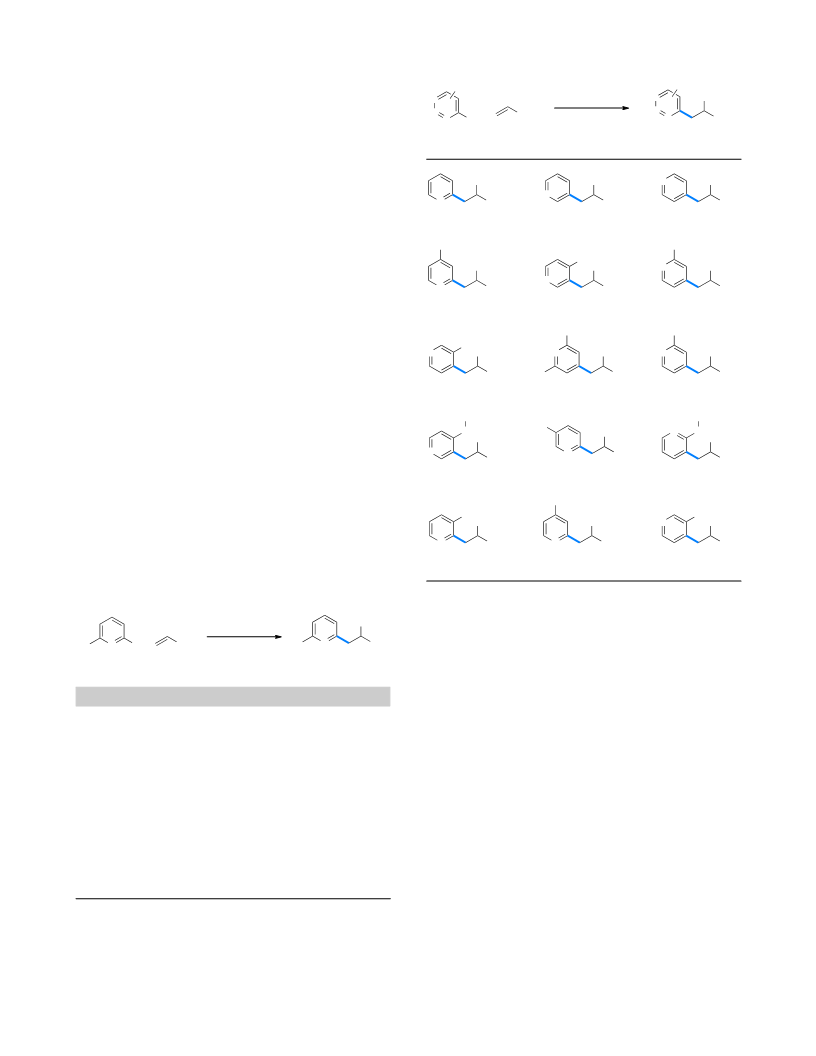
Scheme 1. Competition Experiments: Solvent Dictates Reactivity Profile of Pyridyl Radicals
1
2
3
4
5
6
7
8
9
1
1
1
1
1
1
1
1
1
1
2
2
2
2
2
2
2
2
2
2
3
3
3
3
3
3
3
3
3
3
4
4
4
4
4
4
4
4
4
4
5
5
5
5
5
5
5
5
5
5
6
Nucleophilic Radical
in DMSO System
Electrophilic Radical
H
H
in CF CH OH System
(
1 equiv)
2 equiv)
3
2
O
O
Me
N
Me
Me
N
Br
O
Me
N
Me
OEt
Me
OEt
1
mol%
+
1 mol%
36: 47% yield
36: 2% yield
[
Ir(ppy)2dtbbpy]+
[Ir(ppy)2dtbbpy]+
(
Hantzsch ester
Hantzsch ester
OEt
H
H
2
5% H2O/DMSO
NH4Cl, CF3CH2OH
+
0
1
2
3
4
5
6
7
8
9
0
1
2
3
4
5
6
7
8
9
0
1
2
3
4
5
6
7
8
9
0
1
2
3
4
5
6
7
8
9
0
1
2
3
4
5
6
7
8
9
0
Me
N
: 0% yield
n-hex
blue LED, 23 °C
blue LED, 23 °C
Me
N
n-hex
n-hex
(2 equiv)
1
1: 68% yield
(ref 21)
(this work)
2
1
(1) Vitaku, E.; Smith, D. T.; Njardarson, J. T. J. Med. Chem. 2014, 57,
0257.
acceptors in aqueous DMSO), pyridyl radicals that are
generated in this system (slightly acidic trifluoroethanol as
solvent) preferentially react with electron-rich alkenes. To
1
(
(
2) Kakiuchi, F.; Murai, S. Acc. Chem. Res. 2002, 35, 826.
3) Foley, N. A.; Lee, J. P.; Ke, Z.; Gunnoe, T. B.; Cundari, T. R. Acc.
Chem. Res. 2009, 42, 585.
2
9
clearly illustrate this differential behavior, we conducted
the competition experiments that are shown in Scheme 1.
Specifically, 2-bromo-6-methylpyridine was activated in
the presence of both 1-octene and ethyl crotonate (2
equivalents each). In aqueous DMSO without added acid,
we observed exclusive formation of the radical conjugate
addition product 36 (47% yield); and product 1 was not
formed. The use of trifluoroethanol solvent with added
ammonium chloride, resulted in highly-selective formation
of the octene hydroarylation product 1 (68% yield), along
(
4) Andreatta, J. R.; McKeown, B. A.; Gunnoe, T. B. J. Organomet.
Chem. 2011, 696, 305.
(
(
5) Crisenza, G. E. M.; Bower, J. F. Chem. Lett. 2016, 45, 2.
6) Hoffmann, R. W. Chem. Soc. Rev. 2016, 45, 577.
(7) Ma, X.; Herzon, S. B. J. Am. Chem. Soc. 2016, 138, 8718.
(
8) Green, S. A.; Matos, J. L. M.; Yagi, A.; Shenvi, R. A. J. Am. Chem.
Soc. 2016, 138, 12779.
(
9) Lewis, J. C.; Bergman, R. G.; Ellman, J. A. J. Am. Chem. Soc. 2007,
1
29, 5332.
(10) Nakao, Y.; Yamada, Y.; Kashihara, N.; Hiyama, T. J. Am. Chem.
Soc. 2010, 132, 13666.
(11) Tsai, C.-C.; Shih, W.-C.; Fang, C.-H.; Li, C.-Y.; Ong, T.-G.; Yap, G.
P. A. J. Am. Chem. Soc. 2010, 132, 11887.
3
0
with 2% yield of 36.
In conclusion, we have developed a mild catalytic system
that enables the general hydroarylation of simple alkenes
with pyridine units. This method allows for the installation
of alkyl substituents at any position of the pyridine rings,
and tolerates a wide range of functional groups. Key to this
development was the finding that the use of
trifluoroethanol as the solvent imparts electrophilic
character on the pyridyl radical intermediates. Further
mechanistic studies and the development of related
processes are ongoing in our laboratory.
(12) Holubek, J.; Volke, J. Collect. Czech. Chem. Commun. 1962, 27,
680.
(
(
(
13) Andrieux, C. P.; Blocman, C.; Dumas-Bouchiat, J. M.; Saveant, J.
M. J. Am. Chem. Soc. 1979, 101, 3431.
14) Enemærke, R. J.; Christensen, T. B.; Jensen, H.; Daasbjerg, K. J.
Chem. Soc. Perkin Trans. 2 2001, No. 9, 1620.
15) Prier, C. K.; Rankic, D. A.; MacMillan, D. W. C. Chem. Rev. 2013,
1
13, 5322.
(
(
16) Romero, N. A.; Nicewicz, D. A. Chem. Rev. 2016, 116, 10075.
17) Nguyen, J. D.; D’Amato, E. M.; Narayanam, J. M. R.; Stephenson,
C. R. J. Nat. Chem. 2012, 4, 854.
(
(
(
18) (a) Arora, A.; Weaver, J. D. Acc. Chem. Res. 2016, 49, 2273. (b)
Singh, A.; Kubik, J. J.; Weaver, J. D. Chem. Sci. 2015, 6, 7206. (c)
Amandeep, A.; Weaver, J. D. Org. Lett. 2016, 18, 3996.
19) Discekici, E. H.; Treat, N. J.; Poelma, S. O.; Mattson, K. M.;
Hudson, Z. M.; Luo, Y.; Hawker, C. J.; de Alaniz, J. R. Chem.
Commun. 2015, 51, 11705.
ASSOCIATED CONTENT
Supporting Information.
20) Ghosh, I.; Marzo, L.; Das, A.; Shaikh, R.; Konig, B. Acc. Chem. Res.
2016, 49, 1566.
Experimental procedures and spectral data are available
free of charge on the ACS Publications website.
(21) Aycock, R. A.; Wang, H.; Jui, N. T. Chem. Sci. 2017, 8, 3121.
(22) Costentin, C.; Robert, M.; Savéant, J. J. Am. Chem. Soc. 2004, 126,
1
6051.
AUTHOR INFORMATION
(
23) Lowry, M. S.; Hudson, W. R.; Pascal, R. A.; Bernhard, S. J. Am.
Chem. Soc. 2004, 126, 14129.
(24) In these cases, incomplete conversion of the dihalopyridine was
observed and not double alkylation or product dehalogenation.
Corresponding Author
(
25) Burnett, J. F.; Zahler, R. E. Chem. Rev. 1951, 49, 273.
Notes
(26) Poelma, S. O.; Burnett, G. L.; Discekici, E. H.; Mattson, K. M.;
Treat, N. J.; Luo, Y.; Hudson, Z. M.; Shankel, S. L.; Clark, P. G.;
Kramer, J. W.; Hawker, C. J.; Read De Alaniz, J. J. Org. Chem.
The authors declare no competing financial interests.
2
016, 81, 7155.
ACKNOWLEDGMENT
(27) Seiple, I. B.; Su, S.; Rodriguez, R. A.; Gianatassio, R.; Fujiwara, Y.;
Sobel, A. L.; Baran, P. S. J. Am. Chem. Soc. 2010, 132, 13194.
This project was supported by funds from Emory Universi-
ty and Winship Cancer Institute.
(
28) Senaweera, S.; Weaver, J. D. J. Am. Chem. Soc. 2016, 138, 2520.
(29) For a discussion on radical nucleophilicity/electrophilicity, see:
Giese, B. Angew. Chem. Int. Ed. 1983, 22, 753.
(
30) The same selectivity is observed in trifluoroethanol without added
ammonium chloride, but conversion of starting material is lower.
REFERENCES
ACS Paragon Plus Environment

 Boyington, Allyson J.