2
I. N. Petersen et al. / Bioorg. Med. Chem. xxx (2016) xxx–xxx
F
and 5-HT2C compared with a range of different CNS targets—as is
the case for 1, see Supporting information for details.
O
O
O
O
2:
X = Br
3: X = I
4:
H
N
H
N
X = Cl
The functional properties of 2 at the h5-HT2A and the h5-HT2C
receptors were determined at HEK293 cell lines stably expressing
the two receptors in a fluorescence-based Ca2+ imaging assay using
O
O
5: X = NO2
6: X = CN
Br
X
1
Cimbi-36 (
)
Fluo-4 as dye (Table 2).15 In good agreement with their 5-HT2A
R
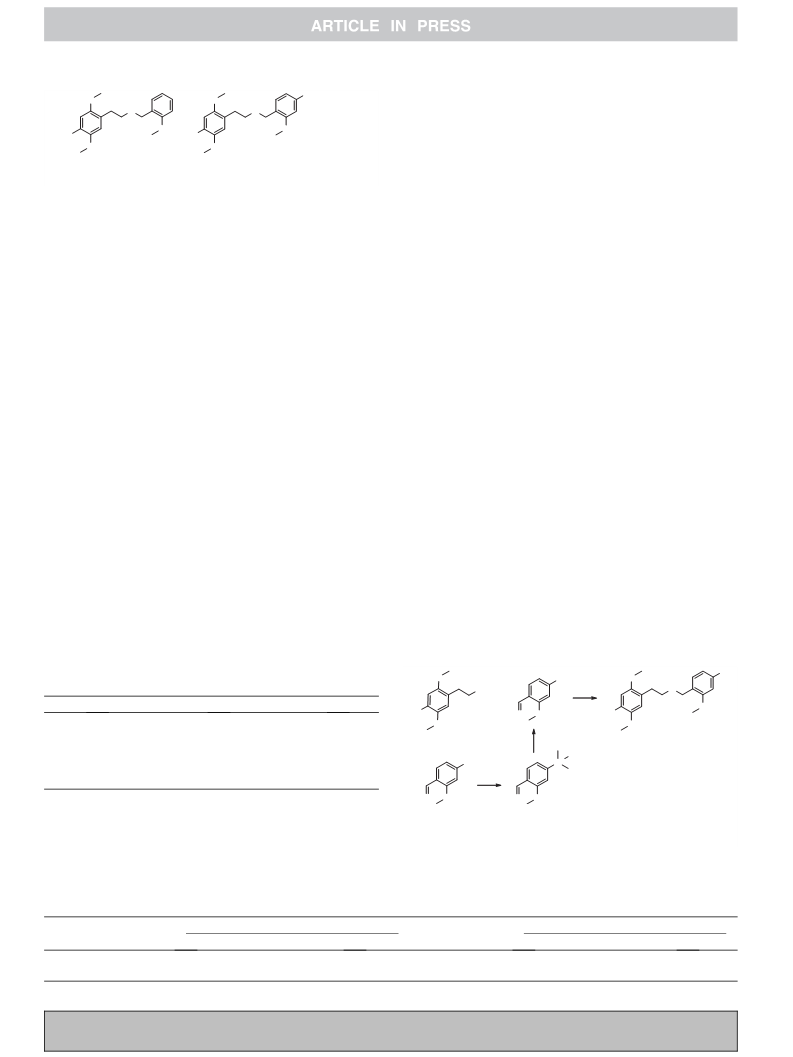
Figure 1. Structure of Cimbi-36 (1) and targeted derivatives amenable for
18F-labeling (2–6).
binding affinities, 2 exhibited 7-fold lower agonist potency at the
receptor than 1, and its potency at 5-HT2CR was even lower (100-
fold) compared to that of 1, and thus 2 exhibited 15-fold functional
selectivity between the receptors in this assay. Interestingly, the
introduction of the fluorine into 1 converted it from a full agonist
into a partial agonist at 5-HT2CR, whereas the intrinsic activities
of 1 and 2 as 5-HT2AR agonists were comparable.
exert more pronounced effects on the behavior of the prospective
PET ligands.
2. Results and discussion
All in all, these data suggested that the introduction of a fluorine
into this position of Cimbi-36 is tolerated, and based on their
respective in vitro binding properties we proceeded to develop a
radiochemical route to 18F-labeled versions of analogs 2–6.
Compounds 2–6 were synthesized via reductive amination with
4-fluoro-2-methoxybenzaldehyde and the appropriately substi-
tuted phenethylamines, see Supporting information for details.
The binding affinities of the six ligands at the human 5-HT2A
(h5-HT2A) and 5-HT2C (h5-HT2C) receptors were determined using
membranes from tsA201 cells transiently expressing the two
receptors in a [3H]Cimbi-36 competition binding assay as previ-
ously described.12
The addition of a fluorine onto Cimbi-36 (1) to give 2 decreased
the binding affinities to both h5-HT2AR and h5-HT2CR with ꢀ16-
fold, and thus the 2A/2C selectivity ratio of 2 was similar to that
of 1 (Table 1). Substitution of the bromine in 2 with an iodine
yielded an analog 3 with slightly improved binding affinities to
both h5-HT2AR and h5-HT2CR, although these binding affinities
were ꢀ7-lower than those exhibited by Cimbi-36 at the two recep-
tors (Table 1). The binding affinities exhibited by chloro-analog 4 at
the two receptors were further reduced compared to 2 and 3.
Finally, the introduction of a NO2 or a CN group in this position
resulted in analogs displaying substantially reduced binding affini-
ties at the receptors. Interestingly, although analog 6 displayed a
ꢀ500 fold lower binding affinity at h5-HT2AR than 1, the reduction
in h5-HT2CR binding affinity for this analog was considerably lar-
ger, resulting in 6 exhibiting pronounced binding selectivity for
5-HT2AR over 5-HT2CR. A broad screen of analog 2 at the NIMH Psy-
choactive Drug Screening Program14 (PDSP) showed that the com-
pound is at least two orders of magnitude selective towards 5-HT2A
We previously investigated the one-pot 11C-labeling of ben-
zaldehydes and subsequent reductive amination with 4-substi-
tuted phenethylamines to produce 11C-labeled PET-ligands from
the Cimbi-36 structural class.16 Using this approach a series of
11C-labeled compounds was produced from the same radiolabeled
intermediate. This greatly simplifies the screening of new PET-
ligands, as precursor synthesis and radiochemical development
can be reduced to a minimum. In the current study we wanted
to develop a similar setup where the 18F-labeling of an aldehyde
and subsequent reductive amination could be performed in a
one-pot reaction. 18F can generally be introduced on electron defi-
cient aromatic rings via nucleophilic substitution of a leaving
group such as halogens, a NO2-group, or ideally a trimethyl ammo-
nium salt. The synthesis of aldehyde [18F]9 (see Scheme 1) has pre-
viously been reported from the corresponding NO2-precursor,17,18
but since excess of the aldehyde would react with the phenethy-
lamine and give products with similar polarity as the desired
PET-ligands, this procedure could complicate the final purification
of the PET-ligands. Thus, we decided to target the trimethylammo-
nium salt 8 as precursor instead as it generally gives better incor-
poration yields and the polarity of the trimethylammonium
reagent is very different from the final PET-ligands due to the fixed
18F
Table 1
18F
O
O
O
O
H
N
Binding affinities of 1–6 at h5-HT2AR and h5-HT2C
R
NH2
(d)
K2i C/K2i A
+
h5-HT2A h5-HT2C
R
R
O
HCl
9
X
X
O
O
1
2
3
4
5
6
0.21 [9.68 0.09] (8)
3.3 [8.48 0.03] (3)
1.5 [8.82 0.08] (4)
7.7 [8.11 0.03] (4)
30 [7.53 0.03] (3)
120 [6.93 0.14] (3)
2.5 [8.60 0.07] (6)
39 [7.41 0.06] (4)
18 [7.74 0.08] (3)
67 [7.18 0.06] (3)
250 [6.60 0.08] (4)
ꢀ10.000 [ꢀ5.0] (3)
12
12
12
8
8
ꢀ85
(c)
[
[
18F]2
: X = Br
18F]3: X = I
F
N+
I-
[
18F]4: X = Cl
[
[
18F]5
(a), (b)
: X = NO2
18F]6
: X = CN
7
8
The affinities were determined in a competition assay using [3H]Cimbi-36 (1) as
radio ligand and membranes from tsA201 cells transiently expressing human 5-
HT2A and 5-HT2C receptors. The Ki values for the analogs are given in nM with
pKi SEM values in brackets. The number of experiments (n) is given in parenthesis
after each value.
O
O
O
O
Scheme 1. Convergent 18F-labeling of 2–6. Reaction and conditions: (a) Me2NH,
DMF, 75 °C, 86% (b) MeI, 7 days, 22% (c) [18F]/FK, K222, DMSO, 70 °C (d) NaBCNH3,
AcOH, DMSO, 130 °C.
Table 2
Functional properties of 1 and 2 at h5-HT2AR and h5-HT2C
R
EC50 [pEC50 SEM]
Rmax(%) SEM
h5-HT2AR
h5-HT2C
R
h5-HT2A
R
h5-HT2CR
1
2
9.02 0.09
8.17 0.08
9.04 0.06
7.00 0.05
83
75
3
6
99
52
7
4
Stable h5-HT2A- and h5-HT2C-HEK293 cell lines were used in the Ca2+/Fluo-4/assay. The EC50 values (given in nM with pEC50 SEM values) and Rmax SEM values (given in %
of the maximal response evoked by 5-HT at the receptor) are based on 3 independent experiments.

 Petersen, Ida Nymann