GOLD(III) EXTRACTION
1801
complex is virtually the same as in the spectrum of the
logD
AuCl4 ion. This is because the stretching frequencies of
trans-Cl–Au–Cl in AuCl3 · L complexes are almost
unaffected by the nature of extractant S, which signifies
the low cis-effect of extractant S on Au–Cl bonds [16,
p. 199]. Oxygen and nitrogen atoms are not involved in
complexing, as proven by the fact that the strong
absorption bands at 1700 and 1656 cm–1, which belong
to the stretching modes of ν(ë=é) and ν(ë=é) +
ν(ëN) in the spectrum of the extractant, virtually do not
change their positions in the spectrum of the extracted
complex.
1.55
1.50
1.45
1.40
1.35
1.30
1.25
1.20
The electronic spectrum of reagent S in chloroform
displays a single, very strong resolved absorption band
at 37720 cm–1, which is due to the absorption of the
uracyl ring. In the electronic spectrum of the gold(III)
extract, there are a weak resolved band at 31240 cm–1
and weak absorption bands in the visible, which are
resolved only as shoulders. The set of absorption bands
and their positions indicate that an AuCl3 · L coordina-
tively solvated complex exists in the organic phase. The
strong absorption band at 31950 cm–1, corresponding to
3.20 3.25 3.30 3.35 3.40 3.45 3.50
103/T, ä–1
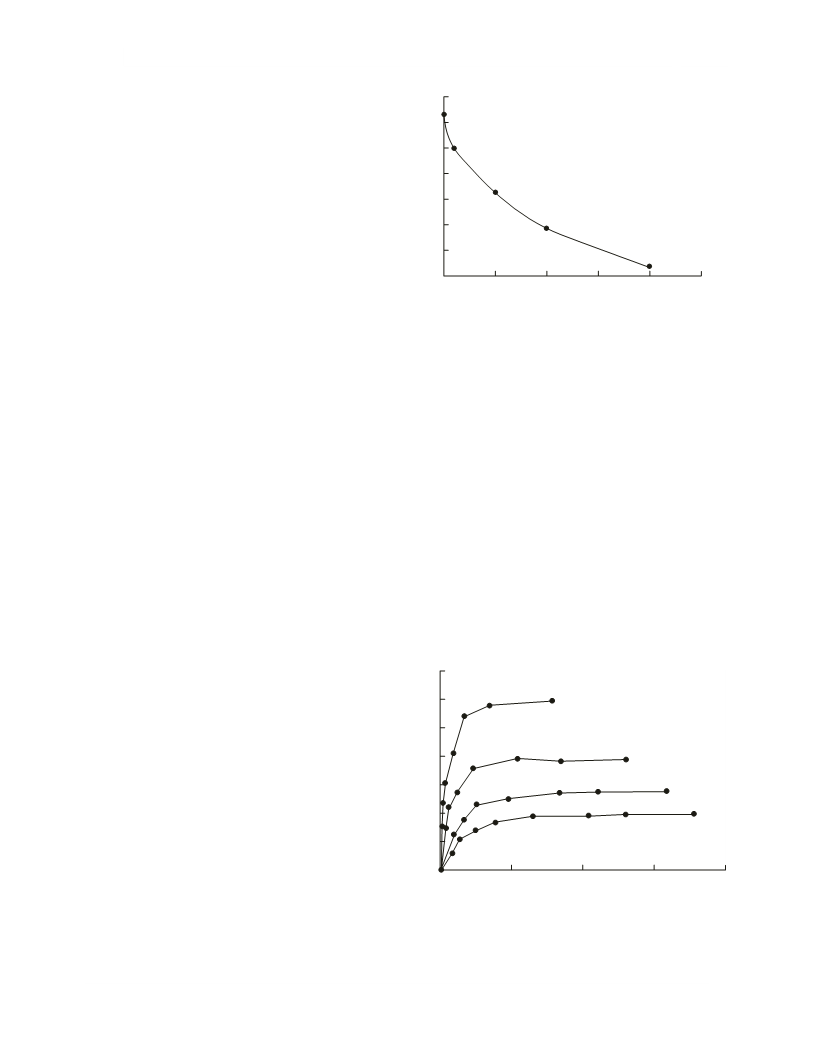
Fig. 3. Temperature effect on gold(III) extraction from
–4
0.5 M HCl solutions (Ò
= 1.6 × 10 mol/L; Ò = 5 ×
Au(III)
S
–4
10 mol/L).
ant withstood at least five cycles of gold(III) extrac-
tion/stripping, holding its efficiency and capacity
unchanged.
the intrinsic color of the AuCl–4 ion, does not appear.
To study the selectivity of the extractant, we
extracted complex hydrochloric acid solutions that con-
tained platinum(IV), iron(III), nickel(II), copper(II),
and zinc(II) in addition to gold(III). The analysis of raf-
finates showed that gold(III) was almost totally trans-
ferred to the organic phase, while the nonprecious and
The isolated extracted gold(III) complex, after dry-
ing, was a yellow-brown glassy mass, which could be
powdered. The decomposition onset temperature was
145°ë; the compound was stable during several days in
light under the ambient standard conditions.
Figure 3 displays a gold(III) extraction versus tem- ferrous metals remained in the aqueous phase.
perature curve, which shows that the gold(III) recovery
decreases with increasing temperature.
From the above-described studies, we can infer that
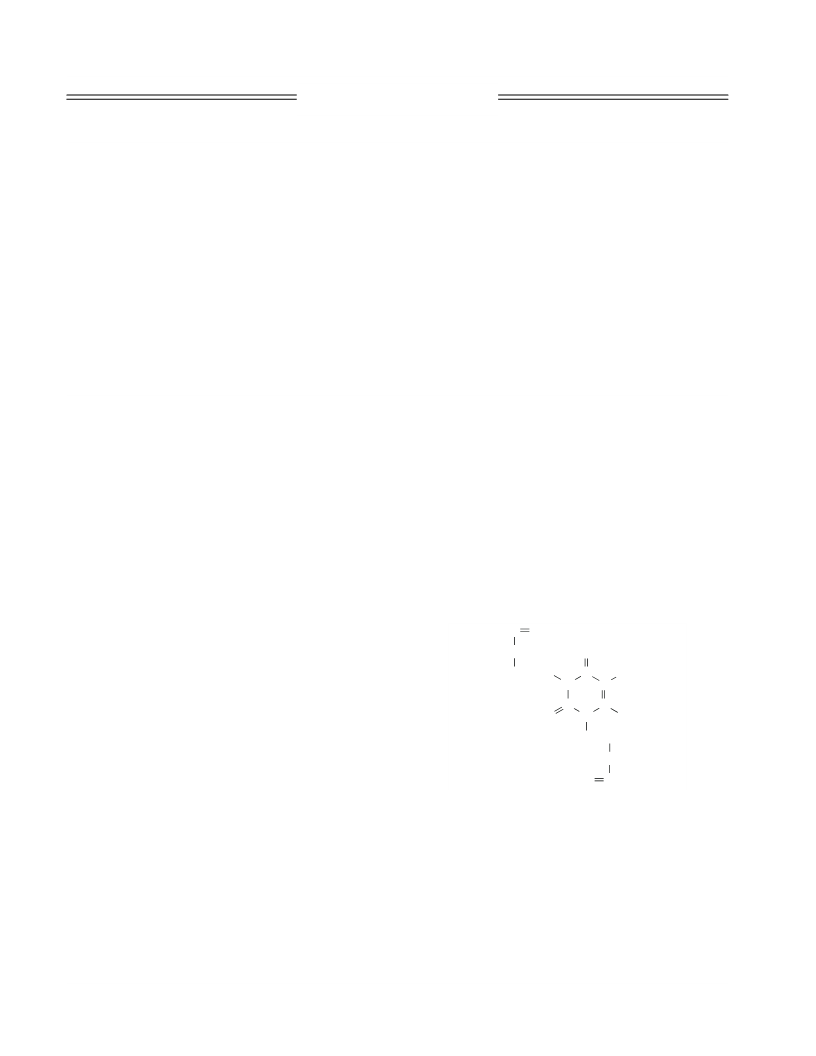
1,3-bis(2'-acetoxymethylthiobutyl-3'-thiobutylpropyl)-
From the whole data set, we can infer that the
extraction of gold(III) by extractant S follows the sol-
vation mechanism. The gold(III) extraction reaction at
cAu > cS is
6-methyluracyl, as an extractant for gold(III), combines
a high efficiency, capacity, selectivity, and redox stabil-
ity, and as distinct from the other tioethers, it can be
reused.
4AuCl–4 + S = (AuCl3)4 · S + 4Cl–.
REFERENCES
Based on the NMR spectroscopic data, we can state
that gold(III) extraction occurs via systematic coordi-
nation of metal ions by the donor sulfur atoms of the
1. G. A. Kostin, V. V. Tatarchuk, and V. G. Torgov, Zh.
Neorg. Khim. 47 (12), 2087 (2002) [Russ. J. Inorg.
Chem. 47 (12), 1922 (2002)].
extractant, i.e., via consecutive generation of S
Au
2. E. Lachowicz and M. Czapiuk, Talanta 37 (10), 1011
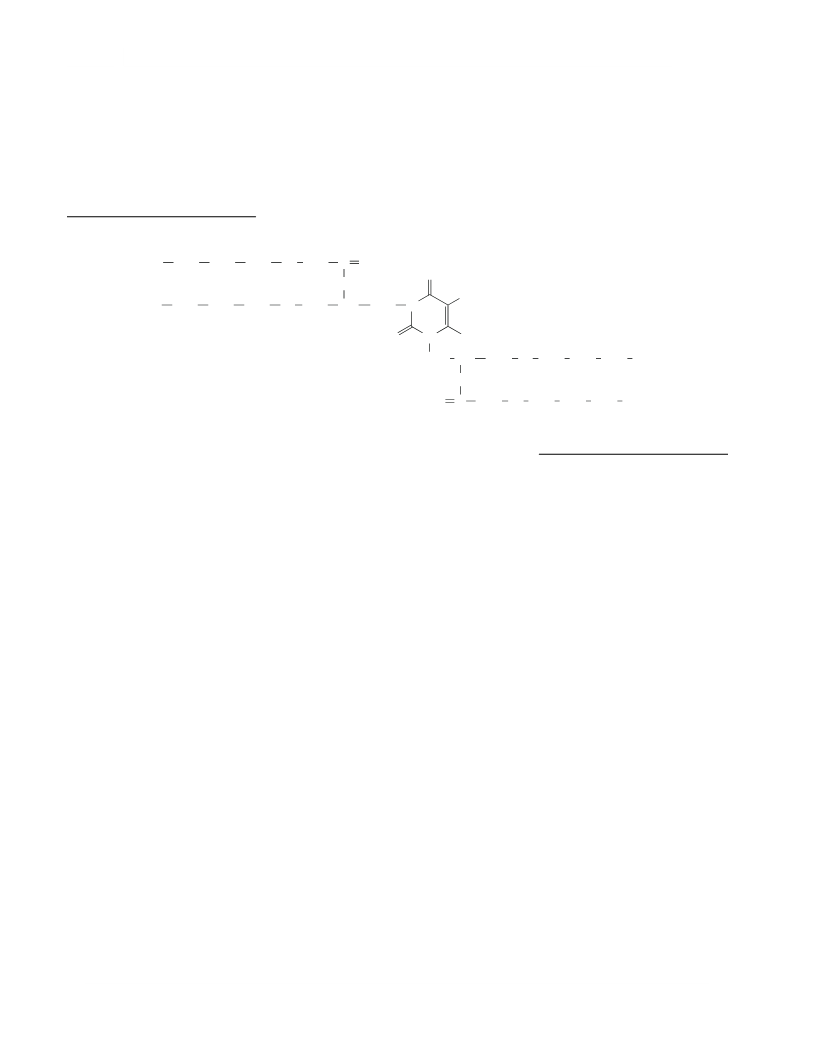
bonds. In the initial segments of the isotherms (with an
excess of the extractant), monosolvate AuCl3 · S is
mainly formed; with rising gold(III) concentration,
(AuCl3)2 · S and other solvates are formed.
(1990).
3. H. Ma, Guijinshu 10 (2), 1 (1989).
4. V. Torgov, G. Kostin, V. Mashukov, et al., Solv. Extr. Ion
Exch. 23 (2), 171 (2005).
The reuse of extractants is technologically conve-
nient and profitable. Therefore, we attempted to repeat
the extraction with solutions of extractant S after it was
separated from extracted gold(III). Gold(III) was
stripped from organic phases with a 5% aqueous solu-
tion of sodium sulfite; the organic-to-aqueous phase
ratio was 1 : 1, the stripping time did not exceed 1 min,
and phase separation was virtually instantaneous. After
stripping, the organic phase was several times washed
with water. These experiments showed that the extract-
5. R. A. Khisamutdinov, O. V. Prokhorova, Yu. I. Murinov,
et al., Zh. Neorg. Khim. 49 (7), 1218 (2004) [Russ. J.
Inorg. Chem. 49 (7), 1119 (2004)].
6. M. Dominguez, E. Antico, L. Beyer, et al., Polyhedron
21 (14–15), 1429 (2002).
7. M. S. Dzul Eroza, R. Navarro Mendoza, T. I. Saucedo
Medina, et al., Proceedings of the International Confer-
ence on Solvent Extraction, Capetown, 2002 (ISEC
2002).
RUSSIAN JOURNAL OF INORGANIC CHEMISTRY Vol. 52 No. 11 2007

 Khisamutdinov