
Welcome to LookChem.com Sign In|Join Free
  • or
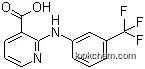
Niflumic acid is a non-steroidal anti-inflammatory drug (NSAID) with both analgesic and anti-inflammatory properties. It is a selective cyclooxygenase-2 (COX-2) inhibitor, which makes it effective in reducing inflammation and pain without causing significant gastrointestinal side effects.

4394-00-7

Post Buying Request

4394-00-7 Suppliers

Recommended suppliers

  • Product
  • FOB Price
  • Min.Order
  • Supply Ability
  • Supplier
  • Contact Supplier

4394-00-7 Usage

Uses

Used in Pharmaceutical Industry:
Niflumic acid is used as an analgesic and anti-inflammatory agent for the treatment of various conditions characterized by pain and inflammation, such as arthritis, musculoskeletal disorders, and other inflammatory diseases.
Used in Medical Applications:
Niflumic acid is used as a selective COX-2 inhibitor for the management of inflammation and pain, providing targeted relief without causing significant gastrointestinal side effects, which are common with non-selective NSAIDs.
Synonyms for Niflumic acid include actol, flunir, nifluril, and others, indicating its widespread use and recognition in the medical field.

Originator

Nifluril,U.P.S.A.,France,1968

Manufacturing Process

Niflumic acid is prepared as follows: Nicotinic acid, m-trifluoromethylaniline, and potassium iodide are intimately mixed and heated on an oil bath at 140°C. The mixture melts to give a dark red liquid. The temperature of the oil bath is allowed to fall to 100°C and is maintained at this temperature for an hour and a half. The mixture puffs up and forms a yellow crystalline mass. After cooling to ordinary temperature, this mass is ground up in a mortar and extracted several times with small volumes of ether to remove excess mtrifluoromethylaniline. The residue is then washed twice with 10 ml of distilled water to remove m-trifluoromethylaniline hydrochloride and potassium iodide, and finally twice with 10 ml of 95% alcohol to remove colored resinous contaminants. After drying at 100°C, 2-(m-trifluoromethylanilino)nicotinic acid is obtained as pale yellow needles (from 70% ethanol) melting at 204°C (Kofler block).

Therapeutic Function

Antiinflammatory

Biochem/physiol Actions

Niflumic acid (NFA), a γ-aminobutyric acid type A receptor (GABAARs) antagonist is a non-steroidal anti-inflammatory drug (NSAID) and it belongs to the fenamate class. It is also a blocker of chloride ion channel and a calcium-activated chloride channel (CaCC) inhibitor. NFA possesses anti-inflammatory property and is useful in treating rheumatic disorders. It is also an inhibitor of N-methyl-D-aspartate receptor and glycine receptor. NFA also inhibits enzymes associated with the prostaglandins synthesis.

Synthesis

Niflumic acid, 2-3-(trifluoromethyl)anilino nicotinic acid (3.2.21), is synthesized either by the reaction of 2-chloronicotinic acid with 3-trifluoromethylaniline [84–86], or 2-aminonicotinic acid with 1-bromo-3-trifluoromethylbenzene [87].

Check Digit Verification of cas no

The CAS Registry Mumber 4394-00-7 includes 7 digits separated into 3 groups by hyphens. The first part of the number,starting from the left, has 4 digits, 4,3,9 and 4 respectively; the second part has 2 digits, 0 and 0 respectively.
Calculate Digit Verification of CAS Registry Number 4394-00:
(6*4)+(5*3)+(4*9)+(3*4)+(2*0)+(1*0)=87
87 % 10 = 7
So 4394-00-7 is a valid CAS Registry Number.
InChI:InChI=1/C13H9F3N2O2/c14-13(15,16)8-3-1-4-9(7-8)18-11-10(12(19)20)5-2-6-17-11/h1-7H,(H,17,18)(H,19,20)/p-1

4394-00-7 Well-known Company Product Price

  • Brand
  • (Code)Product description
  • CAS number
  • Packaging
  • Price
  • Detail
  • TCI America

  • (T2353)  2-(3-Trifluoromethylanilino)nicotinic Acid  >98.0%(HPLC)(T)

  • 4394-00-7

  • 25g

  • 450.00CNY

  • Detail
  • Sigma-Aldrich

  • (Y0000824)  Niflumic acid  European Pharmacopoeia (EP) Reference Standard

  • 4394-00-7

  • Y0000824

  • 1,880.19CNY

  • Detail
  • Sigma

  • (N0630)  Niflumic acid  

  • 4394-00-7

  • N0630-10G

  • 590.85CNY

  • Detail
  • Sigma

  • (N0630)  Niflumic acid  

  • 4394-00-7

  • N0630-25G

  • 1,313.91CNY

  • Detail

4394-00-7Synthetic route

2-chloronicotinic acid
2942-59-8

2-chloronicotinic acid

3-trifluoromethylaniline
98-16-8

3-trifluoromethylaniline

Niflumic Acid
4394-00-7

Niflumic Acid

Conditions
ConditionsYield
With pyridine; toluene-4-sulfonic acid In water Heating;
With potassium iodide at 100 - 140℃; for 1.5h;
1-(3'-trifluoromethylphenyl)-2-methyl-4H-1,2-dihydro-pyrido-<2,3-d>-<1,3>-oxazin-4-one
137488-50-7

1-(3'-trifluoromethylphenyl)-2-methyl-4H-1,2-dihydro-pyrido-<2,3-d>-<1,3>-oxazin-4-one

Niflumic Acid
4394-00-7

Niflumic Acid

Conditions
ConditionsYield
With water In methanol at 20℃; Rate constant; pH from 4.0 to 9.0, half-live-time;
1-(3'-trifluoromethylphenyl)-4H-1,2-dihydro-pyrido-<2,3-d>-<1,3>-oxazin-4-one
137488-34-7

1-(3'-trifluoromethylphenyl)-4H-1,2-dihydro-pyrido-<2,3-d>-<1,3>-oxazin-4-one

Niflumic Acid
4394-00-7

Niflumic Acid

Conditions
ConditionsYield
With water In methanol at 20℃; Rate constant; pH from 4.0 to 9.0, half-live-time;
1-(3'-trifluoromethylphenyl)-2-methoxy-4H-1,2-dihydro-pyrido-<2,3-d>-<1,3>-oxazin-4-one
137488-47-2

1-(3'-trifluoromethylphenyl)-2-methoxy-4H-1,2-dihydro-pyrido-<2,3-d>-<1,3>-oxazin-4-one

Niflumic Acid
4394-00-7

Niflumic Acid

Conditions
ConditionsYield
With water In methanol at 20℃; Rate constant; pH from 4.0 to 8.0, half-live-time;
1-(3'-trifluoromethylphenyl)-2-chloromethyl-4H-1,2-dihydro-pyrido-<2,3-d>-<1,3>-oxazin-4-one
137488-49-4

1-(3'-trifluoromethylphenyl)-2-chloromethyl-4H-1,2-dihydro-pyrido-<2,3-d>-<1,3>-oxazin-4-one

Niflumic Acid
4394-00-7

Niflumic Acid

Conditions
ConditionsYield
With water In methanol at 20℃; Rate constant; pH from 4.0 to 9.0, half-live-time;
1-(3'-trifluoromethylphenyl)-2-ethoxy-4H-1,2-dihydro-pyrido-<2,3-d>-<1,3>-oxazin-4-one
137488-48-3

1-(3'-trifluoromethylphenyl)-2-ethoxy-4H-1,2-dihydro-pyrido-<2,3-d>-<1,3>-oxazin-4-one

Niflumic Acid
4394-00-7

Niflumic Acid

Conditions
ConditionsYield
With water In methanol at 20℃; Rate constant; pH from 4.0 to 8.0, half-live-time;
2-<<3-(Trifluormethyl)phenyl>amino>3-pyridincarbonsaeure-2-oxopropylester
137138-26-2

2-<<3-(Trifluormethyl)phenyl>amino>3-pyridincarbonsaeure-2-oxopropylester

Niflumic Acid
4394-00-7

Niflumic Acid

Conditions
ConditionsYield
With buffer pH 8.0 In 1,4-dioxane; acetonitrile at 57℃; half-life time of hydrolysis at different pH;
3-morpholinopropyl 2-(3-(trifluoromethyl)phenylamino)pyridine-3-carboxylate
929257-58-9

3-morpholinopropyl 2-(3-(trifluoromethyl)phenylamino)pyridine-3-carboxylate

A

4-(1-hydroxypropyl)morpholine
5835-79-0

4-(1-hydroxypropyl)morpholine

B

Niflumic Acid
4394-00-7

Niflumic Acid

Conditions
ConditionsYield
In phosphate buffer at 37℃; for 48h; pH=7.4; Kinetics; Further Variations:; Solvents; reaction times;
4-morpholinobutyl 2-(3-(trifluoromethyl)phenylamino)pyridine-3-carboxylate
929257-57-8

4-morpholinobutyl 2-(3-(trifluoromethyl)phenylamino)pyridine-3-carboxylate

A

5-(morpholin-4-yl)pentan-1-ol
4344-62-1

5-(morpholin-4-yl)pentan-1-ol

B

Niflumic Acid
4394-00-7

Niflumic Acid

Conditions
ConditionsYield
In phosphate buffer at 37℃; for 48h; pH=7.4; Kinetics; Further Variations:; Solvents; reaction times;
2-(3-trifluoromethyl-phenylamino)nicotinic acid propylcarbamoylmethyl ester
735318-84-0

2-(3-trifluoromethyl-phenylamino)nicotinic acid propylcarbamoylmethyl ester

A

propylamine
107-10-8

propylamine

B

Niflumic Acid
4394-00-7

Niflumic Acid

C

glycolic acid proylamide
104749-83-9

glycolic acid proylamide

Conditions
ConditionsYield
With potassium chloride In phosphate buffer; acetonitrile at 37℃; for 0.266667h; pH=7.4; Kinetics; Enzymatic reaction;
N,N-diethylcarbamoylmethyl 2-[3-(trifluoromethyl)anilino]nicotinic ester
533925-39-2

N,N-diethylcarbamoylmethyl 2-[3-(trifluoromethyl)anilino]nicotinic ester

A

N,N-diethyl-2-hydroxyacetamide
39096-01-0

N,N-diethyl-2-hydroxyacetamide

B

Niflumic Acid
4394-00-7

Niflumic Acid

C

diethylamine
109-89-7

diethylamine

Conditions
ConditionsYield
With potassium chloride In phosphate buffer; acetonitrile at 37℃; for 0.266667h; pH=7.4; Kinetics; Enzymatic reaction;
morpholinocarbamoylmethyl 2-[3-(trifluoromethyl)anilino]nicotinic ester
533925-45-0

morpholinocarbamoylmethyl 2-[3-(trifluoromethyl)anilino]nicotinic ester

A

morpholine
110-91-8

morpholine

B

2-hydroxy-1-(morpholin-4-yl)ethan-1-one
51068-78-1

2-hydroxy-1-(morpholin-4-yl)ethan-1-one

C

Niflumic Acid
4394-00-7

Niflumic Acid

Conditions
ConditionsYield
With potassium chloride In phosphate buffer; acetonitrile at 37℃; for 0.266667h; pH=7.4; Kinetics; Enzymatic reaction;
Niflumic Acid
4394-00-7

Niflumic Acid

o-toluidine
95-53-4

o-toluidine

N-o-tolyl-2-(3-trifluoromethyl-anilino)-nicotinamide
31991-24-9

N-o-tolyl-2-(3-trifluoromethyl-anilino)-nicotinamide

Conditions
ConditionsYield
With N,N-bis[2-oxo-3-oxazolidinyl]phosphorodiamidic chloride; triethylamine In dichloromethane at 20 - 25℃; for 1h;97%
Niflumic Acid
4394-00-7

Niflumic Acid

2-((4-bromobutanoyl)oxy)propane-1,3-diyl dipalmitate
185672-31-5

2-((4-bromobutanoyl)oxy)propane-1,3-diyl dipalmitate

2-(3-Trifluoromethyl-phenylamino)-nicotinic acid 3-(2-hexadecanoyloxy-1-hexadecanoyloxymethyl-ethoxycarbonyl)-propyl ester

2-(3-Trifluoromethyl-phenylamino)-nicotinic acid 3-(2-hexadecanoyloxy-1-hexadecanoyloxymethyl-ethoxycarbonyl)-propyl ester

Conditions
ConditionsYield
With 1,8-diazabicyclo[5.4.0]undec-7-ene In benzene for 16h; Heating;97%
Niflumic Acid
4394-00-7

Niflumic Acid

o-phthalic dicarboxaldehyde
643-79-8

o-phthalic dicarboxaldehyde

talniflumate

talniflumate

Conditions
ConditionsYield
With 3,5,3',5'-tetra-tert-butyl-4,4'-diphenoquinone; C18H12BrCl3N3O(1+)*BF4(1-); potassium carbonate; lithium chloride In chloroform at 20℃; for 12h; enantioselective reaction;96%
formaldehyd
50-00-0

formaldehyd

Niflumic Acid
4394-00-7

Niflumic Acid

1-(3'-trifluoromethylphenyl)-4H-1,2-dihydro-pyrido-<2,3-d>-<1,3>-oxazin-4-one
137488-34-7

1-(3'-trifluoromethylphenyl)-4H-1,2-dihydro-pyrido-<2,3-d>-<1,3>-oxazin-4-one

Conditions
ConditionsYield
With zinc(II) chloride In chloroform for 24h; Heating;93%
1, 3-dicaprin
17598-93-5

1, 3-dicaprin

Niflumic Acid
4394-00-7

Niflumic Acid

2-(3-Trifluoromethyl-phenylamino)-nicotinic acid 2-decanoyloxy-1-decanoyloxymethyl-ethyl ester

2-(3-Trifluoromethyl-phenylamino)-nicotinic acid 2-decanoyloxy-1-decanoyloxymethyl-ethyl ester

Conditions
ConditionsYield
With allyl bromide; 1,1'-carbonyldiimidazole for 16h; Heating;92%
cholesterol
57-88-5

cholesterol

Niflumic Acid
4394-00-7

Niflumic Acid

2-(3-Trifluoromethyl-phenylamino)-nicotinic acid (3S,8S,9S,10R,13R,14S,17R)-17-((R)-1,5-dimethyl-hexyl)-10,13-dimethyl-2,3,4,7,8,9,10,11,12,13,14,15,16,17-tetradecahydro-1H-cyclopenta[a]phenanthren-3-yl ester

2-(3-Trifluoromethyl-phenylamino)-nicotinic acid (3S,8S,9S,10R,13R,14S,17R)-17-((R)-1,5-dimethyl-hexyl)-10,13-dimethyl-2,3,4,7,8,9,10,11,12,13,14,15,16,17-tetradecahydro-1H-cyclopenta[a]phenanthren-3-yl ester

Conditions
ConditionsYield
With allyl bromide; 1,1'-carbonyldiimidazole for 16h; Heating;88%
R,S-5-Brom-2,2-dimethyl-1,3-dioxolan-4-on
134674-19-4

R,S-5-Brom-2,2-dimethyl-1,3-dioxolan-4-on

Niflumic Acid
4394-00-7

Niflumic Acid

2-<3-(Trifluormethyl)phenylamino>-pyridin-3-carbonsaeure-(2,2-dimethyl-1,3-dioxolan-4-on-5-yl)ester
134674-25-2

2-<3-(Trifluormethyl)phenylamino>-pyridin-3-carbonsaeure-(2,2-dimethyl-1,3-dioxolan-4-on-5-yl)ester

Conditions
ConditionsYield
With triethylamine In acetone Ambient temperature;87%
Niflumic Acid
4394-00-7

Niflumic Acid

acetic acid
64-19-7

acetic acid

2-diethylaminoethyl 2-[[3-(trifluoromethyl)phenyl]amino]-3-pyridinecarboxylate acetate

2-diethylaminoethyl 2-[[3-(trifluoromethyl)phenyl]amino]-3-pyridinecarboxylate acetate

Conditions
ConditionsYield
Stage #1: 2-bromo-N,N-diethylethanamine hydrobromide; Niflumic Acid With sodium hydrogencarbonate In water; acetone at 20℃; for 5h;
Stage #2: acetic acid In ethyl acetate; acetone
86.1%
Niflumic Acid
4394-00-7

Niflumic Acid

hexadecanyl bromide
112-82-3

hexadecanyl bromide

2-(3-Trifluoromethyl-phenylamino)-nicotinic acid hexadecyl ester

2-(3-Trifluoromethyl-phenylamino)-nicotinic acid hexadecyl ester

Conditions
ConditionsYield
With 1,8-diazabicyclo[5.4.0]undec-7-ene In benzene for 16h; Heating;85%
1,1-dimethoxyethane
534-15-6

1,1-dimethoxyethane

Niflumic Acid
4394-00-7

Niflumic Acid

1-(3'-trifluoromethylphenyl)-2-methyl-4H-1,2-dihydro-pyrido-<2,3-d>-<1,3>-oxazin-4-one
137488-50-7

1-(3'-trifluoromethylphenyl)-2-methyl-4H-1,2-dihydro-pyrido-<2,3-d>-<1,3>-oxazin-4-one

Conditions
ConditionsYield
With toluene-4-sulfonic acid In toluene for 4h; Heating;83%
hexadecanoic acid, 2-hydroxy-1,3-propanediyl ester
502-52-3

hexadecanoic acid, 2-hydroxy-1,3-propanediyl ester

Niflumic Acid
4394-00-7

Niflumic Acid

2-(3-Trifluoromethyl-phenylamino)-nicotinic acid 2-hexadecanoyloxy-1-hexadecanoyloxymethyl-ethyl ester

2-(3-Trifluoromethyl-phenylamino)-nicotinic acid 2-hexadecanoyloxy-1-hexadecanoyloxymethyl-ethyl ester

Conditions
ConditionsYield
With allyl bromide; 1,1'-carbonyldiimidazole for 16h; Heating;82%
cobalt(II) chloride hexahydrate

cobalt(II) chloride hexahydrate

Bathocuproine
4733-39-5

Bathocuproine

Niflumic Acid
4394-00-7

Niflumic Acid

[Co(bathocuproin)(niflumato)2]

[Co(bathocuproin)(niflumato)2]

Conditions
ConditionsYield
With potassium hydroxide In methanol at 60℃; for 1h;82%
Niflumic Acid
4394-00-7

Niflumic Acid

(E)-3-(4-hydroxy-3-methoxyphenyl)allyl 2-((3-(trifluoromethyl) phenyl)amino)nicotinate

(E)-3-(4-hydroxy-3-methoxyphenyl)allyl 2-((3-(trifluoromethyl) phenyl)amino)nicotinate

Conditions
ConditionsYield
Stage #1: coniferal alcohol With dmap; 1-ethyl-(3-(3-dimethylamino)propyl)-carbodiimide hydrochloride In dichloromethane at 20℃; for 0.5h; Steglich Esterification; Inert atmosphere;
Stage #2: Niflumic Acid In dichloromethane at 20℃; for 24.5h; Steglich Esterification; Inert atmosphere;
81%
3-Bromophthalide
6940-49-4

3-Bromophthalide

Niflumic Acid
4394-00-7

Niflumic Acid

talniflumate
66898-62-2

talniflumate

Conditions
ConditionsYield
With triethylamine; sodium iodide In acetone for 2h; Heating;80%
With triethylamine In water; acetone52% (20.5 g)
Niflumic Acid
4394-00-7

Niflumic Acid

Hexadecanoic acid 3-hexadecanoyloxy-2-(4-hydroxy-butyryloxy)-propyl ester
185672-32-6

Hexadecanoic acid 3-hexadecanoyloxy-2-(4-hydroxy-butyryloxy)-propyl ester

2-(3-Trifluoromethyl-phenylamino)-nicotinic acid 3-(2-hexadecanoyloxy-1-hexadecanoyloxymethyl-ethoxycarbonyl)-propyl ester

2-(3-Trifluoromethyl-phenylamino)-nicotinic acid 3-(2-hexadecanoyloxy-1-hexadecanoyloxymethyl-ethoxycarbonyl)-propyl ester

Conditions
ConditionsYield
With allyl bromide; 1,1'-carbonyldiimidazole In chloroform for 16h; Heating;80%
3-Methylpyridine
108-99-6

3-Methylpyridine

copper(II) choride dihydrate

copper(II) choride dihydrate

Niflumic Acid
4394-00-7

Niflumic Acid

[Cu2Cl2(niflumic acid(-H))2(3‐picoline)4]

[Cu2Cl2(niflumic acid(-H))2(3‐picoline)4]

Conditions
ConditionsYield
Stage #1: 3-Methylpyridine; copper(II) choride dihydrate In methanol at 50℃;
Stage #2: Niflumic Acid With potassium hydroxide In methanol for 0.5h;
80%
Chloromethyl pivalate
18997-19-8

Chloromethyl pivalate

Niflumic Acid
4394-00-7

Niflumic Acid

2-<<3-(trifluormetil)fenil>amino>-3-piridincarboxilato de pivaloiloximetilo
66898-68-8

2-<<3-(trifluormetil)fenil>amino>-3-piridincarboxilato de pivaloiloximetilo

Conditions
ConditionsYield
With triethylamine; sodium iodide In acetone for 4h; Heating;79.5%

4394-00-7Relevant academic research and scientific papers

Development of LM98, a Small-Molecule TEAD Inhibitor Derived from Flufenamic Acid

Mélin, Léa,Abdullayev, Shuay,Fnaiche, Ahmed,Vu, Victoria,González Suárez, Narjara,Zeng, Hong,Szewczyk, Magdalena M.,Li, Fengling,Senisterra, Guillermo,Allali-Hassani, Abdellah,Chau, Irene,Dong, Aiping,Woo, Simon,Annabi, Borhane,Halabelian, Levon,LaPlante, Steven R.,Vedadi, Masoud,Barsyte-Lovejoy, Dalia,Santhakumar, Vijayaratnam,Gagnon, Alexandre

, p. 2982 - 3002 (2021/08/03)

The YAP-TEAD transcriptional complex is responsible for the expression of genes that regulate cancer cell growth and proliferation. Dysregulation of the Hippo pathway due to overexpression of TEAD has been reported in a wide range of cancers. Inhibition of TEAD represses the expression of associated genes, demonstrating the value of this transcription factor for the development of novel anti-cancer therapies. We report herein the design, synthesis and biological evaluation of LM98, a flufenamic acid analogue. LM98 shows strong affinity to TEAD, inhibits its autopalmitoylation and reduces the YAP-TEAD transcriptional activity. Binding of LM98 to TEAD was supported by 19F-NMR studies while co-crystallization experiments confirmed that LM98 is anchored within the palmitic acid pocket of TEAD. LM98 reduces the expression of CTGF and Cyr61, inhibits MDA-MB-231 breast cancer cell migration and arrests cell cycling in the S phase during cell division.

Design and synthesis of niflumic acid-based N-acylhydrazone derivatives as novel anti-inflammatory and analgesic agents

Kheradmand, Amin,Navidpour, Latifeh,Shafaroodi, Hamed,Saeedi-Motahar, Ghazaleh,Shafiee, Abbas

, p. 2411 - 2420 (2013/07/26)

A new series of niflumic acid-based N-acylhydrazone derivatives 5a-p were synthesized and evaluated for their anti-inflammatory and analgesic activities. Most of the compounds have shown anti-inflammatory activity with a moderate-to-excellent activity range (20-80 % reduction in inflammation). Among them, 3-chlorophenyl 5d and 3-pyridyl derivatives 5o exhibited the most potent anti-inflammatory activity relative to niflumic acid as the reference drug (77, 76, and 70 % reduction in inflammation at 1-h postdrug administration, respectively). Also, molecular simplification of niflumic acid through replacing the N-aryl group with N-methyl group produced compounds 6a-f with anti-inflammatory activity in a quite similar manner to those of their parent derivatives. In this subgroup, 4-pyridyl derivative 6f showed the most potent anti-inflammatory activity relative to niflumic acid (80 % reduction in inflammation at 1-h postdrug administration). The compounds with highest anti-inflammatory activity were subjected to analgesic assays and showed moderate-to-excellent analgesic activities. The compound 5j, 4-methoxy derivative, exhibited the highest analgesic activity relative to niflumic acid (97 and 68 % activity, respectively).

Stability studies of some glycolamide ester prodrugs of niflumic acid in aqueous buffers and human plasma by HPLC with UV detection

Talath, Sirajunisa,Shirote, Pramod J.,Lough, W. John,Gadad, Andanappa K.

, p. 631 - 639 (2008/02/12)

Glycolamide esters (compounds 1-17) of 2-(3-trifluoromethyl-phenylamino) nicotinic acid (niflumic acid, CAS 4394-00-7) have been synthesized and evaluated as possible prodrugs. In-vitro hydrolysis studies were conducted at selected pH values (1.2, 3.5, 4.8, 7.4 and 7.8) and in human plasma at 37 ± 0.5 °C using HPLC with UV detection. The aqueous (pH 7.4 and 7.8) and enzymatic rates of hydrolysis were substantially affected by the nature of promoieties in this series. The compounds showed good chemical stability in the buffers of low pH values (1.2, 3.5 and 4.8) and appreciable hydrolysis under alkaline conditions and in human plasma. They exhibited long hydrolytic half-lives of 7-46 h in aqueous buffer solutions (pH 7.4 and 7.8) and 14-21 min in human plasma, respectively. It was observed that N,N-disubstituted and cyclic glycolamide derivatives showed 2 fold more hydrolysis in the alkaline pH than monosubstituted derivatives, whereas the piperidino and thiomorpholino derivatives did not undergo chemical hydrolysis. The compounds contain two possible sites for hydrolysis with an increased hydrolytic susceptibility at the terminal aliphatic carbonyl site in aqueous buffers and human plasma solutions. They were found to be cleaved at two hydrolytic carbonyls, namely the nicotinyl (2-5% in enzymatic hydrolysis) and the aliphatic site (7-55% and 70-85% in buffer and plasma hydrolysis, respectively) as revealed by HPLC analysis. The glycolamide ester prodrugs of niflumic acid underwent chemical and enzymatic hydrolysis to release mainly the metabolite 2- (3-trifluoromethyl-phenylamino) nicotinic acid carboxymethyl ester (III) and not the parent drug 2-(3-trifluoromethyl-phenylamino) nicotinic acid. The structure of the metabolite was confirmed by liquid chromatography-mass spectroscopy (LCMS). ECV · Editio Cantor Verlag.

Synthesis, stability studies, anti-inflammatory activity and ulcerogenicity of morpholinoalkyl ester prodrugs of niflumic acid

Talath, Sirajunisa,Gadad, Andanappa K.

, p. 744 - 752 (2007/10/03)

In search for potential prodrugs for anti-inflammatory drug candidates in the niflumate series, novel morpholinoalkyl ester prodrugs of niflumic acid (CAS 4394-00-7) 5a-b were prepared by esterification of appropriate morpholinylalkyl alcohols 3a-b with niflumic acid 4 in the presence of dicyclohexyl carbodiimide (DCC) and catalyst dimethylamino pyridine (DMAP) at 0-5°C. The structures were confirmed by elemental and spectral data (UV, IR, 1H-NMR, 13C-NMR, and EI-MS). The ester prodrugs 5a-b showed better solubility than the parent drug niflumic acid 4 in simulated gastric fluid (SGF) and phosphate buffer (pH 7.4). The in vitro hydrolysis studies were conducted at pH 1.3 (SGF), phosphate buffer (pH 7.4) and in human plasma diluted with phosphate buffer (pH 7.4) at 37 ± 0.5°C using HPLC with UV detection. The ester prodrugs 5a-b were quantitatively hydrolyzed to the parent drug niflumic acid 4 by enzymatic and/or chemical means. It is observed that an increase in the carbon chain length rendered the prodrugs 5a-b more stable in phosphate buffer (pH 7.4) than in pH 1.3 (SGF), but they were rapidly hydrolyzed in human plasma at 37 ± 0.5°C. They exhibited longer hydrolytic half-lives of 16.11-53.30 h in aqueous buffer solutions (pH 1.3 and 7.4) and 1.63-2.73 min in human plasma, respectively. The title compounds were evaluated in vivo for anti-inflammatory activity in carrageenan induced rat paw oedema model in rats at the doses 45, 90, 150 mg/kg b.w. The test compounds exhibited good anti-inflammatory activity (46.6-53.2 % at the dose of 150 mg/kg b. w.) with respect to niflumic acid (78.7 % at the dose of 90 mg/kg b.w.). The compounds were also screened for in vivo ulcerogenicity, it was observed that the prodrug 5b was significantly less irritating to gastric mucosa than compound 5a and the parent drug niflumic acid 4 following single and chronic oral administration in rats. ECV. Editio Cantor Verlag.

Methods for use of GABAa receptor GABAergic compounds

-

, (2008/06/13)

A method is disclosed for potentiating mammalian GABA A receptor responses to GABA. The receptor responses are potentiated according to the invention by contacting GABA A receptors with GABA and an effective amount of non-steroidal anti-inflammatory agents, in particular, fenamates and structurally related compounds.

Substituted 1,3-Dihydro-2H-pyrrolopyridin-2-ones as Potential Antiinflammatory Agents

Ting, Pauline C.,Kaminski, James J.,Sherlock, Margaret H.,Tom, Wing C.,Lee, Joe F.,et al.

, p. 2697 - 2706 (2007/10/02)

A series of analogues based on the 1,3-dihydro-2H-pyrrolopyridin-2-one ring system have been synthesized and shown to possess oral antiinflammatory activity in both the reverse passive Arthus reaction (RPAR) pleural cavity assay in rats and in the adjuvant-induced arthritic rat model (AAR).Several members of this series additionally exhibit an inhibitory effect on the in vivo production of prostaglandin- and leukotriene-derived products or arachidonic acid metabolism although these compounds exhibit no significant inhibitory activity against the cyclooxygenase and 5-lipoxygenase enzymes in vitro.Structure-activity relationships in this series are discussed.

Esters and amides containing the 1-(4-chlorobenzoyl)-5-methoxy-2-methyl-1H-indole-3-acetyl moiety

-

, (2008/06/13)

Compounds of the formula STR1 wherein each X, which may be identical or different from the other X, is oxygen or imino; R1 is hydrogen, fluorine, chlorine or bromine; R2 and R3, which may be identical or different from each other, are each hydrogen; unsubstituted or mono-substituted alkyl of 1 to 6 carbon atoms, where the substituent is phenyl or dialkylamino with 1 to 3 carbon atoms in each alkyl moiety; pyridyl; or cycloalkyl of 5 to 7 carbon atoms; R2 and R3, together with each other and the nitrogen atoms to which they are attached, are pyrrolidino, piperidino, hexamethyleneimino, morpholino, N-aryl-piperazino or N-(alkyl of 1 to 3 carbon atoms)-piperazino; A is cycloalkylene of 5 to 7 carbon atoms; unsubstituted or substituted alkylene of 2 to 10 carbon atoms, where the substituents are one to two alkyls of 1 to 3 carbon atoms each, one to two carbalkoxys of 2 to 4 carbon atoms each, one to two phenyls, one to four hydroxyls, one halomethyl, one hydroxymethyl, one alkanoyloxy of 1 to 18 carbon atoms, one alkanoyloxymethyl of 1 to 18 carbon atoms in the alkanoyl moiety or one STR2 where R1, R2 and R3 have the meanings previously defined; or alkylene of 2 to 10 carbon atoms interrupted by oxygen, sulfur, sulfoxide, sulfonyl, phenyl, cyclohexyl, pyridyl, piperazino or unsubstituted or substituted imino, where the substituent on the imino group is alkyl of 1 to 6 carbon atoms, phenyl or phenylalkyl of 1 to 3 carbon atoms in the alkyl moiety; B is the acyl residue of an antiphlogistic carboxylic acid; and their non-toxic, pharmacologically acceptable acid addition salts. The compounds as well as their salts are useful as anti-inflammatories.

Post a RFQ

Enter 15 to 2000 letters.Word count: 0 letters

Attach files(File Format: Jpeg, Jpg, Gif, Png, PDF, PPT, Zip, Rar,Word or Excel Maximum File Size: 3MB)

1 Customer Service

What can I do for you?
Get Best Price

Get Best Price for 4394-00-7