Journal of The Electrochemical Society, 151 ͑1͒ A151-A157 ͑2004͒
A151
0013-4651/2003/151͑1͒/A151/7/$7.00 © The Electrochemical Society, Inc.
Synthesis, Characterization, and Electrochemical
Properties of Nanocrystalline Silver Thin Films
Obtained by Spray Pyrolysis
a,z
b
b,
b
J. Morales,a, L. Sanchez, F. Martın, J. R. Ramos-Barrado, and M. Sanchez
´
´
´
*
*
a
´
´
´
´
Departamento de Quımica Inorganica e Ingenierıa Quımica, Facultad de Ciencias,
´
´
Universidad de Cordoba, 14071 Cordoba, Spain
bLaboratorio de Materiales y Superficie (Unidad Asociada al Consejo Superior
´
´
de Investigaciones Cientificas), Universidad de Malaga, Malaga, Spain
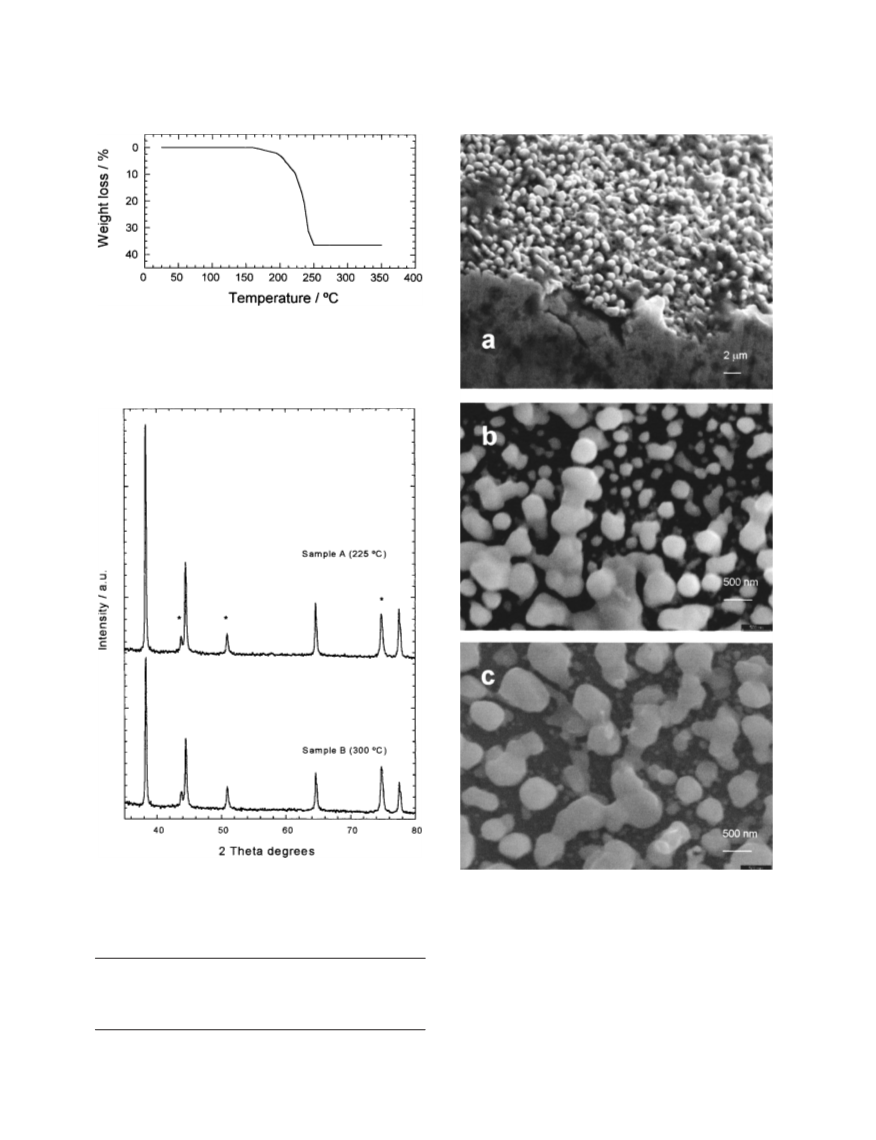
Silver thin films were prepared using a spray pyrolysis method, silver acetate as the precursor, and stainless steel, heated at 225
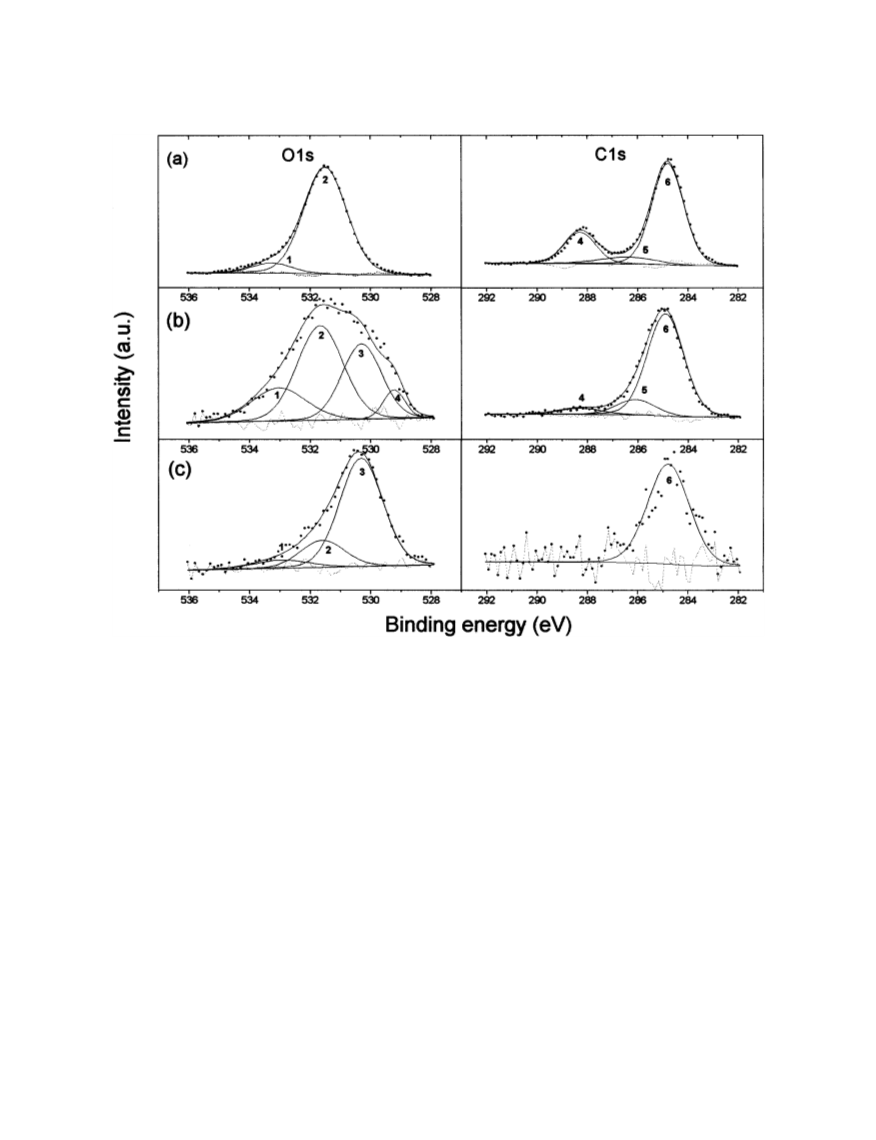
and 300°C, as the substrate. Structural and morphological analyses carried out using X-ray diffraction, X-ray photoelectron
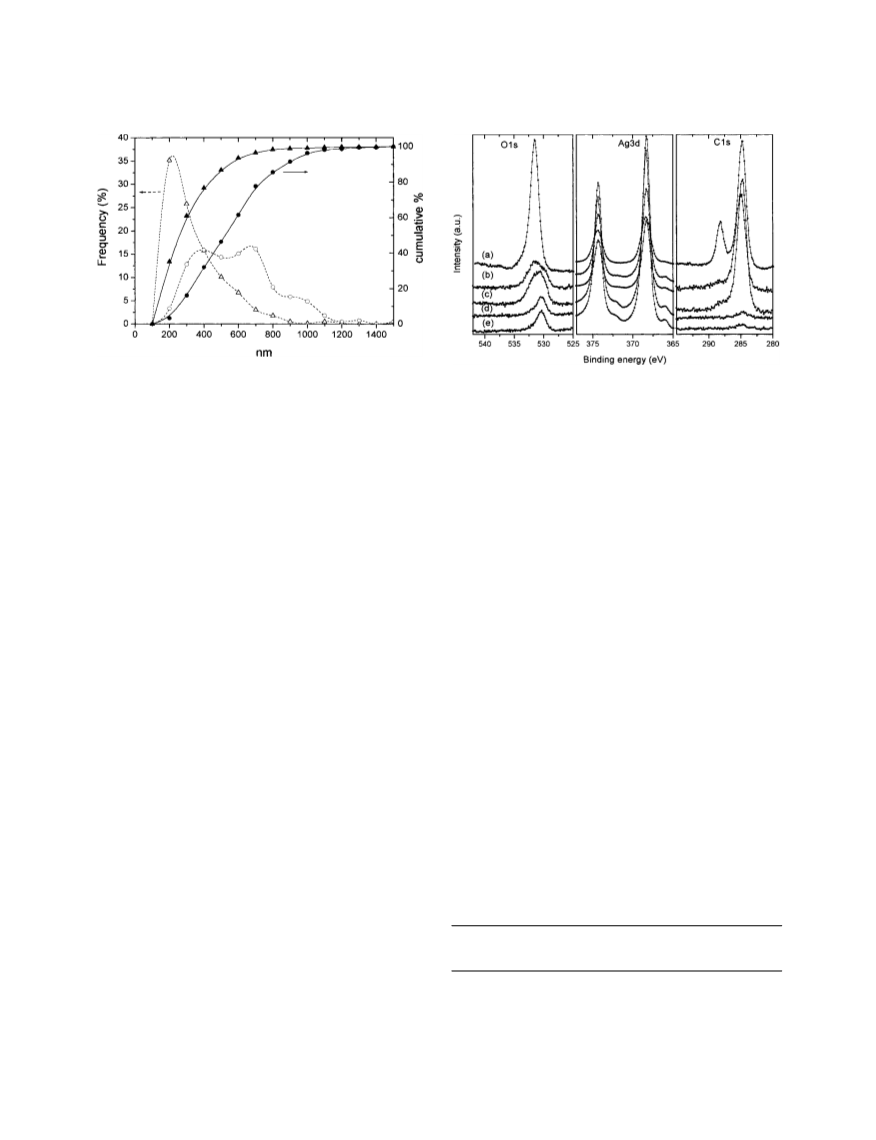
spectroscopy ͑XPS͒, and scanning electron microscopy methods revealed the formation of highly homogeneous, porous coatings
ca. 1 m thick and with nanometric Ag particles as the main component. The presence of small amounts of Ag2O was also
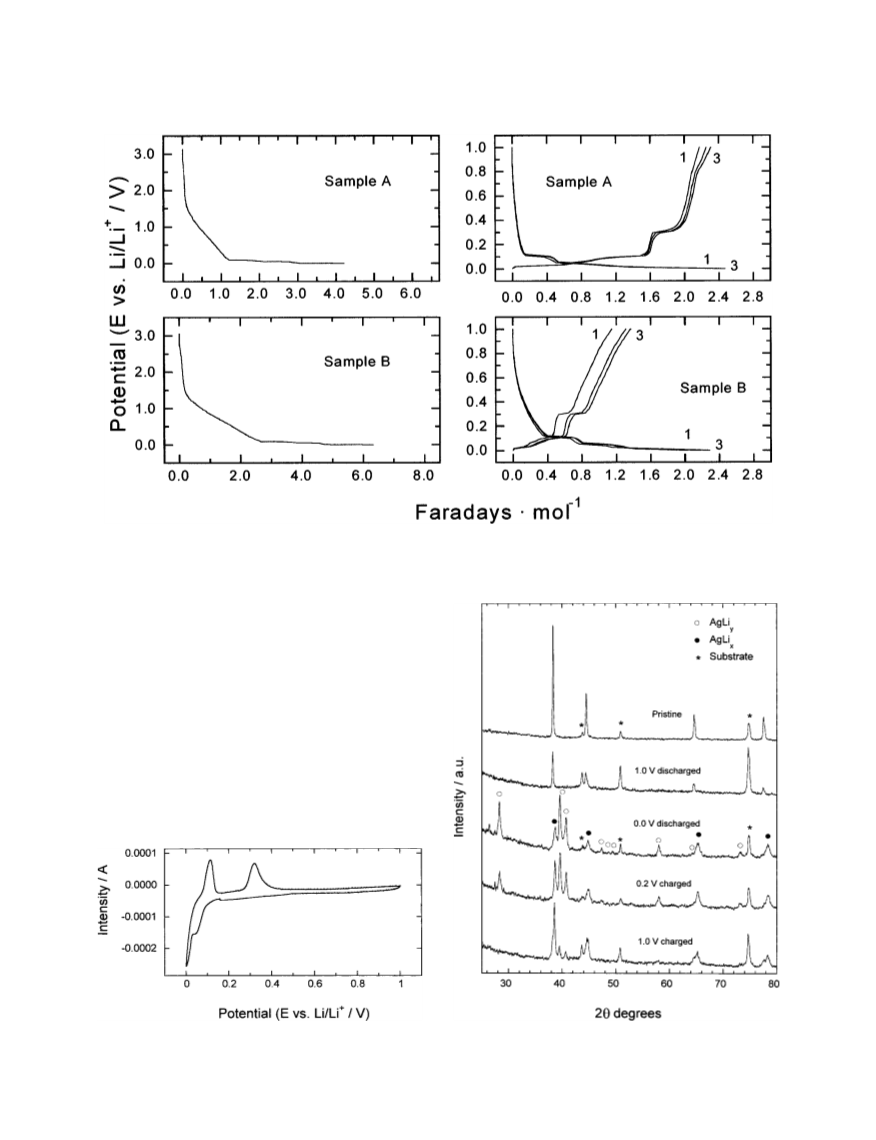
inferred from XPS data. The reduction process of these films, which are used as electrodes over the potential range 3.0-0.0 V in
lithium cells, consisted of several steps involving the formation of a solid electrolyte interface between 1.5 and 0.2 V, and at least
two Ag-Li alloys below 0.2 V, the patterns of which were indexed in the cubic and tetragonal systems, respectively. The
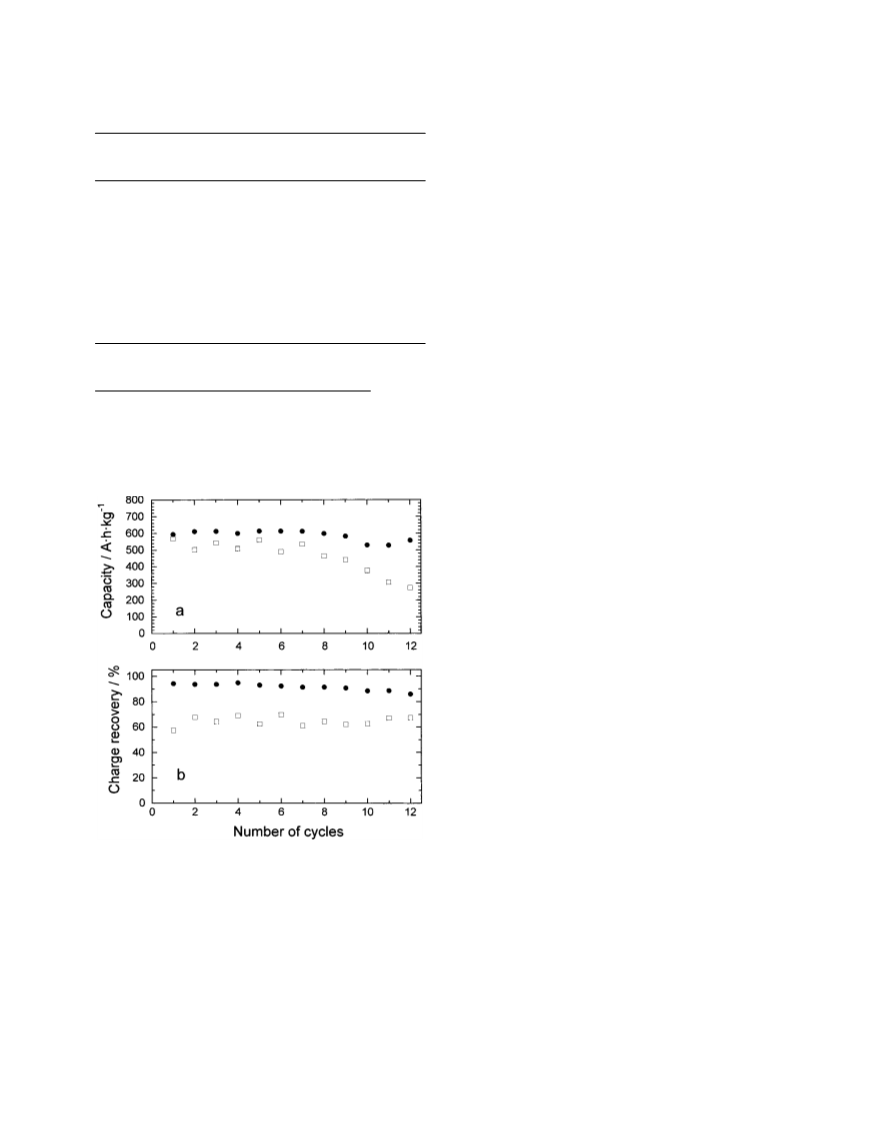
alloying/dealloying processes are reversible, and the cell can deliver a capacity of 600 Ah kgϪ1 in the potential window 1.0-0.0 V.
© 2003 The Electrochemical Society. ͓DOI: 10.1149/1.1632476͔ All rights reserved.
Manuscript submitted February 10, 2003; revised manuscript received July 25, 2003. Available electronically December 9, 2003.
In the last few years, lithium-based alloys have aroused increas-
ing interest as promising choices for use as negative electrodes in
Li-ion batteries, particularly since the inception of the Stalion
lithium-ion cell1 developed by Fuji Photo Film Celltec. Co. ͑Japan͒,
which showed that tin-based systems exhibit high specific capacities
as anode materials by virtue of their ability to form LixSn alloys,
ler. The substrate was moved forward and backward at a fixed fre-
quency by an electronically controlled step motor. An aqueous so-
lution of 0.05 M Ag(CH3COO) was used as precursor. The solution
was pumped into the airstream in the spray nozzle at a rate of
50 mL hϪ1 with a syringe pump for a preset time of 20 min. An
airstream of 25 L minϪ1 measured at 1.25 bar was used to atomize
the solution. Circular disks 0.4 mm thick and of 7.5 mm diam of
commercial 304 stainless steel were used as substrates. They were
kept at temperatures over the range 225-300°C.
X-ray diffraction ͑XRD͒ patterns were recorded on a Siemens
D5000 X-ray diffractometer, using Cu K␣ radiation and a graphite
monochromator, in steps of 0.02° and 1.2 s. Scanning electron mi-
croscopy ͑SEM͒ images were obtained on a Jeol JMS-5300 micro-
scope. A Visiolog 5.2 software, from NOESIS, was used to charac-
terize particle size by image processing. Thermogravimetric ͑TG͒
measurements were made on a CAHN 2000 thermobalance by heat-
ing from 25 to 600°C at a rate of 5°C minϪ1 under ambient condi-
tions.
X-ray photoelectron spectroscopy ͑XPS͒ spectra were recorded
on a Physical Electronics PHI 5700 spectrometer using nonmono-
chromated Mg K␣ radiation and a hemispherical analyzer operating
in the constant pass mode at 29.35 eV. Binding energies ͑BEs͒ were
referred to the Ag 3d5/2 peak at 368.3 eV. Samples were mounted on
a holder without adhesive tape and kept under high vacuum in the
preparation chamber overnight before they were transferred to the
analysis chamber of the spectrometer. Survey spectra over the range
0-1200 eV were recorded at a 187.85 pass energy, each region being
scanned several times to ensure an adequate signal-to-noise ratio. A
3 ϫ 3 mm sample area was sputtered by 4 keV Arϩ; the sputter rate
was assumed to be ϳ3 nm minϪ1, as determined for Ta2O5 under
identical sputtering conditions. Spectra were handled by PHI-Access
V.6 and Multipak software, both from Physical Electronics. Curve
fitting of high resolution spectra was carried out after Shirley back-
ground correction and satellite subtraction. The atomic concentra-
tion was determined from C 1s, O 1s, and Ag 3d peak areas, using
Shirley background subtraction and sensitivity factors provided by
the spectrometer manufacturer ͑Physical Electronics͒. An Arϩ ion
beam of 4 keV was used for depth profiling, the composition being
determined from the integrated intensities of the XPS spectra.
Electrochemical experiments were carried out in two-electrode
cells, using lithium as the anode. The electrolyte used was a Merck
battery electrolyte LP 40, ethylene carbonate ͑EC͒:diethyl carbonate
(DEC) ϭ 1:1 w/w, 1 M LiPF6). The stainless steel circular disks
coated with the active material were used as working electrodes.
Ͻ
Ͻ
1.0
x
4.4.
The reaction of these systems with lithium is well known and
involves a decomposition step that yields Li2O and Sn, followed by
the formation of various Li-Sn alloys.2-5 The decomposition reaction
is electrochemically irreversible, so most of the initial discharge
capacity cannot be recovered. Unfortunately, pure Sn tends not to
react electrochemically with lithium. An alternative approach is to
use tin-based intermetallic composites as electrodes in lithium cells.
Good results have been obtained in this respect with Sn-Fe,6 Cu-Sn,7
Sn-Sb,8 Ni-Sn,9 and Sn-Ca10 systems, where the elements accompa-
nying tin act as inert matrices and help mitigate disintegration and
mechanical failure of the electrode through the significant volume
changes resulting from the formation of the LixSn alloy. Also, many
researchers have focused on other elements capable of reversibly
storing variable amounts of Li: Bi,11 Mg,12 Sb,13 Si,14 Zn,15 and
Pb.16
Silver is one other element capable of alloying with lithium to
form AgLix compounds (x Ϸ 3.3, theoretical capacity
17
827 Ah kgϪ1 ͒. Moreover, there is much experience in silver com-
pounds used as electrodes in primary button cells, and the element
can be easily obtained with simple conventional techniques, requir-
ing no inert atmosphere. These advantageous features are attractive
enough to test this element as an electrode material in rechargeable
lithium cells. Silver has so far been used as a diluting matrix to
retard the aggregation of tin in Sn18 and Sn-Sb19 electrodes. This
communication explores the reactivity of silver films in lithium
cells. Preliminary electrochemical tests exposed the potential of el-
emental Ag as an anodic material for electrochemical devices.
Experimental
A spray pyrolysis method was used to prepare the Ag coatings.
Compressed atmospheric air was used to atomize a solution contain-
ing the precursor compound through a spray nozzle over the heated
substrate.20 The substrate holder was equipped with thermocouples
and heating elements, the latter governed by a temperature control-
* Electrochemical Society Active Member.
z E-mail: iq2sagrl@uco.es
Downloaded on 2015-05-03 to IP 130.216.30.115 address. Redistribution subject to ECS terms of use (see ecsdl.org/site/terms_use) unless CC License in place (see abstract).

 Morales