Refernces
10.1021/jo902669j
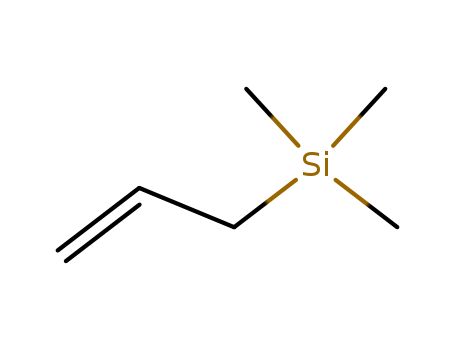
The research explores the application of the photo-SN1 reaction on 4-chloroanilines under solar irradiation to develop a metal-free arylation method. The study aims to improve the environmental sustainability of arylations by using sunlight, more environmentally friendly solvents, and reducing the excess of trapping agents. The researchers optimized the reaction conditions using a solar simulator and then tested the reactions under direct sunlight. They found that the process could be scaled up to a gram scale with satisfactory yields, even with higher starting concentrations of halides and lower proportions of trapping agents. The study concludes that solar-induced photo-ArSN1 arylations are a viable and environmentally friendly alternative to traditional metal-catalyzed arylations, with the added benefit of being powered by renewable solar energy. 4-Chloro-N,N-dimethylaniline (1a) serves as the starting material for generating the 4-N,N-dimethylaminophenyl cation upon irradiation. Mesitylene (2a) acts as a p-trap in the reaction. R-Methylstyrene (2b) is another nucleophile used in the study. Allyltrimethylsilane (2c) serves as a nucleophile in the reaction.
10.1021/jo01306a006
The research investigates the hydroboration of various alkenylsilanes to develop a systematic and detailed understanding of the products formed and the utility of this reaction for synthesizing functionalized organosilanes. The study aims to resolve long-standing anomalies in the hydroboration of alkenylsilanes and provide a clear understanding of the phenomena involved. Vinyltrimethylsilane (1) is a key substrate used to study the hydroboration reaction. Allyltrimethylsilane (24) is another important substrate used in the research to explore the hydroboration reaction and its outcomes. The research finds that the hydroboration process is highly regiospecific, with the boron atom predominantly placed at the terminal position of the double bond, resulting in high isomeric purity of the products. The study also observes unusual directive effects of the trimethylsilyl substituent and synthesizes the first monomeric dialkylborane without the need for excess alkene. The findings provide valuable insights into the hydroboration mechanism and offer a convenient route to functionalized organosilanes for use in synthetic organic chemistry.
10.1016/S0040-4039(98)00394-3
Nikolai Kulmert, Jonathan Peverley, and Jeremy Robertson explores the use of bistrifluoromethanesulfonimide (TMSNTf2) as a catalyst for the allylation of a,?-unsaturated carbonyl compounds with allyltrimethylsilane. The study was motivated by difficulties encountered in the conventional Sakurai reaction, which failed to produce the desired product or yielded it in low amounts. The authors discovered that TMSNTf2, generated in situ from HNTf2 and allyltrimethylsilane, effectively catalyzed the allylation, yielding ketones and esters in high yields (e.g., 97% for ketone 2) under mild conditions. The reaction was found to be moisture-tolerant and could be initiated at temperatures above -40°C. The method was demonstrated on a range of enones and enoates, producing allylated compounds with good to excellent yields. The study also highlighted the stereoselective nature of the reaction, producing the opposite stereochemical outcome compared to classical methods. The findings present a practical and efficient alternative to traditional allylation methods, avoiding the use of toxic and air-sensitive reagents, and suggest potential for industrial applications.
10.1021/acs.joc.0c01041
The research focuses on the development of a mild Cu(OTf)2-mediated C-glycosylation method using chelation-assisted picolinate as a leaving group. The study aims to avoid the use of harsh Lewis acids typically required for such reactions and operates under neutral conditions. The experiments involve the reaction of glycosyl picolinates with allyltrimethylsilane or silyl enol ethers, using Cu(OTf)2 as a mediator. The reactants include various protected monosaccharides and disaccharides as glycosyl donors, with allyl TMS and silyl enol ethers as nucleophiles. The analyses used to characterize the products and monitor the reactions include thin layer chromatography (TLC), flash column chromatography, nuclear magnetic resonance (NMR) spectroscopy, high-resolution mass spectrometry (HRMS), and infrared (IR) spectroscopy. The research successfully achieved the synthesis of C-glycosides with high yields and stereoselectivities, demonstrating the efficiency of the developed method.
10.1016/S0040-4020(98)00082-9
The research focuses on the synthesis and application of chiral 3-methoxy-2,5-morpholinediones, which are cyclic N,O-acetals, as excellent chiral cationic amino acid equivalents, particularly effective with larger nucleophiles. The purpose of the study was to develop a method for the synthesis of these compounds from dipeptolides formed between chiral cα-hydroxy acids and dimethyl aminomalonate, using a regioselective electrochemical methoxylation followed by intramolecular lactonization after decarboxylation. The researchers successfully synthesized the desired chiral 3-methoxy-2,5-morpholinediones and demonstrated their effectiveness in amidoalkylation reactions, with the ability to obtain both enantiomers of the new amino acid from a single chiral precursor. The chemicals used in the process included various chiral cα-hydroxy acids, dimethyl aminomalonate, acetyl chloride, thionyl chloride, sodium hydroxide, and nucleophiles such as allyl trimethyl silane and ally triphenyl silane. The study concluded that these chiral compounds are valuable due to their ease of separation from the starting chiral hydroxy acid by extraction and their potential use in the synthesis of non-proteinogenic co-amino acids.


 F,
F, Xi
Xi


