2698
L. Xu et al.
[1], and the synthesis of nervous system drugs, such as milnacipran [2]. There are
many methods for the synthesis of N-ethyl-n-butylamine, and the most commonly
used method is N-alkylation of amine with aryl/alkyl halides [3, 4]. However, the
use of aryl/alkyl halides is unfriendly to the environment, and this procedure
generates large amounts of inorganic salts as byproducts [5]. The relatively green
method for the synthesis of N-ethyl-n-butylamine is the catalytic amination of
alcohols [6–8], generally by using the Cu, Ni, and Co catalysts. However, this
method generates water as a byproduct, which will reduce the activity of the catalyst
and may form azeotrope with the raw material alcohol and the product amine, thus
rendering the purification of the target product difficult.
The process for the amines disproportionation is a class of common side reactions
in the synthesis of aliphatic amines. Some researchers have studied the amines
disproportionation phenomenon in a number of systems, trying to suppress the
disproportionation to improve the selectivity of primary products; however, the results
showed that preventing the amines disproportionation reactions from the source was
very difficult, and only possible by reducing the activity of the catalyst to reduce the
amines disproportionation [7, 9, 10]. The research of the amines disproportionation
reaction as the main reaction is small and the cross-disproportionation of a variety of
aliphatic amines to synthesize asymmetric amines, such as the synthesis of N-ethyl-n-
butylamine from ethylamine and butylamine, is even rarer. An earlier study of the
conversion between methylamine, dimethylamine, and trimethylamine was carried
out, and the result showed either methylamine or dimethylamine as the raw material,
and a mixture of methylamine, dimethylamine, and trimethylamine was found [11,
12]. The catalysts of the amines disproportionation are mainly metal or supported
metal catalysts, and one having high catalytic activity and acidic centers would be
favorable to the amines disproportionation reaction. Many transition metals have been
used in the amines disproportionation reaction, such as Ni, Cu, Co, Ru, Pt, or Pd [7],
among which Ni has high catalytic activity [8, 13–15]. The acidic centers of catalyst
are often provided by the support, and the performance of the catalyst alters with
changing the catalyst’s acidity. A specific study on the role of the support on the
properties of Cu–Cr catalysts has been reported [16], and the result showed that the
performance varied in the following order, SiO2–Al2O3 & Al2O3 [ SiO2 & graph-
ite & ZnO.
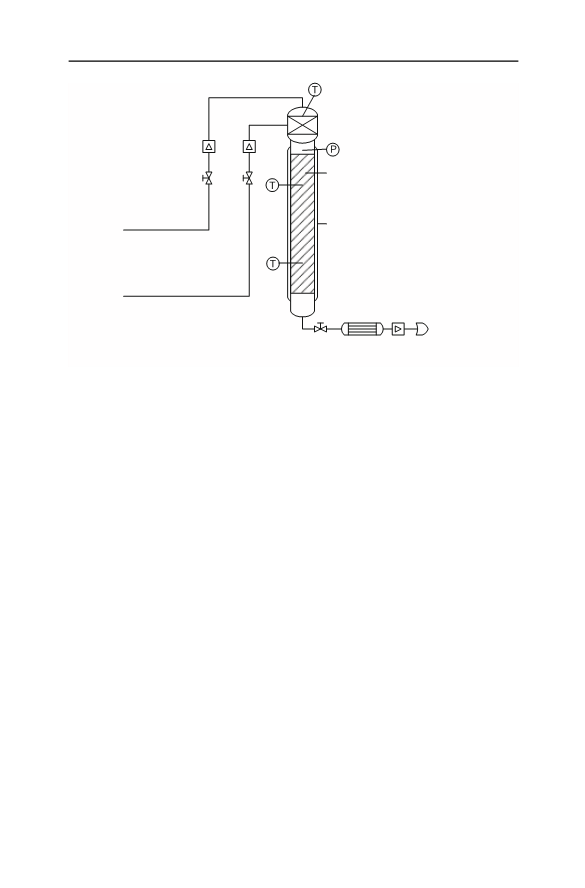
In this paper, we report on the synthesis of N-ethyl-n-butylamine from ethylamine
and butylamine with CuO–NiO–PtO/c-Al2O3 catalyst in a fixed-bed reactor. A
report on a photocatalytic process of N-alkylation of different amines by using
microreactors with immobilized Pt-free TiO2 as well as Pt-loaded TiO2 can be found
in the literature [17]. The N-ethylation process of butylamine was examined in the
ethanol solvent with immobilized Pt-loaded TiO2 and found to yield only 36 %.
There was another report [18] on the synthesis of N-ethyl-n-butylamine, and the
yield of the reaction of butylamine and ethanol catalyzed by Ni–Sn/Al2O3 was only
42 %. The yield of N-ethyl-n-butylamine in this paper is significantly higher than the
results in the literature. The synthesis of N-ethyl-n-butylamine from ethylamine and
butylamine has an important advantage: the reaction does not generate water, which
solved the fundamental problem of removing the water from the reaction mixture,
and no azeotrope in the reaction mixture made the separation process simple.
123

 Xu, Lu-Feng