1308
D. V. Naik et al.
which serve as ligands for cerium(IV) are chloride, bro-
mide, and hypophosphite [12].
decrease with increasing perchloric acid concentration
(Table 1). The order with respect to perchloric acid con-
centration was determined from the log–log plots of (rate)c
vs. acid concentrations and was found to be negative
fractional (-0.40). Cerium(IV) is known to form several
complexes in aqueous perchloric acid media [8, 9], such as
The oxidation of TH has been performed with ferri-
cyanide [13], hypoiodide [14], chlorite [15], and
N-chlorobenzenesulfonamide [16]. However, there was no
report on the oxidation of TH by cerium(IV) in the litera-
ture. Thus we tried to study this reaction in sulfuric acid
and perchloric acid media. The reaction is facile only in the
presence of micro-amounts (10-6 mol dm-3) of manga-
nese(II) in perchloric acid medium, but not in sulfuric acid.
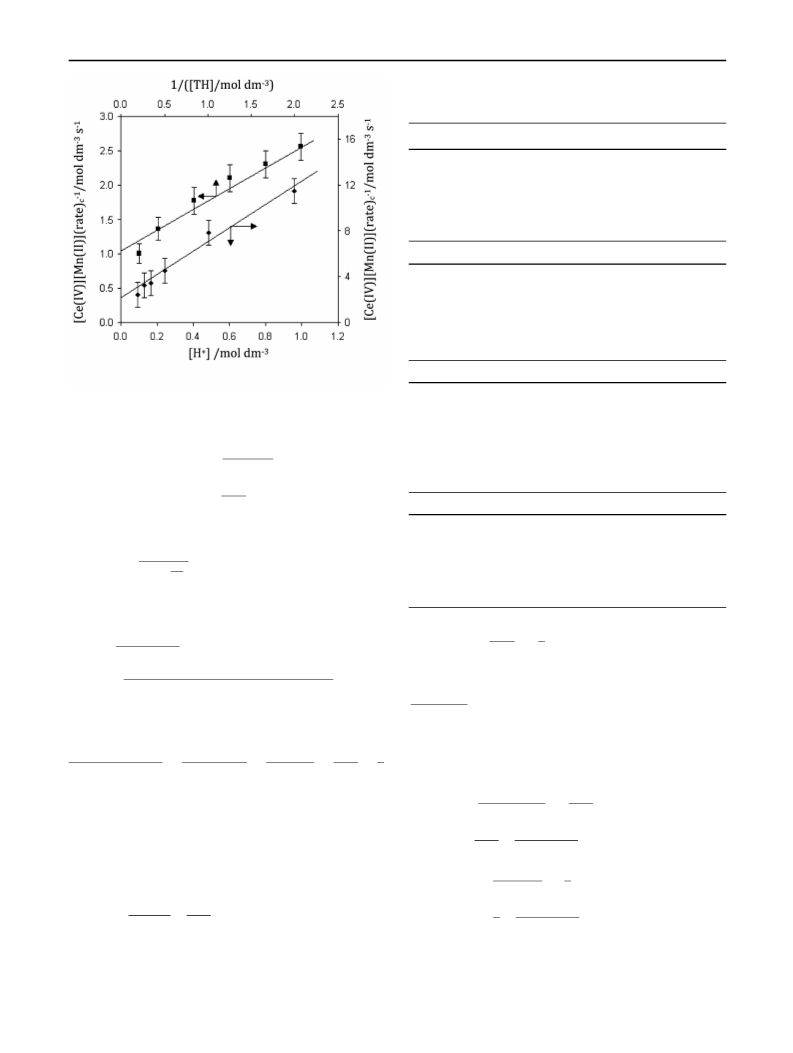
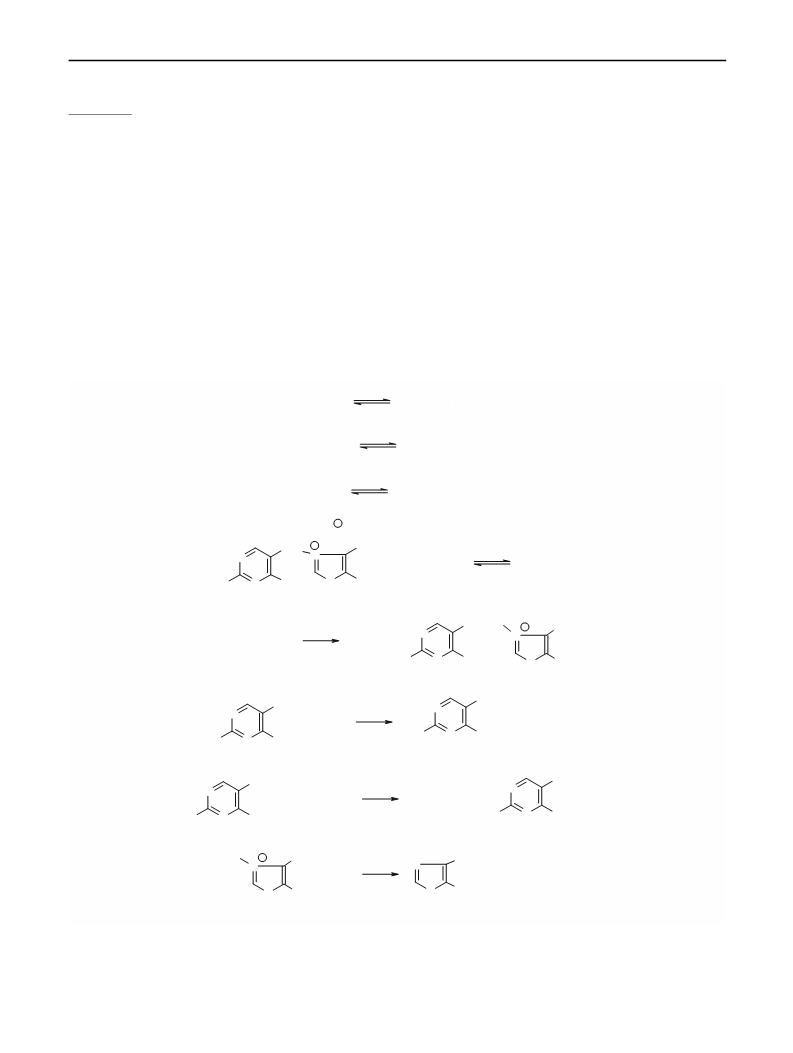
The mechanism may be quite complicated owing to the
formation of different cerium(IV) and manganese(II)
complexes in the form of active species in the perchloric
acid medium. Hence, we have investigated the manga-
nese(II)-catalyzed oxidation of TH by cerium(IV) in order
to understand the behavior of the active species of the
oxidant, [Ce(OH)]3?, and catalyst, [Mn(H2O)4]2?, and to
propose a suitable mechanism.
Ce4?
, , , , and
[Ce(OH)]3? [Ce(OH2)]2? [Ce–O–Ce]6?
[HOCe–O–CeOH]4?. A potentiometric study of the
hydrolysis of cerium(IV) indicates [10] [Ce(OH)]3? to be
the predominant active species of cerium(IV) in perchloric
acid in the concentration range 0.30–2.0 mol dm-3
.
Effect of [manganese(II)]
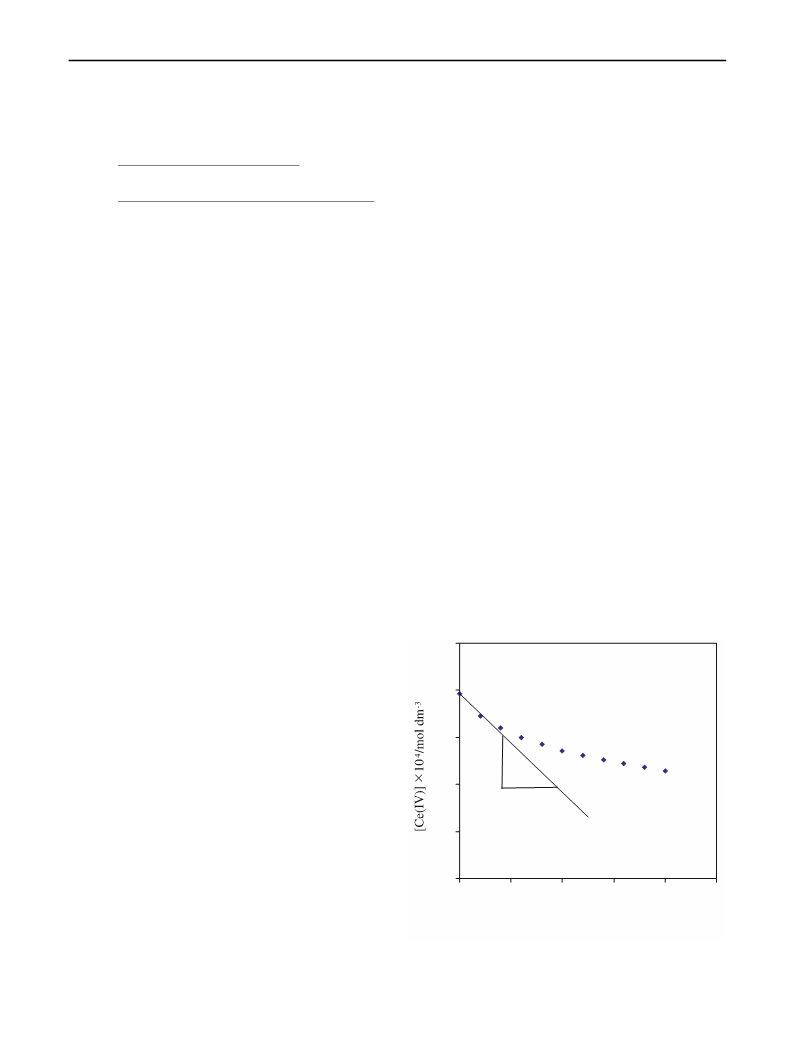
At constant oxidant, reductant, and acid concentration of
2.0 9 10-4, 5.0 9 10-2, and 1.0 mol dm-3, respectively,
and I = 1.10 mol dm-3, the catalyst manganese(II) con-
centration was varied between 1.0 9 10-6 and
10.0 9 10-6 mol dm-3 (Table 1). The order with respect
to manganese(II) concentration was found to be unity. As
catalyst concentration increases the rate of the reaction also
increases, and the activity of catalyst reaches a maximum
when [manganese(II)] is at least 10.0 9 10-6 mol dm-3
under the aforementioned experimental conditions.
Results and discussion
Reaction orders
The reaction orders were determined from the slopes of
log(rate)c vs. log(concentration) plots by varying the con-
centrations of cerium(IV), TH, perchloric acid, and
manganese(II) catalyst, while keeping all other concentra-
tions and conditions constant.
Effect of ionic strength and dielectric constant
At constant concentration of reactants and other conditions
constant, the ionic strength was varied from 1.10 to
3.40 mol dm-3 by varying the concentrations of sodium
perchlorate and the rate was found to increase with
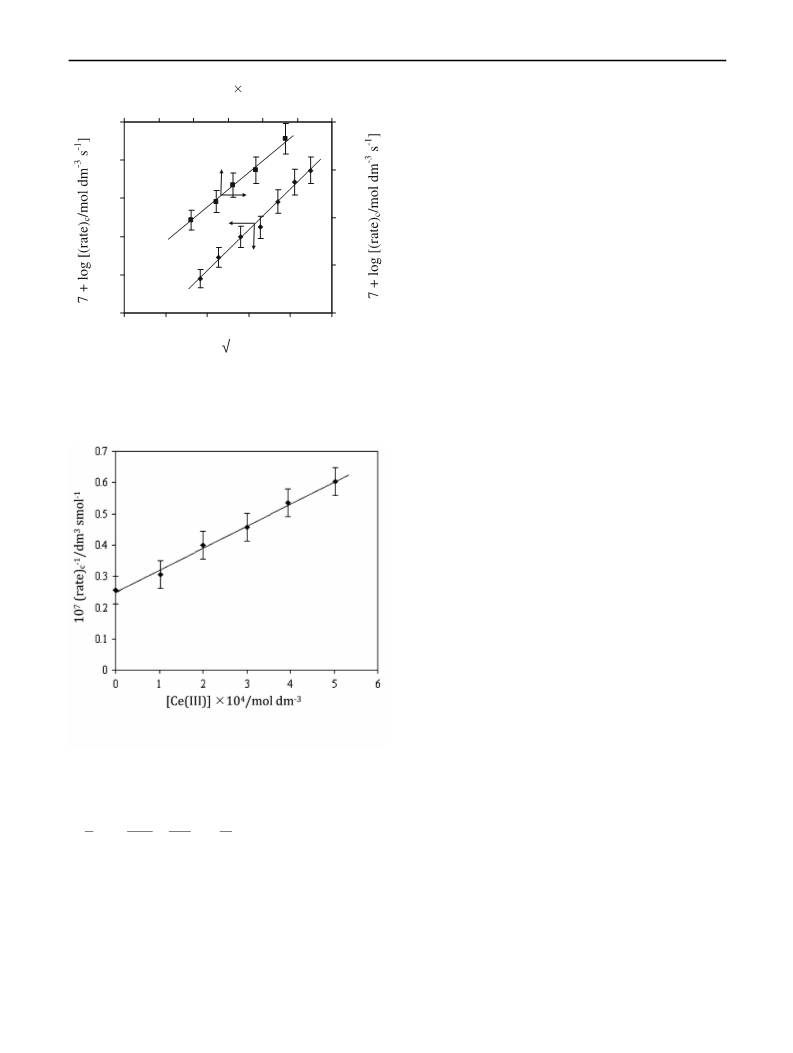
increasing ionic strength. A plot of log(rate)c vs. HI is linear
with a positive slope (Fig. 1). The effect of the dielectric
constant was studied by varying the volume fraction acetic
acid–water (u, see [17]) in the reaction mixture with all other
conditions being kept constant. It was found that (rate)c
increased with decreasing dielectric constant of the medium.
In other words, as the acetic acid content in the reaction
mixture increases, the pH of the reaction medium decreases
and the rate of the reaction [(rate)c] increases. No reaction of
the solvent occurred during the oxidant under the experi-
mental conditions employed. A plot of log(rate)c vs. 1/D is
linear with positive slope (Fig. 1).
Effect of [oxidant] and [substrate]
At constant concentration of TH (5.0 9 10-2 mol dm-3),
perchloric acid (1.0 mol dm-3), catalyst manganese(II)
(5.0 9 10-6 mol dm-3), and at constant ionic strength
(I = 1.10 mol dm-3), the cerium(IV) concentration was
varied from 0.50 9 10-4 to 5.0 9 10-4 mol dm-3; the
initial rate increased with increase in the cerium(IV) con-
centration (Table 1). From the plot of log(rate)c vs.
log[Ce(IV)], the order with respect to cerium(IV) concen-
tration was found to be unity.
The substrate TH concentration was varied in the con-
centration range 5.0 9 10-3–5.0 9 10-2 mol dm-3 at 25°
C, keeping all other conditions constant. The initial rate
increased with increase in the concentration of TH
(Table 1). From the slope of the plot of log(rate)c vs.
log[TH], the order with respect to TH concentration was
found to be fractional (0.59).
Effect of initially added products
The effect of initially added product cerium(III) was studied
in the 5.0 9 10-5–5.0 9 10-4 mol dm-3 concentration
range, keeping the ionic strength, reactant concentration, and
other conditions constant. It was found that cerium(III) in the
concentration range 5.0 9 10-5–5.0 9 10-4 mol dm-3
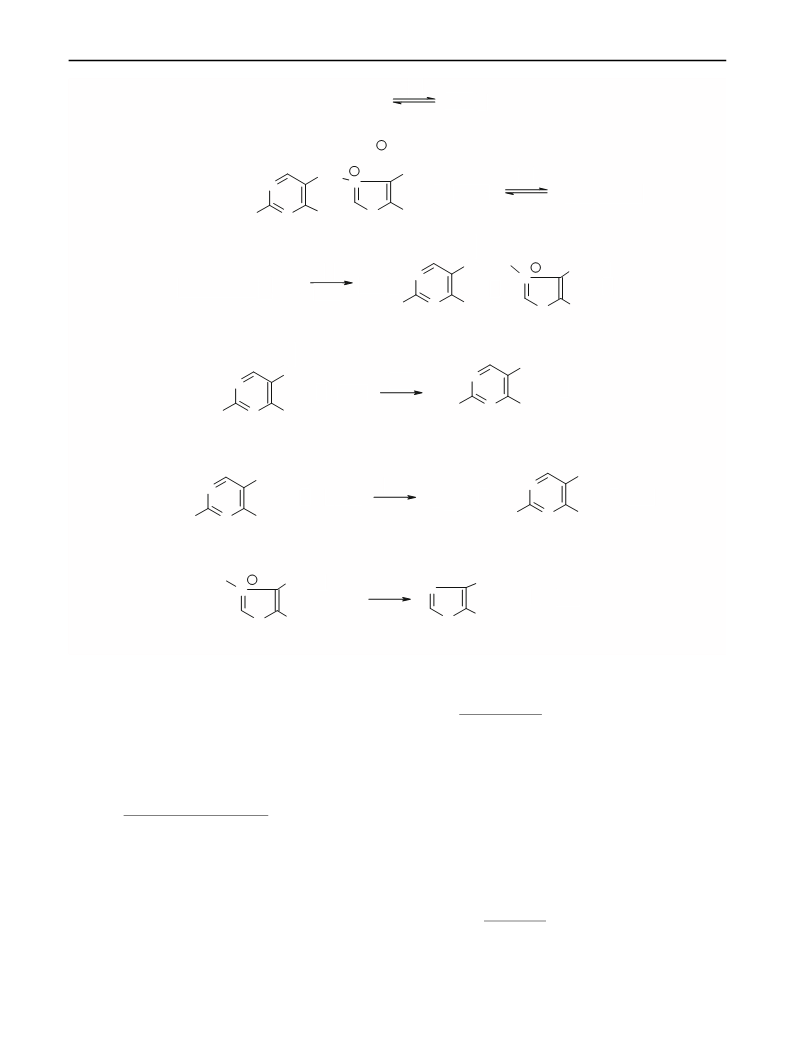
caused a decrease in rate. The inhibitory effect of initially
added product cerium(III) is shown in Fig. 2.
Effect of [acid]
At constant ionic strength (I = 1.10 mol dm-3) and with
other conditions remaining constant, the rate was found to
123

 Naik
Naik