B.; Flint, O. P.; Whaley, J. M.; Washburn, W. N. J. Med. Chem.
2008, 51, 1145–1149.
A
3. (a) Blanchard, S.; Thorson, J. S. Curr. Opin. Chem. Biol. 2006, 10,
263–271; (b) Toshima, K.; Tatsuta, K. Chem. Rev. 1993, 93,
1503–1531; (c) Cox, D. J.; Smith, M. D.; Fairbanks, A. J. Org.
Lett. 2010, 12, 1452–1455; (d) Mydock, L. K.; Demchenko, A. V.
Org. Biomol. Chem. 2010, 8, 497–510.
Glycosylation
AaGT3
4. (a) Lim, E. K. Chem. Eur. J. 2005, 11, 5486–5494; (b)
Luzhetskyy, A.; Méndez, C.; Salas, J. A.; Bechthold, A. Curr.
Top. Med. Chem. 2008, 8, 680–709; (c) Gantt, R. W.; Peltier-Pain,
P.; Thorson, J. S. Nat. Prod. Rep. 2011, 28, 1811‒1853.
5
5a
UDP-Glc
Up to 62% yield
UDP
5. (a) Minami, A.; Uchida, R.; Eguchi, T.; Kakinuma, K. J. Am.
Chem. Soc. 2005, 127, 6148‒6149; (b) Gantt, R. W.; Goff, R. D.;
Williams, G. J.; Thorson J. S. Angew. Chem. Int. Ed. 2008, 47,
8889–8892; (c) Xie, K.; Chen, R.; Li J.; Wang, R.; Chen, D.; Dou,
X.; Dai, J. Org. Lett. 2014, 16, 4874‒4877; (d) Sun, L.; Chen, D.;
Chen, R.; Xie, K.; Liu, J.; Yang, L.; Dai, J. Tetrahedron Lett.
2016, 57, 1518‒1521; (e) Chen, D.; Chen, R.; Wang, R.; Li, J.;
Xie, K.; Bian, C.; Sun, L.; Zhang, X.; Liu, J.; Yang, L.; Ye, F.; Yu,
X.; Dai, J. Angew. Chem. Int. Ed. 2015, 54, 12678‒12682; (f) Xie,
K.; Chen, R.; Chen, D.; Li, J.; Wang, R.; Yang, L.; Dai, J. Adv.
Synth. Catal. 2017, 359, 603‒608; (g) Feng, J.; Zhang, P.; Cui, Y.;
Li, K.; Qiao, X.; Zhang, Y.; Li, S.; Cox, R. J.; Wu, B.; Ye, M.;
Yin, W. Adv. Synth. Catal. 2017, DOI:10.1002/adsc.201601317.
6. (a) Das, B.; Reddy, C. R.; Kashanna, J.; Mamidyala, S. K.;
Kumar, C. G. Med. Chem. Res. 2012, 21, 3321‒3325; (b) Todd, P.
A.; Clissold, S. P. Drugs 1990, 40, 91‒137; (c) Moore, B. R.;
Laman, M.; Salman, S.; Batty, K. T.; Page-Sharp, M.; Hombhanje,
F.; Manning, L.; Davis, T. M. Drugs 2016, 76, 789‒804.
7. (a) Chen, W.; Van Wyk, B.; Vermaak, I.; Viljoen, A. M.
Phytochem Lett. 2012, 5, 1‒12; (b) Beppu, H.; Kawai, K.; Shimpo,
K.; Chihara, T.; Tamai, I.; Ida, C.; Ueda, M.; Kuzuya, H.
Biochem. Syst. Ecol. 2004, 32, 783‒795.
AaGT3
HO
NO2
Deglycosylation
7a
7
B
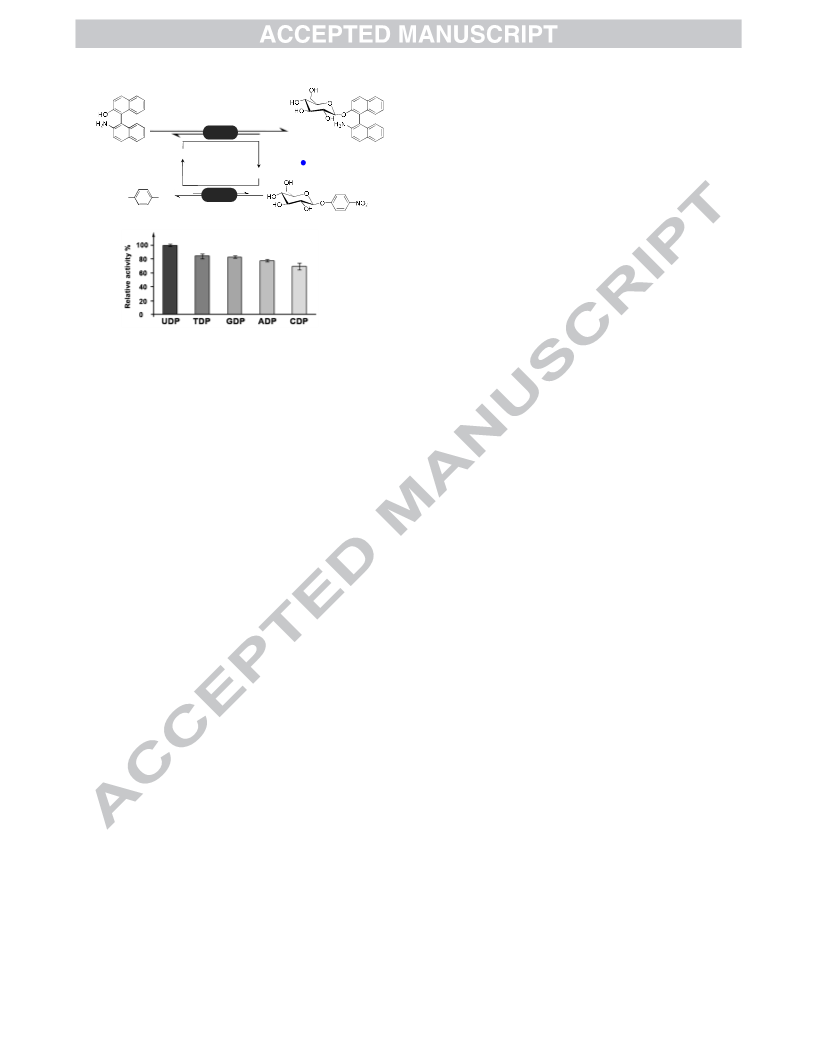
Figure 3. One-pot reaction catalyzed by AaGT3. (A) The bioactive
glucoside (5a) was generated from a simple sugar donor (7) with a
catalytic amount of UDP. (B) Besides UDP, other NDPs (TDP,
GDP, ADP and CDP) can also be used in the one-pot reaction.
conversion rates than that of UDP (Fig. 3B). This feature allows
AaGT3 to be applied in producing bioactive glucosides from a
simple sugar donor in vivo with different NDPs of host strains.10
Above all, the coupled reactions mediated by AaGT3 generating
bioactive unnatural glucosides from abundant unnatural
glucosides without adding activated sugars establishes a cost-
effective enzymatic method for synthesizing diverse bioactive
glucosides.
8. (a) Vogt, T.; Jones, P. Trends Plant Sci. 2000, 5, 380‒386; (a)
Gachon, C. M.; Langlois-Meurinne, M.; Saindrenan, P. Trends
Plant Sci. 2005, 10, 542‒549.
9. Ahmed, I.; Bose, S. K.; Pavese, N.; Ramlackhansingh, A.;
Turkheimer, F.; Hotton, G.; Hammers, A.; Brooks, D. J. Brain
2011, 134, 979–986.
10. Williams, G. J.; Yang, J.; Zhang, C.; Thorson, J. S. ACS Chem.
Biol. 2011, 6, 95–100.
In summary, enzymatic glucosylation of unnatural naphthols
for generating novel and bioactive unnatural glucosides was
achieved by a natural GT AaGT3 from A. arborescens. AaGT3
exhibited robust glucosylation activity toward simple basic units
and structurally diverse derivatives of naphthols. Moreover, the
catalytic reversibility of AaGT3 coupled with its catalytic
promiscuity was exploited as a powerful biocatalyst for the
enzymatic synthesis of novel and bioactive unnatural glucosides.
This study not only demonstrates the application prospect of
natural GTs in synthesis of target unnatural glycosides with
pharmacological activities but also provides a potential tool in
glycorandomization of diverse unnatural products.
Supplementary Material
Supplementary material (experimental operations, including
gene cloning, expression, reaction analysis and products
purification protocols, LC/MS, HRESIMS and NMR
characterization data and spectra of glucosylated products)
associated with the article can be found, in the online version, at
http:xxx
Acknowledgments
This work is financially supported by the National Natural
Science Foundation of China (Grant No. 81602999) and CAMS
Innovation Fund for Medical Sciences (CIFMS-2016-I2M-3-012).
References and notes
1. (a) Weymouth-Wilson, A. C. Nat. Prod. Rep. 1997, 14, 99‒110;
(b) Luzhetskyy, A.; Bechthold, A. Appl. Microbiol. Biotechnol.
2008, 80, 945–952; (c) Chang, A.; Singh, S.; Phillips, G. N.;
Thorson, J. S. Appl. Microbiol. Biotechnol. 2008, 80, 945–952; (d)
Elshahawi, S. I.; Shaaban, K. A.; Kharel, M. K.; Thorson, J. S.
Chem. Soc. Rev. 2015, 44, 7591–7697.
2. (a) Kren, V.; Martínková, L. Curr. Med. Chem. 2001, 8,
1303‒1328; (b) Belkhadem, F.; Othman, A. A. Mol. Diversity
2016, 21, 115‒124; (c) Meng, W.; Ellsworth B. A.; Nirschl, A. A.;
McCann, P. J.; Patel, M.; Girotra, R. N.; Wu, G.; Sher, P. M.;
Morrison, E. P.; Biller, S. A.; Zahler, R.; Deshpande, P. P.;
Pullockaran, A.; Hagan, D. L.; Morgan, N.; Taylor, J. R.;
Obermeier, M. T.; Humphreys, W. G.; Khanna, A.; Discenza, L.;
Robertson, J. G.; Wang, A.; Han, S.; Wetterau, J. R.; Janovitz, E.

 Xie, Kebo